
25 Side Income Sources in India That Actually Pay (2026)
Where to start each one, and what it actually pays.

Most side income sources pay in one of two ways: for your hours, or for an outcome. Hourly work has a hard ceiling, because there are only so many evenings in a week. Outcome-based work does not, which is why selling financial products sits at the top of this list and survey apps sit near the bottom. Every entry below carries the same three things: what it is, where to actually start it, and what it typically pays.
Key Takeaways
- Selling financial products pays per approved application rather than per hour, with commissions up to Rs 2,000 on a single approved credit card.
- Refer and earn is the easiest thing to start, but most app referral programmes pay in coins, vouchers or credit rather than cash.
- Freelancing, tutoring and design pay well but stop paying the moment you stop working. Treat them as income, not as a business.
- If you have a job, read your employment contract before starting anything. Some employers require written permission for outside work.
- Anything that asks you to pay a joining fee, buy a kit or invest first is not a side income source. It is a purchase.
Table of contents
- What Counts as a Side Income Source?
- How to Choose a Second Source of Income
- Commission-Based Sources (1 to 2)
- Phone and Laptop Sources (3 to 10)
- Skill-Based Sources (11 to 17)
- Time and Asset Based Sources (18 to 25)
- Which Side Income Sources Work Alongside a Job?
- Which Side Income Sources Suit Students?
- Extra Income Sources Worth Avoiding
- What You Can Realistically Earn
What Counts as a Side Income Source?
A side income source is any repeatable way of earning money outside your main job or business. Three kinds exist, and the difference decides your ceiling.
Time-for-money. Freelancing, tutoring, driving, delivery. Reliable, immediate, and capped by the hours you have.
Outcome-for-money. Commission on a sale, a completed application, a closed deal. Pays nothing when it fails and pays properly when it works, and one good month does not require twice the hours.
Asset-for-money. Renting a room, a bike or camera gear, or earning interest on savings. Needs something you already own, then runs quietly.
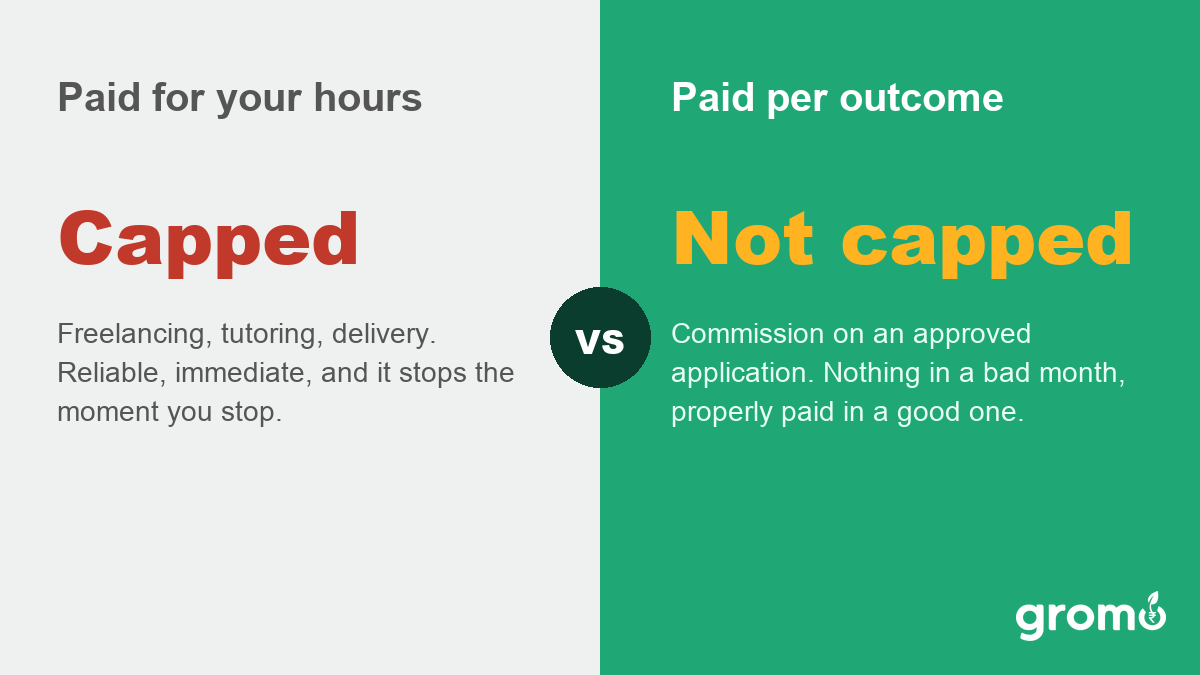
The same evening spent two ways. Only one of them scales.
Most lists mix all three and rank them by how exciting they sound. This one ranks by what an hour spent is actually worth, so the order below won't match what you've read elsewhere.
How to Choose a Second Source of Income
Four filters, applied in this order, remove about twenty of the twenty-five for any given person.
- Capital needed. If it asks for money upfront, it is a business, not a side income. Start with what costs nothing.
- Time it fits into. Evenings and weekends, or gaps in the day? A tiffin service needs mornings. Sharing a product link needs four minutes.
- Skill you already have. The fastest starts use something you can already do, even if that skill is simply being trusted by people around you.
- Where the ceiling sits. Ask what this pays if it goes really well for a year. Some of these top out at pocket money by design.
Run those four filters honestly and the list usually shortens to two or three real options. Start one, not three, because three at once is how people end up with none.
About the pay ranges below. Each entry carries a typical Indian range for 2026, based on what these platforms and local markets commonly pay. Ranges move with city, skill, demand and season, and beginners often start below the lower end. None of them is a promise. GroMo commissions are the exception, because those come from the app's own catalogue and can be checked live before you quote them.
Commission-Based Sources (1 to 2)
1. Selling financial products with GroMo
GroMo is an Indian financial products distribution app. Partners recommend credit cards, savings accounts, demat accounts, loans and credit lines from a single catalogue, and earn a commission when an application is approved.
Where to start. Install the GroMo app, sign up, register as a partner, and share one product with someone it suits. Your PAN comes in at withdrawal, once a sale is confirmed.
What it pays. Per approved application, by product category:
| Product category | Pays up to per approved application |
|---|---|
| Credit Card | Rs 2,000 |
| Investment | Rs 1,000 |
| Savings Account | Rs 750 |
| Personal Loan | Rs 500 |
| Demat Account | Rs 400 |
| Credit Line | Rs 150 |
Please note. Every figure above is a maximum rather than a flat fee, and comes from the app (GroMo product catalogue). Commissions are campaign-linked, so they move and can change without notice. The rate showing on the product card when you share it is the one you get paid.
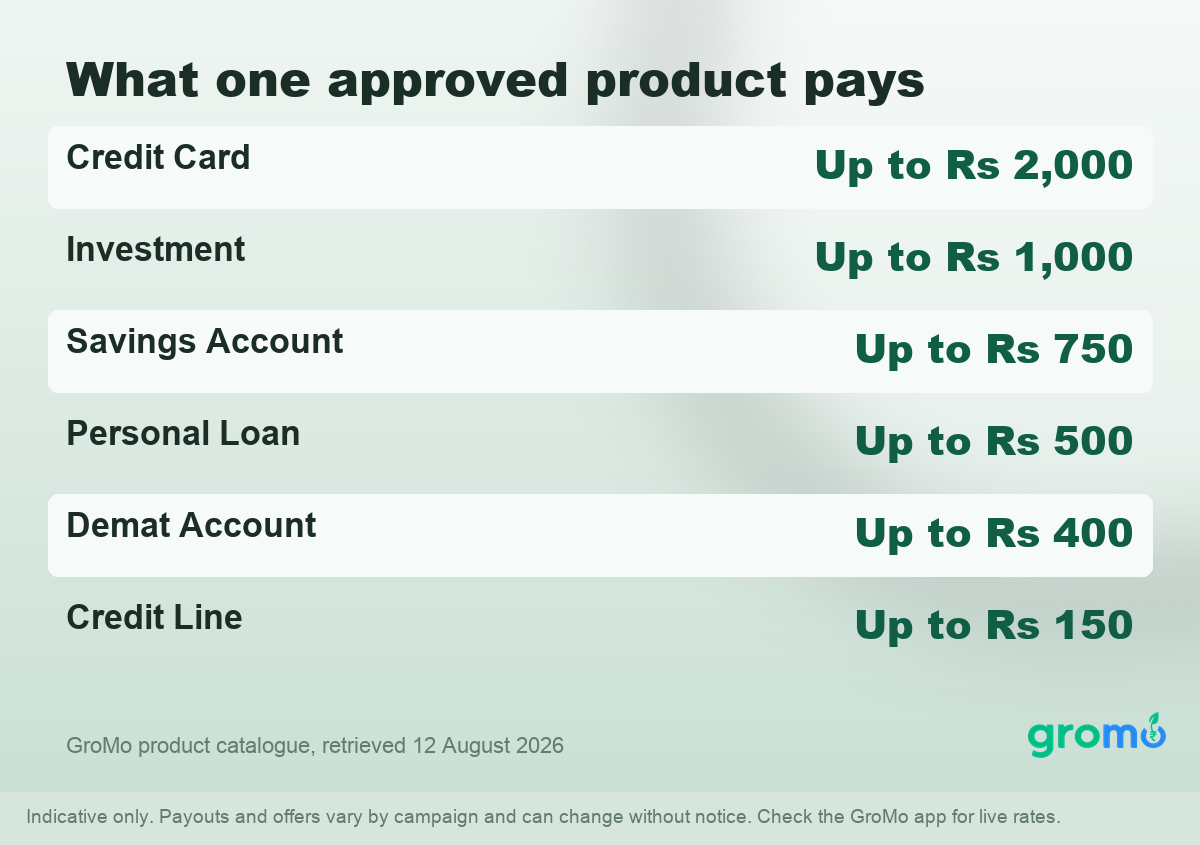
One approved application, by product category.
The honest catch. This needs a conversation. If you can't picture explaining a credit card to a cousin, a freelance skill will suit you better. Approvals are decided by banks, so some months are quiet.
Best for anyone whose friends and family already ask them for money advice.
2. Refer and earn
Referral programmes pay you for bringing a new user to an app. Every category runs one, and the payouts vary more widely than in any other entry on this list.
Where to start. GroMo's referral programme sits inside the app. Beyond it, broker apps such as Upstox, Groww and Angel One run their own schemes, payment apps like PhonePe and Paytm run smaller ones, and shopping apps such as Meesho and Amazon pay for installs and first orders.
What it pays. Financial referrals are the serious end, usually a few hundred to a couple of thousand rupees per successful referral, paid as cash to a bank account. Payment and shopping apps typically pay tens of rupees, often as wallet credit or a scratch card. Task, game and survey apps pay in coins worth a fraction of a rupee.
The question to ask any programme. Does it pay cash to a bank, and does it pay when your friend signs up or only after they transact? Programmes that pay only once your referral spends money are worth far less than they look.
Best for absolutely everyone as a starting point, and almost nobody as a whole plan.
Phone and Laptop Sources (3 to 10)
3. Freelance writing and editing
Blogs, product descriptions, newsletters, resumes and case studies, written to a brief.
Where to start. Upwork, Fiverr, Contra and Internshala for listed work, plus direct outreach on LinkedIn to marketing managers at small companies. Regional-language writing is undersupplied.
What it pays. Roughly Rs 500 to Rs 2,000 for a standard blog article at the start, rising past Rs 3,000 once you have a portfolio and a niche.
Rates rise fast with a niche. Pick one.
Best for anyone who writes clearly and hits deadlines without being chased.
4. Graphic design and template selling
Posters for local businesses, wedding invitations, social media kits, and templates that sell repeatedly.
Where to start. Fiverr and Behance for clients, Canva's creator programme and Etsy for templates, and your neighbourhood market for the fastest first customer.
What it pays. About Rs 300 to Rs 1,500 for a single poster or invitation, and Rs 5,000 to Rs 25,000 for a small brand identity package.
Templates keep selling after you've made them once.
Best for people with a design eye who would rather make things than talk to people.
5. Online tutoring
School subjects, spoken English or competitive exam prep, taught one to one or in small batches.
Where to start. Vedantu, Chegg India and Superprof for platform work, and local parent WhatsApp groups for direct students, who pay more because no platform takes a cut.
What it pays. Around Rs 200 to Rs 800 an hour, with maths, science and exam coaching at the top of that range.
Direct students pay more. Always.
Best for anyone with a subject they know well and the patience to explain it twice.
6. YouTube
A channel that compounds slowly and keeps paying long after a video is made.
Where to start. YouTube itself, with monetisation unlocked after the platform's subscriber and watch-hour thresholds. Regional-language explainer channels face far less competition than English ones.
What it pays. Nothing for the first several months. Once monetised, Indian channels commonly see a few tens to a couple of hundred rupees per thousand views, and brand deals usually pay more than the ad revenue does.
It's the slowest thing here. It's also the one that keeps paying.
Best for people willing to publish for six months before judging it.
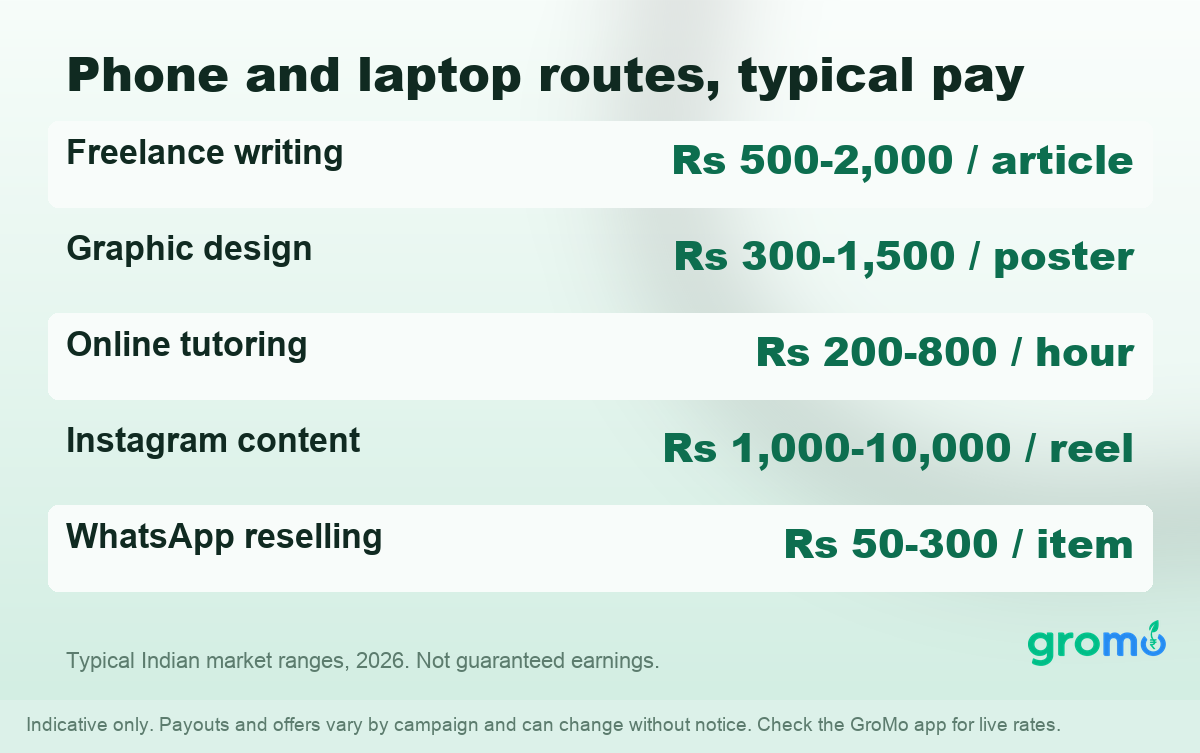
What the phone and laptop routes typically pay in 2026.
7. Instagram content for brands
Reels, photos and captions made for businesses that have no time to produce their own.
Where to start. Local businesses first, gyms, cafes, salons and boutiques, then creator marketplaces once you have samples to show.
What it pays. Roughly Rs 1,000 to Rs 10,000 per reel for a small creator working with local brands, and monthly retainers pay better than one-off posts.
Local brands are the easy first yes.
Best for anyone comfortable on camera or good at editing on a phone.
8. Affiliate marketing
Commission for products bought through your link, across retail, software and financial products.
Where to start. Amazon Associates, Flipkart Affiliate and EarnKaro for retail, and financial product platforms for higher-value categories.
What it pays. Retail links pay a small share of each sale, often only a few rupees an order, which is why volume decides everything. Financial and software products pay far more per conversion.
No audience, no affiliate income. That's the whole rule.
Best for people who already have an audience that trusts their recommendations.
9. Blogging
Your own site, earning from ads and affiliate links, built for search traffic.
Where to start. A domain, hosting and WordPress, one narrow topic you can cover better than anyone else, and Google AdSense once traffic exists.
What it pays. Nothing for six to twelve months. A blog with steady search traffic can earn a few thousand rupees a month from ads, and considerably more from affiliate placements.
Payback is slow. Compounding is real.
Best for patient people who enjoy writing and are willing to learn SEO.
10. Reselling on WhatsApp
Sourcing from wholesale apps and selling into your own network without holding stock.
Where to start. Meesho, GlowRoad and Shop101 for catalogues, and your existing WhatsApp and Facebook groups for customers.
What it pays. A margin you set yourself, commonly Rs 50 to Rs 300 an item, so earnings follow order volume rather than effort per sale.
Returns eat the margin, so check them first.
Best for people with an active network and time for follow-up messaging.
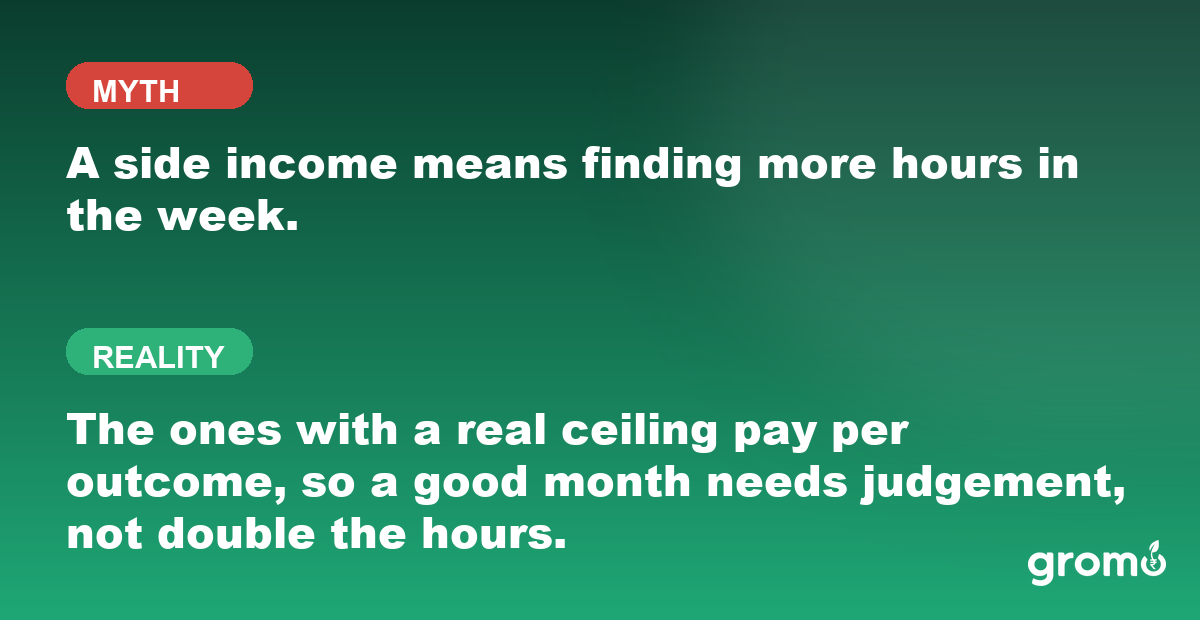
The order here follows what an hour buys, not how new the idea is.
Skill-Based Sources (11 to 17)
11. Web and app development
Small business websites, landing pages, fixes and integrations, built on evenings and weekends.
Where to start. Upwork and Toptal for remote clients, local business networks for direct work, and agencies that outsource overflow.
What it pays. Around Rs 8,000 to Rs 50,000 for a small business website, and the highest hourly rate on this list once you have references.
Nothing else here pays this well per evening.
Best for developers who want maximum return per hour.
12. Voice-over and dubbing
Ads, explainer videos, e-learning modules and audiobooks, recorded from a quiet room.
Where to start. Voices.com and Fiverr for international work, and Indian dubbing studios and ad agencies for regional-language jobs.
What it pays. Roughly Rs 500 to Rs 5,000 per short project at the start, with regional accents and languages paying more than neutral English.
Best for people with a clear voice and the discipline to do retakes.
13. Transcription and captioning
Turning audio into text and adding captions to video. Unglamorous, and always available.
Where to start. Rev, GoTranscript and TranscribeMe for English, and Indian media houses for regional-language work.
What it pays. Roughly Rs 20 to Rs 60 per audio minute, so typing speed and accuracy decide your hourly rate.
You won't speak to a single client. Some people want exactly that.
Best for fast typists who want work that needs no client conversation.
14. Translation
English into Hindi, Marathi, Tamil or Bengali and back, for brands localising content.
Where to start. ProZ and Upwork for professional work, Indian content agencies for volume, and app localisation projects for repeat clients.
What it pays. Commonly Rs 1 to Rs 3 a word, with technical, legal and medical translation at the higher end.
Conversational isn't enough here.
Best for anyone genuinely fluent in two languages, not just conversational.
15. Virtual assistant work
Inbox, scheduling, research, data and coordination work for founders and small agencies.
Where to start. Upwork and Wishup for structured roles, and founder communities on LinkedIn for direct hires.
What it pays. Roughly Rs 8,000 to Rs 25,000 a month for part-time hours, with international clients paying substantially more.
Best for organised people who like closing loops for somebody else.
16. Photography and videography
Weddings, events and product shoots, priced by the day.
Where to start. Second-shooter work with an established photographer first, then WedMeGood and local wedding planners once you have a portfolio.
What it pays. Around Rs 5,000 to Rs 25,000 per event day as a second shooter or on small shoots, and more once you own the client relationship.
Your weekends go first. Be honest about that.
Best for people who already own a camera and can give up weekends.
17. Teaching a craft
Yoga, music, dance, fitness or cooking, taught in small batches online or in person.
Where to start. Your own building and neighbourhood groups, a local studio that rents slots by the hour, and Instagram to fill batches.
What it pays. Roughly Rs 1,500 to Rs 4,000 per student a month for a regular batch, so eight students is a real second income.
Eight students changes a month.
Best for anyone with a skill people already ask them to teach.
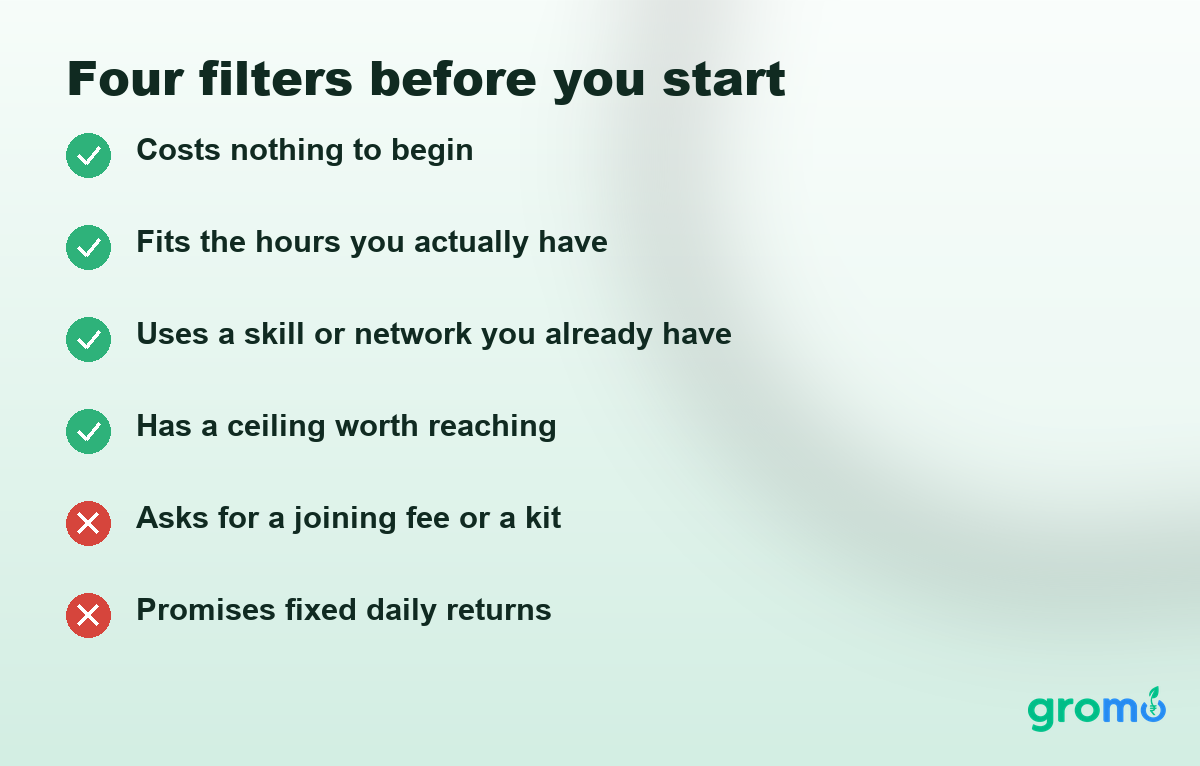
Apply the four filters before you start anything.
Time and Asset Based Sources (18 to 25)
18. Ride-hailing and delivery
Driving or delivering in hours you can spare. Immediate money, hard ceiling.
Where to start. Uber, Ola and Rapido for rides, Swiggy, Zomato, Zepto and Blinkit for delivery. Onboarding takes a few days.
What it pays. Roughly Rs 10,000 to Rs 20,000 a month for genuine part-time hours, before fuel and maintenance, which are the costs most people forget to subtract.
Money arrives fast. It also stops the day you do.
Best for people with a vehicle and fixed free hours who want money this week.
19. Renting out a room
The largest asset most families own, and the most underused one.
Where to start. Airbnb for short stays, NoBroker and Nestaway for long-term tenants, and your own society noticeboard for the fastest match.
What it pays. Roughly Rs 5,000 to Rs 20,000 a month depending on the city and whether the room is furnished.
Best for households with a genuinely spare room and no objection to sharing space.
20. Renting out equipment
Camera gear, a bike, power tools or party equipment, earning while you are at work.
Where to start. RentSher and local Facebook groups, plus photography WhatsApp groups where gear rental is routine.
What it pays. Around Rs 500 to Rs 3,000 a day for camera bodies and lenses, less for tools, and it only works if you already own the item.
Best for people whose expensive hobby equipment sits idle most weeks.
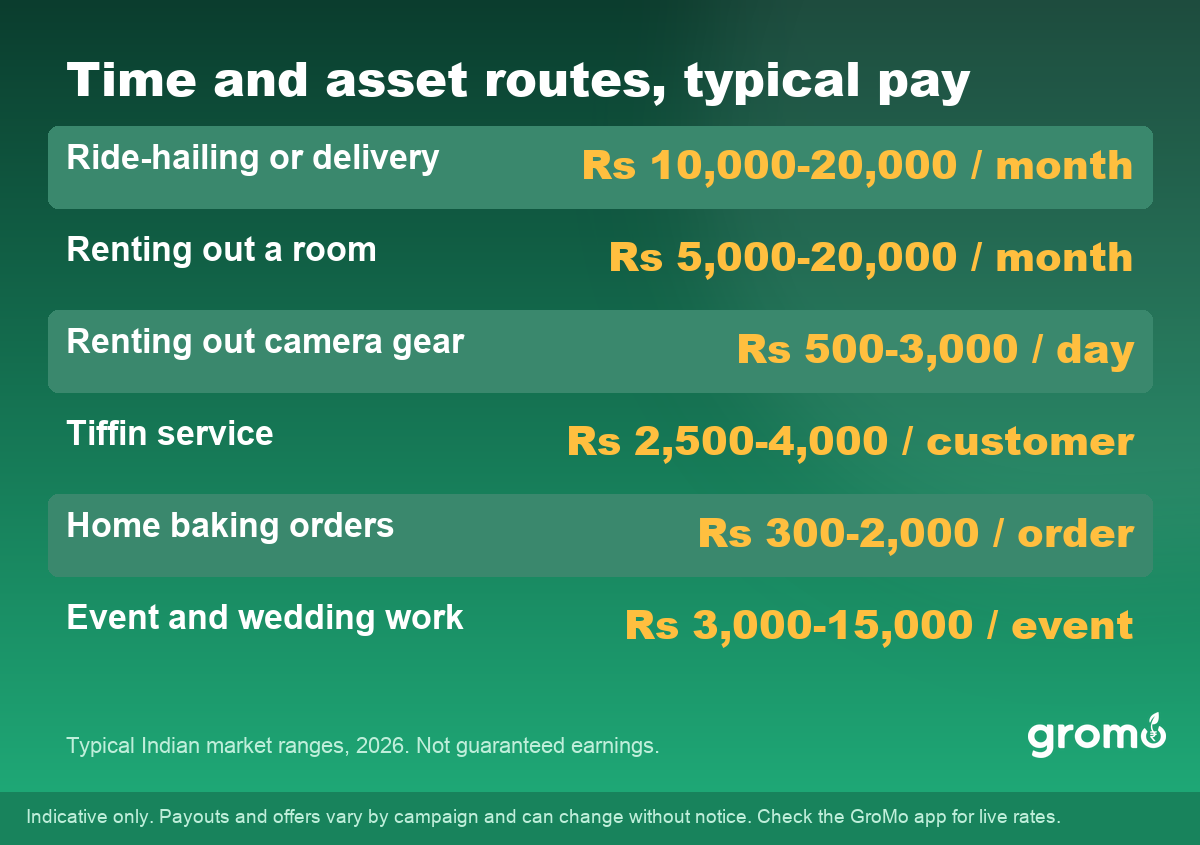
What the time and asset routes typically pay in 2026.
21. Tiffin service
Home-cooked meals for regular customers, billed monthly. Steady, and demanding every single morning.
Where to start. Nearby offices, PG accommodations and hostels, then delivery apps once the kitchen routine is proven.
What it pays. Roughly Rs 2,500 to Rs 4,000 per customer a month, so fifteen regulars is a serious business rather than a side income.
Every morning. No exceptions.
Best for people who cook well and can commit to mornings without exception.
22. Home baking and festival orders
Cakes, cookies and hampers, peaking around festivals and birthdays.
Where to start. Instagram for showing the work, WhatsApp status for taking orders, and your building group for the first customers.
What it pays. Roughly Rs 300 to Rs 2,000 an order, with festival hampers priced higher and usually ordered in batches.
Best for anyone whose baking already gets requested at family events.
23. Event and wedding services
Decoration, catering support, coordination and hosting, priced per event.
Where to start. Local event planners who need reliable hands, and wedding marketplaces once you have photographs of your work.
What it pays. Roughly Rs 3,000 to Rs 15,000 an event depending on the role and the scale.
Best for organised people who stay calm under pressure and are free at weekends.
24. Selling on marketplaces
Listing products on national platforms, with real reach and real competition.
Where to start. Amazon Seller Central, Flipkart Seller Hub and Meesho. A GST registration is needed for most categories.
What it pays. A margin per order after platform fees, shipping and returns, which is why unit economics matter more than volume in the first year.
Unit economics decide this one.
Best for people with a genuine product source, not for anyone hoping to arbitrage.
25. Interest and dividend income
Fixed deposits, debt funds and dividend-paying stocks. It isn't exciting and it needs capital to matter, but it asks nothing of your evenings.
Where to start. Your own bank for deposits, and a demat account for funds and shares.
What it pays. A modest annual return on whatever is invested, which makes it the quiet third layer rather than a plan on its own.
Best for people who already have savings sitting idle in a current account.
Which Side Income Sources Work Alongside a Job?
Working alongside a salaried job is normal, and there are three things to sort out before you start.
Read your employment contract. Look for exclusivity, non-compete and outside-work clauses. Some employers require written permission, and asking first is a much easier conversation than explaining later.
Keep it fully separate. Your own device, your own time, your own accounts. Never use office hours, office equipment or anything belonging to your employer.
Plan for the tax. Side income is taxable. Keep a simple record of what came in and what you spent to earn it, and declare it when you file.
Best fits for salaried people: financial product distribution, referrals, tutoring, freelance work in your professional skill, and asset rental. All of them run on evenings and weekends without a fixed schedule, and the first of them is explained in this guide to what a credit card agent does.
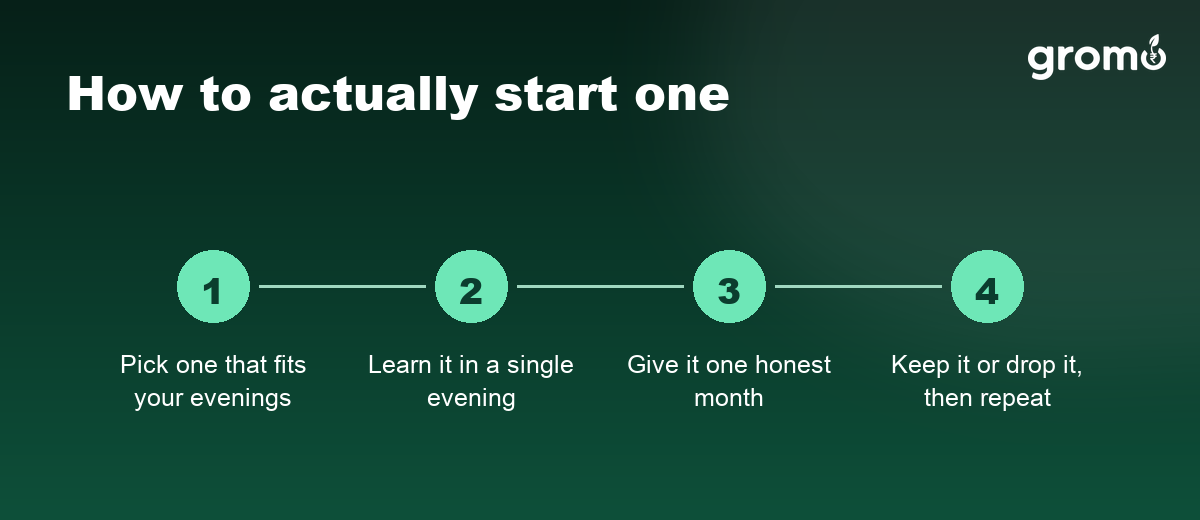
One option, one month, then decide. That is the whole method.
Which Side Income Sources Suit Students?
Students have the two things that matter most here: time, and a network of people the same age.
Start with what needs no capital. Tutoring juniors pays from the first week, freelance writing and design build a portfolio while paying, campus-level social media work for local businesses is usually uncontested, and financial product distribution becomes available once you turn 18.
Skip anything that asks you to pay upfront for a kit, a course or a starter pack. Student-targeted schemes of that kind are common and none of them are side income.
Best for building a skill and a track record at the same time, which is worth more at graduation than the money itself.
Extra Income Sources Worth Avoiding
Some categories look like side income and are not.
- Anything with a joining fee. No legitimate distribution or freelance platform charges you to start.
- Investment-first schemes promising fixed daily returns. That is not a side income source, it is a risk to your savings.
- Chain recruitment programmes where the money comes from signing people up rather than from selling anything.
- Survey and task apps as a main plan. They genuinely pay, but the amounts are small and the ceiling is fixed.
- Anything needing your OTP, password or documents shared with a stranger.
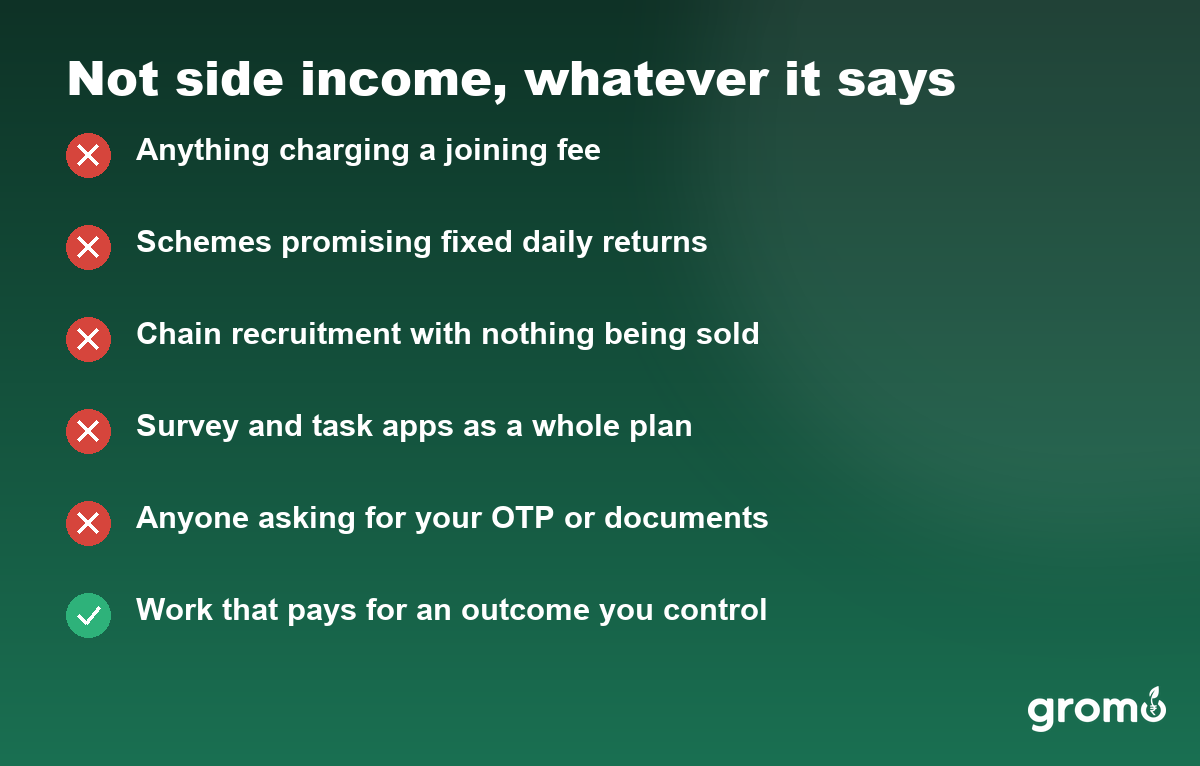
If it takes money from you before it pays you, it is not income.
What You Can Realistically Earn
Nobody can promise you a number, and anyone who does is selling something.
What can be said is how the shapes differ. Hourly work pays predictably and stops when you stop. Commission work pays nothing in a bad month and pays properly in a good one. Asset income is small but needs almost no attention once it is running.
The realistic plan for most people is one of each: something predictable for the base, something with a ceiling for the upside, and an asset quietly earning in the background. Starting all three at once is the most common way to end up with none of them.
Frequently Asked Questions
What is the best side income source in India?
The one that fits your time and skills, which for most people is either a skill they can freelance or a product they can distribute. Financial product distribution pays the most per hour spent because commission is paid per approved application rather than per hour worked.
Which side income sources need zero investment?
Financial product distribution, referrals, freelancing, tutoring, content creation, transcription and virtual assistant work all start with nothing but a phone or a laptop. Anything asking for a joining fee or a starter kit should be avoided.
Can I do a side income with a full-time job?
Usually yes, and many people do. Check your employment contract for exclusivity or outside-work clauses first, keep the work entirely separate from your employer's time and equipment, and declare the income when you file your taxes.
What are good side income sources for students?
Tutoring, freelance writing and design, campus social media work for local businesses, transcription, and financial product distribution once you turn 18. All of them need time rather than capital.
How quickly can a side income start paying?
Freelance and gig work pays within days of the first job. Commission-based work pays once an application is approved, usually within a week or two. Content-based routes such as blogging and YouTube take months before they pay anything at all.
Is side income taxable in India?
Yes. Income earned outside your salary is taxable, and it should be declared when you file your return. Keep a simple record of receipts and expenses from the day you start.
Conclusion
Twenty-five options is a menu, not a plan. The useful move is to pick one that matches your evenings and your existing skill, and give it a real month before judging it.
If your network already trusts you with money questions, financial product distribution has the highest ceiling of anything on this list and costs nothing to try. If you would rather sell a skill than a product, freelancing pays sooner and more predictably. Either way, the first month is about learning what works, and the second is where the money starts. The rest of the partner journey is laid out in this guide to earning from home as a GroMo Partner.
Disclaimer
Nothing here is a guarantee of income. Earnings from every source listed depend on effort, demand, skill and, for commission-based work, approvals by banks and NBFCs.
The ranges given for each source are typical market rates seen in India in 2026 and are offered as a guide only. They vary widely by city, experience, season and platform, and many people earn below the lower end while they are learning. Commissions are set by product partners and revised as campaigns change, so a figure that is accurate today can be different next month. Every GroMo commission quoted here is a maximum rather than a flat fee, is indicative only, and was read from the app on 12 August 2026 (GroMo product catalogue, retrieved 2026-08-12).
Everything above is general information, not financial, tax or legal advice. Side income is taxable in India and should be declared. Read your employment contract before taking up outside work, and check the live commission in the GroMo app before quoting anything to anyone. Third-party platforms named in this article are mentioned for reference only and have no association with GroMo.


