
How to Sell Credit Cards Through YouTube
How to sell credit cards through YouTube in India: the link-first business model, 6 video types that convert, scripting, SEO, disclosures and timelines.

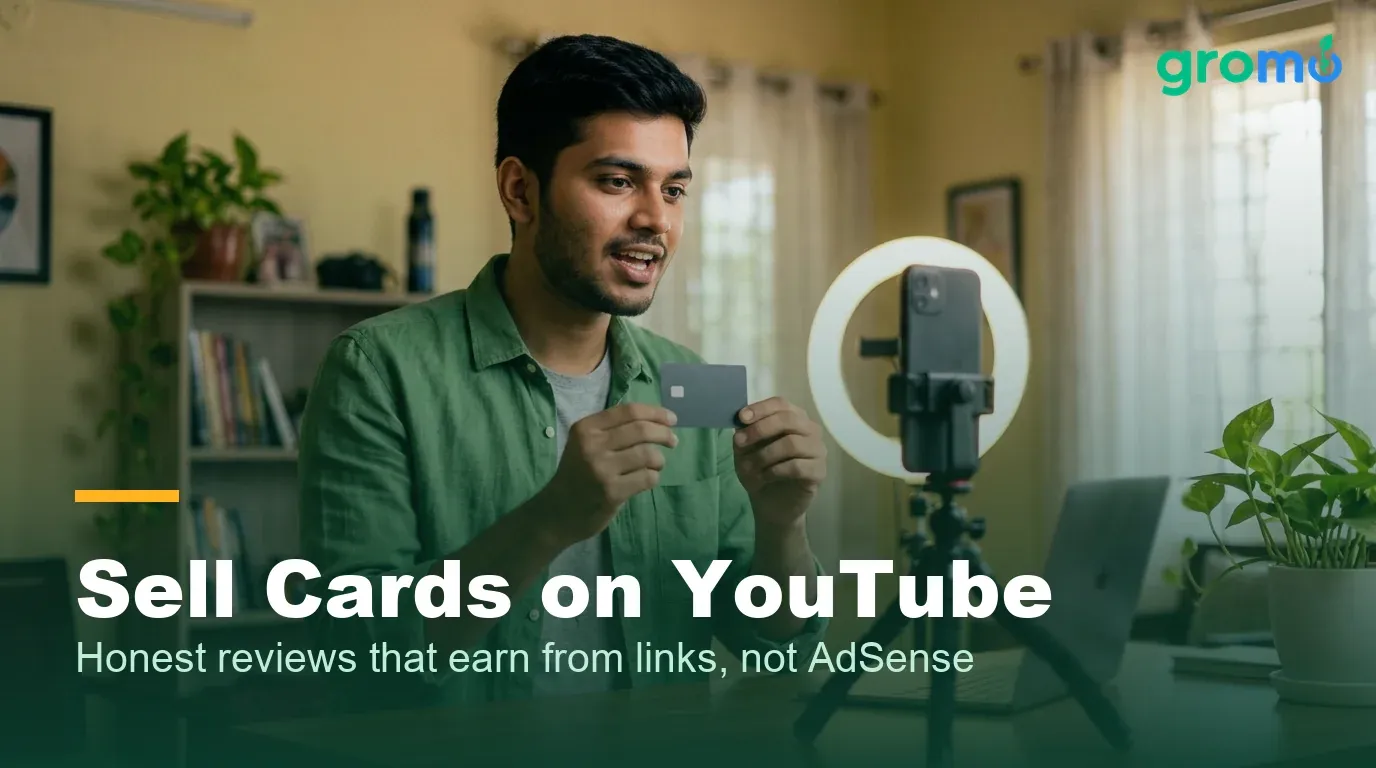
YouTube is the only channel where one honest card review can sell for you every single day for years, to strangers you will never meet. Finance content earns some of the highest watch value on the platform, and card-decision videos catch viewers at the exact moment they are ready to apply.
This guide covers how to sell credit cards through YouTube in India: the channel setup, the video types that convert, scripting and SEO, the disclosure rules, and the honest math of where the money really comes from.
Quick Facts
| Question | Answer |
|---|---|
| Investment needed | Zero; your phone camera and free editing apps are enough |
| Where the money is | Application links in your description, not AdSense |
| Time to first income | 1 to 3 months; link payouts start before monetisation ever does |
| Best language choice | Hindi and regional languages; less competition, higher trust |
| Videos per week | 1 to 2 long videos or 3 to 4 Shorts, consistently |
| The one rule | Honest reviews with fees stated; trust is the whole business |
The Real Business Model: Links, Not Ads
New creators chase monetisation, but AdSense pays creators in paise per view while an approved credit card through your link pays hundreds to a couple of thousand rupees. One video with 2,000 views and a 1 percent application rate can out-earn months of ad revenue.
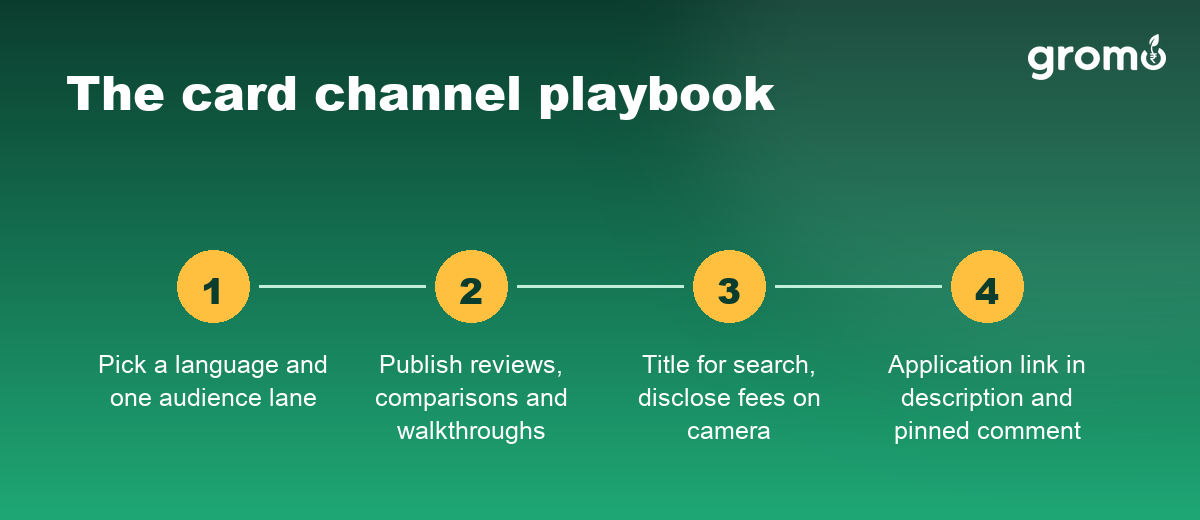
So the model is simple: make videos that help people choose a card, put your agent application link in the description and pinned comment, and say clearly in the video where the link is. The credit card agent registration on GroMo is free, and its digital links are built exactly for this.
Step 1: Choose Your Lane
- Language: Hindi or your regional language beats English for both competition and trust; a Tamil or Marathi card channel has far fewer rivals than an English one.
- Niche: pick one audience, first-card seekers, students turning 21, fuel-spending commuters, small business owners, and let every video serve them.
- Face or faceless: face-on-camera builds trust fastest, but clean screen-recording walkthroughs with your voice work too. Start with whichever you will actually publish consistently.
Step 2: The 6 Video Types That Convert
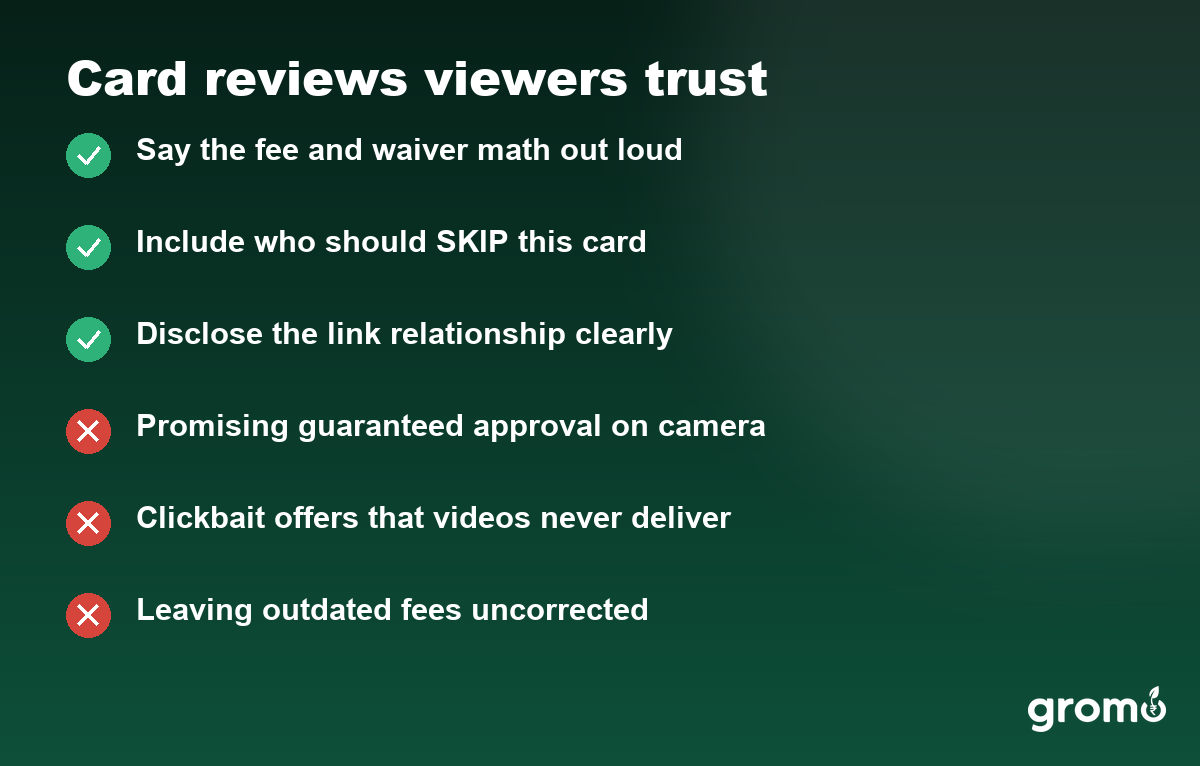
- Single-card review: fees, waiver math, rewards on real spending, who should skip it. The honest "who should NOT take this card" section is what makes viewers trust the link.
- Card vs card: comparison videos catch viewers at peak decision moment; end with a clear verdict by user type.
- Best cards for X: students, fuel, first card, no annual fee, one video per use case, refreshed yearly.
- Process walkthroughs: how to apply, documents needed, and how approval works step by step; screen-record the application flow.
- Mistake and myth videos: minimum-due traps, hidden charges, credit score myths; these earn subscribers who convert on later videos.
- Shorts: one fact per Short, the fee math, a waiver condition, a myth busted, feeding viewers to the full videos.
Step 3: Script Like a Helper, Not a Seller
The structure that holds viewers: hook with the viewer's question in the first ten seconds ("Rs 500 fee, but is this card actually free? Let me show the math"), deliver the promised answer with numbers on screen, give the honest verdict including who should skip, then one clear call to action: "Application link is in the description; it takes two minutes and I have explained every step."
Say fees out loud. Every rupee you disclose in the video is a doubt the viewer does not carry to the comment section, the same principle behind every response in credit card sales objections and how to handle them.
Step 4: YouTube SEO That Matters
- Title = the search phrase plus the year: card name, "review", "kaunsa card", "best card for students 2026".
- Thumbnail = one readable promise: the card image plus three big words, not ten small ones.
- Description: two honest summary lines, your application link high up, timestamps, and your disclosure line.
- Pinned comment: the link again, plus "ask your card questions here", and then actually answer them; comment replies are free content research and warm leads.
Step 5: Disclosure and Honesty Rules
- Disclose the relationship: a spoken line and a description line, "I earn a payout if you apply through my link, at no cost to you." It builds trust and follows advertising norms.
- Never promise approval or limits; approval is always the bank's decision, and saying so on camera makes you the credible one in the niche.
- Keep facts current: pin a correction or re-shoot when fees change; an outdated video that misleads costs subscribers permanently.
- No clickbait fraud: "free unlimited cashback" thumbnails convert once and destroy the channel's compounding.
The Honest Growth Timeline
| Phase | What happens |
|---|---|
| Weeks 1 to 4 | You publish 6 to 10 videos; views are small; search traffic begins on long-tail titles |
| Months 2 to 3 | First applications through links; comments become your content pipeline |
| Months 4 to 6 | One or two videos take off in search; income becomes monthly |
| Beyond | A library of ranked reviews converts daily; refreshing old videos beats chasing trends |
Convert viewers who comment into WhatsApp conversations for one-to-one guidance; the routine in selling credit cards through WhatsApp closes what YouTube opens, and a companion site built like selling credit cards through your own website catches the searchers who prefer reading.
How GroMo and GroMo Academy Fit
GroMo gives a card channel its inventory: 30+ credit cards from different banks, so every review and comparison you make has a matching application link, with each application tracked in the app and payouts on every approved and activated card.
Free GroMo Academy lessons supply the product depth your scripts are built from, fees, eligibility, and benefit math explained correctly, which is exactly what separates a trusted reviewer from a link spammer. Learn the products, publish consistently in your language, and the channel becomes a compounding asset for selling credit cards at a scale no offline routine can match.
FAQ: Sell Credit Cards Through YouTube
How do YouTubers earn money from credit cards?
Mainly through application links, not ads. A card reviewer places an agent application link in the description and pinned comment; when a viewer applies and the bank approves the card, the creator earns a payout of a few hundred to a couple of thousand rupees.
AdSense pays paise per view by comparison, which is why links are the real model.
Do I need monetisation to earn from a credit card channel?
No. Link payouts start from your first approved application, months before a channel qualifies for AdSense. A video with 2,000 targeted views and a 1 percent application rate can out-earn its ad revenue many times over, so new channels should optimise for helpful decision videos, not watch-time tricks.
What videos work best for selling credit cards on YouTube?
Six types: single-card reviews with honest fee math, card-vs-card comparisons, best-cards-for-X lists, application and approval walkthroughs, mistake and myth videos, and Shorts carrying one fact each. Reviews that include who should skip the card convert best, because honesty is what makes viewers use your link.
Which language is best for a credit card YouTube channel in India?
Hindi and regional languages usually beat English: competition is thinner, trust builds faster, and card decisions are personal enough that people prefer their own language. A Tamil, Marathi, or Bengali card channel can rank for searches national English channels ignore.
What must I disclose in credit card videos?
Say on camera and write in the description that you earn a payout when viewers apply through your link, at no extra cost to them. Never promise approval or limits, since approval is always the bank's decision, and correct or re-shoot videos when fees change.
These habits follow advertising norms and build the trust the whole channel monetises.
Disclaimer
This article is general guidance, not financial, legal, or tax advice. Card features, fees, eligibility criteria, approval decisions, and agent payouts are decided by the issuing banks and platforms, vary by product and profile, and change over time; no income or approval is guaranteed. Follow each platform's policies and applicable advertising disclosure norms when promoting financial products.
GroMo is a financial product distribution platform, not a bank or lender, and is available only to users aged 18 and above. Bank, card, platform, and brand names are trademarks of their respective owners.


