
Best Places to Find Credit Card Customers Offline
15 best places to find credit card customers offline, from IT parks and electronics stores to trade fairs, with simple ways to approach people at each spot.

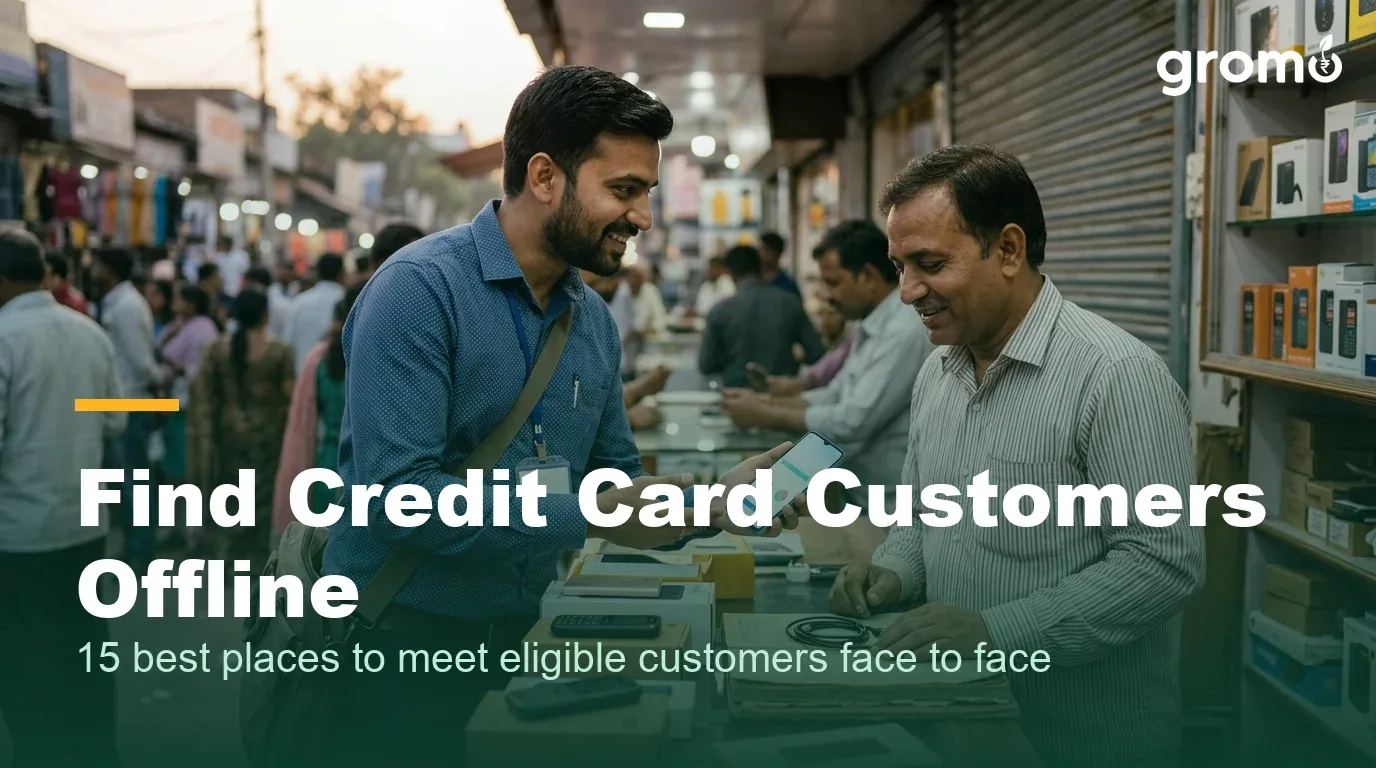
Online leads are useful, but the biggest advantage a credit card agent has offline is trust. When people meet you face to face, they ask questions freely, share their needs honestly, and say yes faster.
The real skill is knowing where to stand. This guide covers the 15 best places to find credit card customers offline, who you will meet at each place, and how to approach them without annoying anyone.
All 15 Places at a Glance
| # | Place | Who you meet | Cards that fit |
|---|---|---|---|
| 1 | Corporate offices and IT parks | Salaried professionals | Cashback, rewards, premium |
| 2 | Co-working spaces | Freelancers, startup teams | Business, cashback |
| 3 | Professional networks and associations | Doctors, CAs, traders | Premium, business |
| 4 | Shopping malls and retail stores | Active spenders | Shopping, cashback |
| 5 | Electronics and mobile stores | EMI buyers | EMI-friendly, cashback |
| 6 | Cafes and restaurants | Young urban spenders | Dining, cashback |
| 7 | Gyms and fitness centers | Health-focused professionals | Lifestyle, rewards |
| 8 | Car and bike dealerships | Vehicle buyers | Fuel, EMI-friendly |
| 9 | Real estate offices | Home buyers, investors | Premium, rewards |
| 10 | Travel agencies | Frequent travellers | Travel, lounge-benefit |
| 11 | Small businesses and local shops | Shop owners | Business, fuel |
| 12 | High-footfall market areas | Mixed daily crowd | Entry-level, cashback |
| 13 | College and coaching hubs | Final-year students, young earners | First-card, low-fee |
| 14 | Events, exhibitions and trade fairs | Buyers in spending mode | Category-matched cards |
| 15 | Existing customer referrals | Pre-trusted leads | Any matched card |
Offices and Work Hubs
1. Corporate Offices and IT Parks
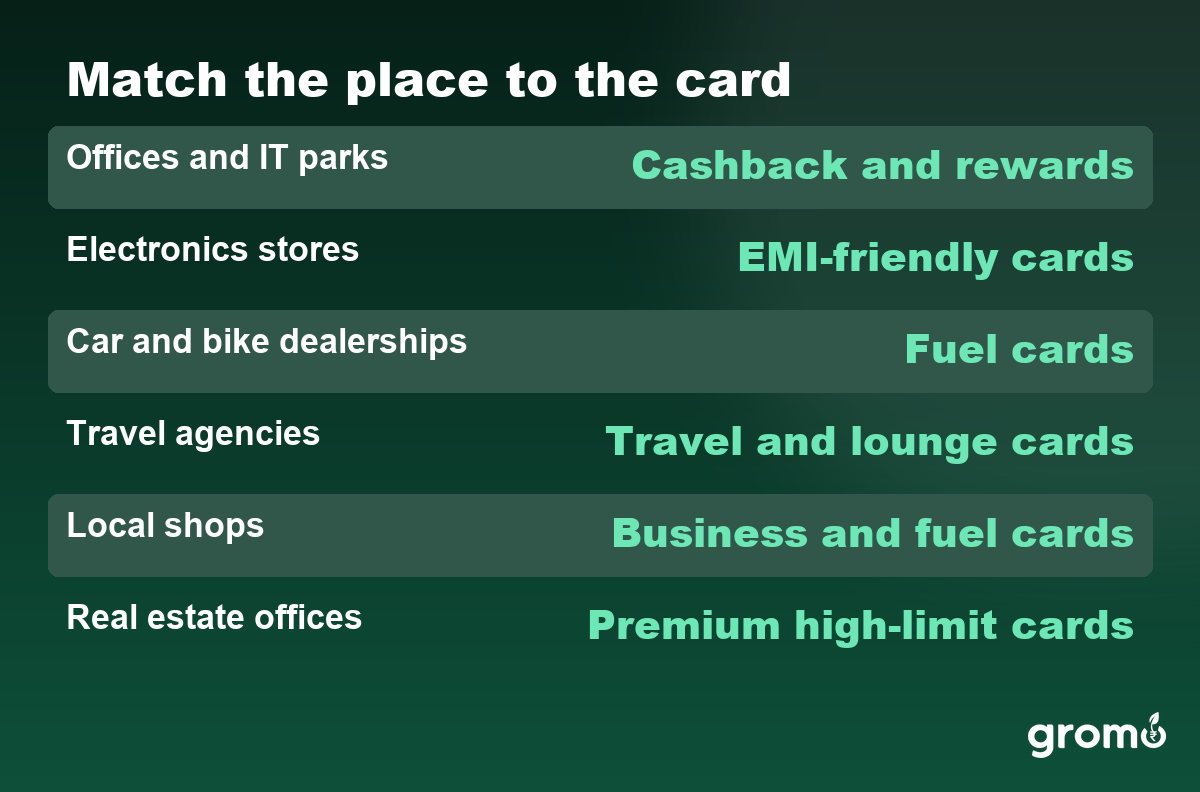
Salaried professionals are the easiest approvals in the market: stable income, salary slips ready, and clear spending habits. One office visit can put you in front of dozens of eligible customers at once.
How to approach: Start with people you know inside one company and ask them to introduce you during lunch hours. Canteens, tea stalls outside office gates, and cab pickup points work better than reception desks. Never enter office premises without permission.
2. Co-working Spaces
Co-working spaces are full of freelancers, consultants, and startup teams who spend on software, travel, and ads, and who often want to separate business spending from personal spending.
How to approach: Take a day pass and work from there instead of pitching cold. Conversations start naturally over coffee. Community managers also run member events where a short money-tips session can position you as the finance person everyone consults.
3. Professional Networks and Associations
Trade associations, doctors' and CA circles, business networking groups, and local merchant associations gather high-income professionals in one room. These customers qualify for premium cards with higher payouts.
How to approach: Join as a member or attend open meetings. Build relationships first; in these circles, one respected member's approval opens the entire group. Pushy selling in the first meeting closes it permanently.
Shopping and Lifestyle Spots
4. Shopping Malls and Retail Stores
People inside a mall are already in spending mode, so picking from the right types of credit cards for exactly what they are buying is an easy conversation. Banks themselves run mall kiosks because footfall converts.
How to approach: Tie up with store staff and billing counters rather than stopping strangers. A salesperson who mentions "this card gives 5 percent off here" at billing time sends you warm, ready leads. Always take the mall's or store's permission for any setup.
5. Electronics and Mobile Stores
Anyone buying a phone, TV, or laptop is thinking about EMIs and instant discounts, and most store offers work only on credit cards. That makes the customer's need immediate and real.
How to approach: Partner with the store owner. When a customer without a credit card misses a card-only discount, the staff can introduce you on the spot. The customer saves money on their next purchase, the store closes more sales, and you get a motivated lead.
6. Cafes and Restaurants
Regulars at cafes and restaurants are young, urban, and comfortable spending on lifestyle. Dining offers and buy-one-get-one deals on cards are benefits they instantly understand.
How to approach: Befriend owners and managers of places you already visit. A small table card or a word from the cashier about dining discounts starts conversations. Pitch patrons only through the owner's arrangement, never table to table on your own.
7. Gyms and Fitness Centers
Gym members pay recurring fees, buy supplements, and skew towards disciplined professionals with steady income. Fitness and lifestyle cards with membership or wellness offers fit them naturally.
How to approach: Your own gym is the best start; you already share a routine with the same people every day. Talk during rest time, not mid-workout, and let the trainer or front desk introduce you to members asking about EMI options on annual memberships.
Big-Purchase Locations
8. Car and Bike Dealerships
Vehicle buyers have just proven their income to a financer and are about to start spending on fuel, insurance, and accessories. Fuel cards that save money on every tank are an easy, logical pitch.
How to approach: Build a relationship with the sales executives. They meet every buyer at the exact moment card benefits matter and can refer customers to you after the vehicle deal closes. A small thank-you arrangement keeps referrals steady.
9. Real Estate Offices
Home buyers and property investors are high-income customers planning big expenses: furniture, appliances, interiors. Premium and high-limit reward cards suit them, and premium approvals usually mean higher payouts for you.
How to approach: Connect with brokers and builders' sales teams. Position the card as the smart way to handle post-purchase spending. Brokers refer clients happily when you also send them leads from your own network in return.
10. Travel Agencies
Anyone booking through a travel agency spends meaningfully on flights and hotels, exactly where travel cards give miles, lounge access, and booking discounts. The benefit is visible on the very next trip.
How to approach: Offer the agency a simple line for their customers: "This card would have saved you Rs 3,000 on this booking." The agent shares your contact, the traveller gets real savings, and the agency looks smarter for suggesting it.
Local Markets and Communities
11. Small Businesses and Local Shops
Shop owners are underserved and valuable: they buy stock regularly, pay suppliers, and fuel delivery vehicles. Business and fuel cards give them credit periods and savings they rarely know exist.
How to approach: Visit during quiet hours, not peak billing time. Lead with one concrete number: "A 45-day credit period on stock purchases means your money stays with you longer." One convinced shopkeeper introduces you to the whole market line.
12. High-Footfall Market Areas
Weekly markets, main bazaars, and busy commercial streets give you volume: hundreds of mixed-profile people in one evening. Entry-level and cashback cards fit this crowd best.
How to approach: Volume needs filtering, so ask two quick questions early: are they salaried or running a business, and roughly what do they spend monthly. Spend time only with people who clear basic eligibility, and collect numbers for follow-up rather than forcing decisions on the street.
13. College and Coaching Hubs
Areas around colleges and coaching centers are full of final-year students about to join jobs, young tutors, and working professionals upgrading their skills. First-card customers here can stay with you for years of upgrades and referrals.
How to approach: Focus only on those who are eligible: age 18 or above with an income source, or new joiners with offer letters. Pitch low-fee first cards that build credit history. Never push cards on students with no income; a rejected or misused first card helps nobody.
Network-Based Sources
14. Events, Exhibitions and Trade Fairs
Property expos, auto shows, wedding exhibitions, and trade fairs collect thousands of people who came specifically to spend on one category. Matching the card to the event does half your selling.
How to approach: At an auto expo, talk fuel savings; at a wedding exhibition, talk EMI and reward points on big purchases. A visitor pass and good conversations work; a small stall works even better if the organiser permits it. Collect contacts and follow up within 24 hours while interest is fresh.
15. Existing Customer Referrals
The best offline source is not a place at all. A happy customer's reference carries trust you cannot create with a stranger, so referred leads convert several times better than cold ones and cost you nothing.
How to approach: After every successful approval, ask one question: "Is there anyone in your family or office who could use a card like this?" Two names per happy customer keeps your pipeline full permanently, and it compounds as those referrals refer further.
Ground Rules for Offline Selling
Wherever you go, the same rules protect your reputation (our full guide on how to sell credit cards covers the complete sales method):
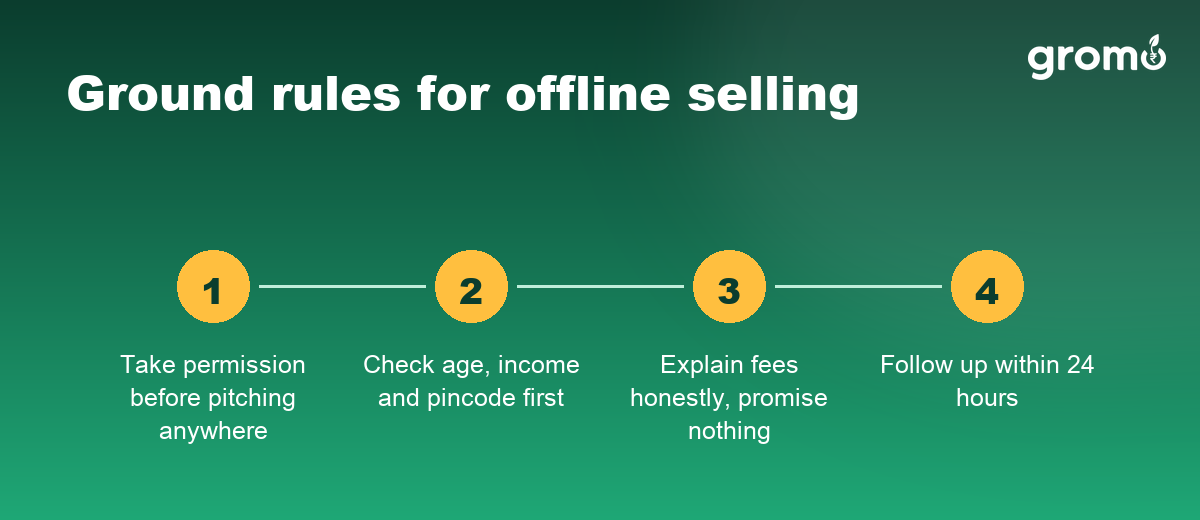
- Take permission before setting up or pitching inside any office, store, mall, campus, or event.
- Check basic eligibility (age, income, pincode) before collecting an application.
- Explain fees and charges honestly; never promise approval or a credit limit.
- Handle documents carefully: collect only what the application needs, submit only through official channels, and take the customer's consent.
- Follow up within 24 hours of every conversation; offline trust fades fast without it.
How GroMo Fits Into Offline Selling
Offline selling works best when the paperwork is digital. With the GroMo app you can stand in any of these 15 places and complete the whole process on your phone: compare 30+ credit cards from different banks, check eligibility on the spot, and share a digital application link so the customer applies in minutes without physical forms.
You can register as a credit card agent on GroMo for free, you earn a payout on every approved and activated card, and the app tracks each lead so no follow-up is missed.
FAQ: Finding Credit Card Customers Offline
Where can I find credit card customers offline?
The best offline places are corporate offices and IT parks, shopping malls, electronics stores, co-working spaces, car and bike dealerships, travel agencies, local shops, high-footfall markets, and events like trade fairs and property expos. Referrals from existing happy customers convert best of all because the trust is already built. For online methods too, see our guide on how to get credit card leads.
Which offline place gives the fastest results for a new agent?
Electronics and mobile stores usually give the fastest conversions because the customer has an immediate reason: card-only discounts and EMI offers on the purchase they are making right now. Corporate offices come next because salaried professionals clear eligibility easily and approvals are quick.
Do I need permission to sell credit cards in malls, offices, or events?
Yes. Always take permission from the mall management, office administration, store owner, or event organiser before setting up or pitching on their premises.
Selling without permission can get you removed, damages your reputation, and can create problems for your agent code. Tie-ups with owners and staff work far better than cold pitching anyway.
How do I approach a stranger about a credit card without annoying them?
Lead with a benefit connected to what they are already doing, like a discount on the purchase in their hand or savings on fuel for the vehicle they are buying. Ask two quick eligibility questions, share your contact, and let them decide with a follow-up the next day.
Pressure on the spot loses both the sale and the referral.
Can I handle the credit card application digitally while meeting customers offline?
Yes, and it is the best way to work. Through a platform like GroMo you can compare 30+ cards from different banks on your phone, check eligibility on the spot, and share a digital application link so the customer applies in minutes. No physical forms, and every lead is tracked in the app for follow-up.
Disclaimer
This article is general guidance for credit card agents, not financial or legal advice. Always follow local rules and take the venue's permission before any offline selling activity.
Card features, fees, eligibility criteria, and agent payouts are decided by the issuing banks and platforms, vary by product and profile, and change over time; check the official app or bank page for current terms. No income is guaranteed, and card approval is always the bank's decision.
GroMo is a financial product distribution platform, not a bank or lender, and is available only to users aged 18 and above. Bank, card, and brand names are trademarks of their respective owners.


