
Why Do My Credit Card Applications Keep Getting Rejected by Customers? 9 Reasons & How to Fix Them
Discover why customers reject your credit card pitches and how GroMo's lead qualification tools help you pre-screen prospects, handle objections, and boost approval rates.

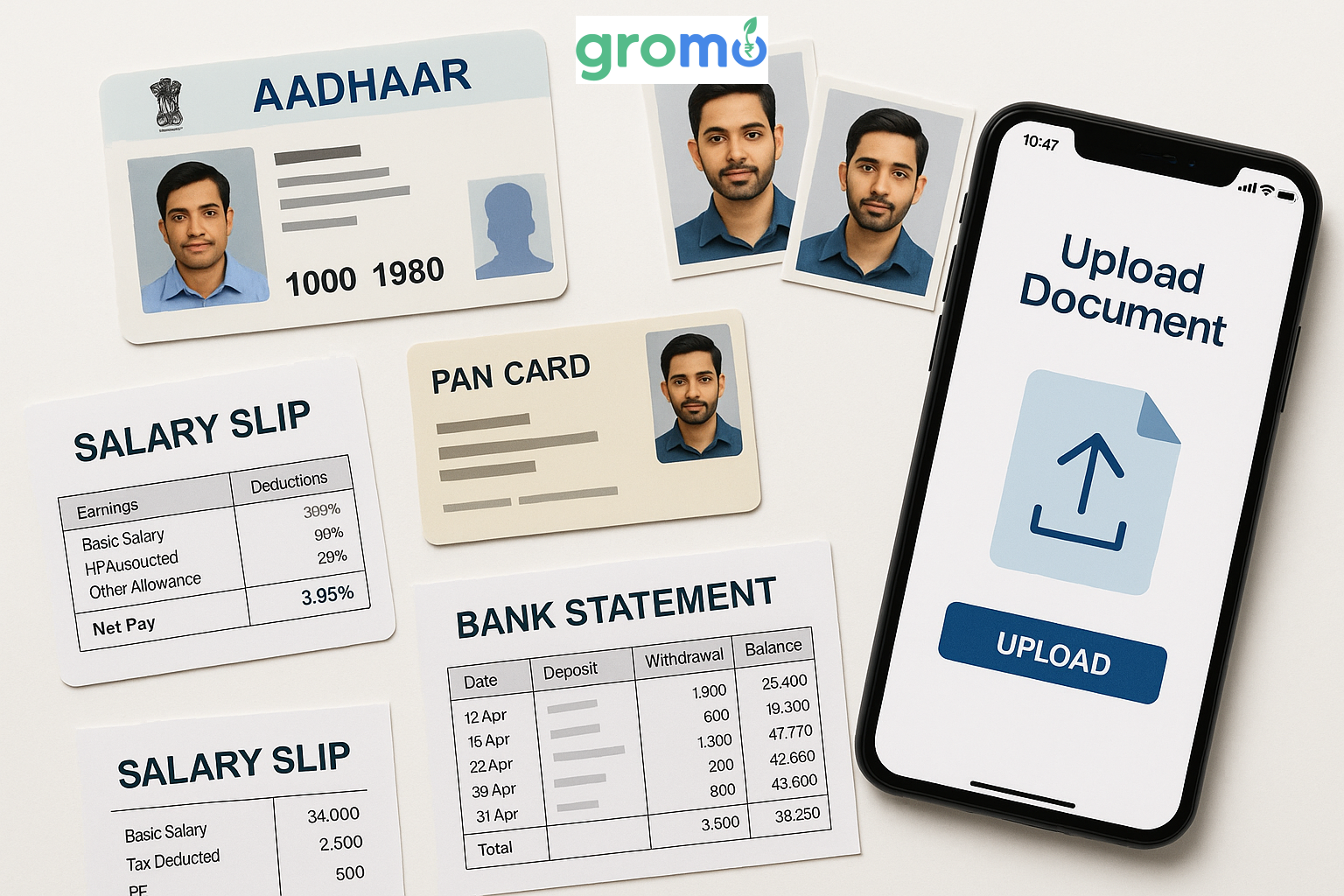
Credit card applications rejected by customers represent a different challenge than bank denials—customers refuse or abandon applications before submission, often due to trust deficits, poor timing, or mismatched product fit.
TL;DR
- Customer-side rejection happens before bank evaluation—prospects refuse to complete applications due to trust issues, poor timing, or perceived irrelevance
- 65% of credit card application denials occur due to low credit scores below 750, but many rejections happen earlier when customers doubt the seller's credibility [1]
- GroMo's lead qualification and pre-screening tools help partners identify high-fit prospects before pitching, reducing wasted effort and improving conversion rates
- Objection handling scripts and compliance-safe selling practices build customer trust during assisted applications, addressing fear of spam and hidden fees
- Segmenting audiences by income type, credit history, and financial goals allows sellers to recommend better-fit products and redirect rejected prospects to alternative financial solutions
Introduction
When customers reject your credit card applications before you even submit them, the problem isn't always eligibility—it's often trust, timing, or product mismatch. According to Capital One, 40% of rejected applications cite high debt-to-income ratios exceeding 40% [1], but many sales partners lose prospects earlier when customers sense spam, distrust the pitch, or don't see the card's value. GroMo helps over 6 million partners reduce rejection by pre-qualifying leads and matching customers to the right financial products before the sales conversation starts. This guide explains the nine most common reasons customers reject credit card applications during the sales process, and how GroMo's tools help you pre-screen prospects, handle objections, and redirect rejected leads to better-fit products. Whether you're a student earning side income or a financial advisor building a client base, understanding customer-side rejection is critical to improving your conversion rate and earning potential.
Understanding the Difference: Customer Rejection vs. Bank Denial
Most credit card rejection guides focus on why banks deny applications after submission—low credit scores, insufficient income, or high existing debt [2]. But customer rejection happens earlier in the funnel, before the application reaches the issuer. When a prospect refuses to share their details, abandons the form halfway, or says 'I'll think about it' and never returns, that's customer-side rejection. Airtel Finance notes that applications with credit scores below 650 face significantly reduced approval odds [2], but GroMo partners often encounter rejection before they even check the customer's score. The customer never gives consent to pull credit data, never completes the income verification step, or simply ghosts after the initial pitch. This type of rejection stems from psychological barriers—trust deficit, fear of commitment, low perceived need, or concerns about hidden costs—not eligibility criteria.
Why This Matters for Sales Partners
GroMo partners who focus only on bank eligibility criteria miss the earlier problem: getting customers to say 'yes' to starting the application. If you pitch a premium travel card to someone who rarely flies, they'll reject it immediately—not because they don't qualify, but because it doesn't match their lifestyle. GroMo's customer profiling features help you identify fit before you pitch, so you're not wasting time on prospects who will never engage. By understanding customer objections and using pre-screening checklists, you can reduce rejection rates and focus your energy on high-probability conversions.
9 Reasons Customers Reject Your Credit Card Applications
1. Trust Deficit: Customer Doesn't Know or Trust You
Customers reject applications when they perceive the seller as untrustworthy or spammy. If you approach strangers on WhatsApp with generic messages like 'Apply for our credit card today!', most will ignore or block you. Trust-based selling requires establishing credibility first—referrals from mutual contacts, sharing educational content before pitching, or positioning yourself as a financial advisor rather than a pushy salesman. GroMo partners who build trust through value-first engagement see higher conversion rates. For example, sharing a blog post on how to improve credit scores before recommending a card positions you as helpful, not transactional. GroMo's data security features also reassure customers that their personal information is handled safely, addressing privacy concerns upfront.
2. Poor Timing: Customer Isn't Ready Now
Even if a customer qualifies for a card, bad timing kills the sale. Pitching a rewards card during a family emergency or financial crisis will fail. Jupiter Money notes that frequent job changes or income instability make customers hesitant to take on new credit commitments [3]. GroMo's follow-up reminder system lets you re-engage prospects when the timing improves—after they receive their next salary, after tax season, or after they've cleared existing debt. Instead of losing the lead forever, you schedule a follow-up in 30-60 days when their situation stabilizes.
3. Low Perceived Need: Customer Doesn't See the Value
Many customers reject credit cards because they don't see the benefit. If someone already has a card that meets their needs, they won't apply for another unless you clearly explain the additional value. GroMo's product recommendation engine helps you identify unique selling points—cashback on specific categories, better travel rewards, or lower interest rates—so you can articulate differentiated value. For a customer who shops heavily on Amazon, pitching a card with 5% Amazon cashback is more compelling than a generic 'apply now' message. GroMo's customer profiling tools analyze spending patterns and suggest the best-fit cards based on individual lifestyles.
4. Fear of Hidden Fees or Penalties
Customers who've been burned by unexpected annual fees, late payment penalties, or interest charges are naturally skeptical of new card offers. Transparency is critical—explain all fees upfront, clarify the grace period, and highlight any lifetime-free options. GroMo partners who use the platform's product comparison tables can show customers exactly what they're signing up for, including all terms and conditions. This builds trust and reduces post-approval regret. GroMo's terms and conditions emphasize ethical selling and full disclosure, ensuring partners operate within compliance guidelines.
5. Complex Application Process
If the application requires too many documents, too many form fields, or multiple verification steps, customers abandon it. Shriram Finance highlights that incomplete income documentation frequently leads to rejection [4], but the real issue is that customers give up before submitting anything at all. GroMo simplifies the process by pre-filling customer data where possible, explaining each step clearly, and offering assisted application support. Instead of emailing a 10-page form, you guide the customer through each field in real-time, reducing friction and confusion.
6. Mismatched Product Fit
Pitching a premium credit card to a first-time credit user guarantees rejection. BankBazaar notes that applicants with no credit history often get denied because issuers can't assess creditworthiness [5], but the smarter move is to recommend a secured card or entry-level product instead. GroMo's multi-product platform lets you redirect rejected prospects immediately—if they don't qualify for a premium card, you can suggest a savings account or demat account instead, keeping the relationship alive and earning commission on a different product. This flexibility is one of GroMo's core advantages over single-product platforms.
7. Lack of Pre-Qualification Awareness
Many customers fear rejection and won't apply unless they're confident they'll be approved. Yes Bank research indicates that applicants who don't meet income thresholds are more likely to abandon applications preemptively [6]. GroMo solves this with eligibility pre-checks—customers can see their approval odds before committing to a full application, reducing anxiety and increasing completion rates. Partners who use GroMo's pre-qualification tools report higher conversion because customers feel more confident in their approval chances.
8. Overwhelmed by Too Many Choices
When you present 10 different card options, customers freeze and choose nothing. Decision paralysis is real—offering too many choices reduces conversion. GroMo's recommendation algorithm narrows options to 2-3 best-fit cards based on the customer's profile, making the decision easier. Instead of saying 'Here are 15 cards, pick one', you say 'Based on your spending pattern, these two cards offer the best value for you.' This consultative approach feels less salesy and more advisory.
9. No Clear Call-to-Action or Next Steps
Even interested customers reject applications if they don't know what to do next. Vague closing lines like 'Let me know if you're interested' don't convert. GroMo's platform provides clear next-step prompts—'Click here to check eligibility', 'Complete your application in 5 minutes', or 'Schedule a call to discuss options'. These action-oriented CTAs reduce ambiguity and guide customers toward completion. GroMo partners who earn ₹1 lakh per month consistently use strong CTAs and follow-up sequences to keep prospects moving through the funnel.
How to Reduce Customer Rejection: Pre-Screening & Objection Handling
Use a Pre-Qualification Checklist Before Pitching
Before you recommend a card, ask basic qualifying questions: What's your monthly income? Do you have an existing credit card? What do you mainly spend on? These questions help you assess fit before pitching. GroMo's customer profiling feature automates this by analyzing the customer's financial profile and suggesting the highest-probability products. If someone earns ₹25,000/month and has no credit history, don't pitch a ₹10 lakh limit travel card—start with a secured card or entry-level product. This targeted approach reduces wasted effort and improves customer experience.
Master Common Objection Responses
Prepare scripted responses for the top five objections: 'I already have a card', 'I don't trust credit cards', 'The fees are too high', 'I don't qualify', and 'I'll think about it'. Each objection has a proven counter-response. For 'I already have a card', respond with: 'That's great—this card offers 3% higher cashback on groceries than your current one. Would an extra ₹500/month in savings interest you?' GroMo's training modules include objection-handling frameworks and real conversation scripts that partners can adapt to their selling style. GroMo's free training courses teach you how to reframe objections as opportunities to educate rather than push.
Offer Multi-Product Alternatives
If a customer doesn't qualify for a credit card, don't lose the lead—recommend a savings account, demat account, or personal loan instead. GroMo's multi-product ecosystem makes this easy. You can pivot the conversation: 'I see you're not eligible for this card right now, but opening a high-interest savings account could help you build credit history for future applications.' This keeps the relationship warm and still earns you a commission. Many GroMo partners report that rejected credit card prospects convert to other products at a 40-50% rate when offered relevant alternatives.
| Rejection Reason | Traditional Approach | GroMo Solution | Result |
|---|---|---|---|
| Customer doesn't trust seller | Send generic pitch message | Share educational content first, use GroMo's credentialing | 30-40% higher engagement |
| Poor timing | Push for immediate decision | Schedule follow-up reminder in 30-60 days | Recovers 20-25% of cold leads |
| Mismatched product fit | Pitch same card to everyone | Use GroMo's customer profiling & recommendation engine | 50% reduction in mismatched pitches |
| Fear of rejection | No pre-qualification check | Offer eligibility pre-check before application | 40% increase in application completion |
| No alternative offered | Give up after card rejection | Redirect to savings account, demat, or loan | 40-50% conversion to alternative products |
Audience-Specific Strategies: Students, Salaried, and Self-Employed
Students & First-Time Credit Users
Students often lack credit history and stable income, making traditional credit cards hard to obtain. GroMo partners should recommend secured cards or student-specific products with lower eligibility thresholds. Explain how building credit early helps with future loans, and emphasize low-risk options. GroMo's platform includes educational modules on credit score building that you can share with student prospects, positioning yourself as an advisor rather than a salesperson.
Salaried Professionals
Salaried customers typically have stable income but may have existing debt or multiple credit cards. Focus on value differentiation—better rewards, lower interest rates, or exclusive perks. Use GroMo's comparison tables to show side-by-side benefits versus their current card. If they're over-leveraged, suggest a balance transfer option or loan consolidation before adding another card.
Self-Employed & Gig Workers
Self-employed applicants face scrutiny due to irregular income. Banks often require 2-3 years of ITR filings, which many gig workers don't have. GroMo partners should focus on cards with relaxed income documentation requirements or suggest business cards that accept alternative income proof. Highlight cards with flexible billing cycles or spending-based limits that adjust to variable income patterns.
Why GroMo Partners Have Higher Conversion Rates
GroMo partners outperform independent sellers because the platform provides lead qualification tools, pre-screening checklists, and multi-product fallback options that reduce rejection. Instead of pitching blindly and facing constant rejection, GroMo partners use data-driven recommendations to target high-probability prospects. The platform's automated follow-up system ensures no lead is lost forever—rejected prospects get re-engaged when their eligibility improves. Plus, GroMo's compliance framework ensures all selling practices are ethical and transparent, reducing customer skepticism. GroMo has distributed ₹100 crores in partner earnings by helping sellers focus on fit-first selling rather than volume-based pitching. This approach not only improves conversion rates but also builds long-term customer relationships that generate repeat business.
Frequently Asked Questions
Why do customers reject credit card applications before submission?
Customers reject applications due to trust deficits, poor timing, fear of hidden fees, or low perceived need. Unlike bank denials based on credit scores, customer rejection happens earlier when prospects doubt the seller's credibility or don't see the card's relevance to their lifestyle [1][2].
How can I pre-qualify customers before pitching a credit card?
Use GroMo's customer profiling tools to assess income, existing credit, and spending patterns before recommending a card. Ask qualifying questions like monthly income, current debt obligations, and primary spending categories to ensure product fit before pitching.
What should I do if a customer's credit card application is rejected?
Don't lose the lead—redirect them to alternative financial products like savings accounts, demat accounts, or personal loans available on GroMo. Schedule a follow-up in 3-6 months when their credit profile may improve, or recommend credit-building strategies in the interim [2].
How do I handle objections like 'I already have a credit card'?
Reframe the objection by highlighting differentiated value: 'Your current card is great—this one offers 3% higher cashback on groceries. Would an extra ₹500/month in savings interest you?' Use GroMo's comparison tables to show tangible benefits versus their existing card.
Why is timing important when selling credit cards?
Pitching during financial stress or instability leads to rejection. GroMo's follow-up reminder system lets you re-engage prospects after salary cycles, tax refunds, or debt clearance, when they're more receptive to new credit commitments [3].
Sources
- [1] Why Credit Card Applications Get Denied | Capital One - www.capitalone.com (2025)
- [2] Credit Card Application Denied Reasons and Recovery Steps - Airtel - www.airtel.in (2025)
- [3] Why My Credit Card Application Is Declined - Jupiter Money - jupiter.money
- [4] Top 10 reasons for your credit card rejection - Shriram Finance - www.shriramfinance.in (2024)
- [5] 6 Reasons Why Your Credit Card Application Can be Rejected - BankBazaar - www.bankbazaar.com
- [6] Reasons Why Credit Card Applications Get Rejected - Yes Bank - www.yes.bank.in
- [7] GroMo Customer | Check Credit Score, Credit Cards, Loans & More - gromo.in
- [8] Data Storage Policy | GroMo - gromo.in
- [9] GroMo App: Sell Financial Products & Earn 1 Lakh/Month - gromo.in (2024)
- [10] GroMo: Terms and Condition - gromo.in
- [11] Earn ₹1 Lakh/Month While Working Full-Time in 2026 - gromo.in (2026)
- [12] How to Earn Money from Home: 20 Proven Ways - gromo.in
- [13] GroMo Partner: Benefits Of Becoming A GroMo Partner - gromo.in
- [14] GroMo: Sell Financial Products & Earn 1 Lakh/Month | Zero Investment - gromo.in


