
Common Mistakes New Credit Card Agents Make While Selling Cards
20 common mistakes new credit card agents make while selling cards, why each one costs you approvals and payouts, and simple ways to avoid them.

Most new credit card agents do not fail because selling cards is hard. They fail because of small, repeated mistakes: pitching the wrong card, chasing the wrong customer, or forgetting to follow up.
The good news is that every one of these mistakes has a simple fix. This guide covers the 20 most common credit card agent mistakes to avoid, why each one costs you money, and exactly what to do instead.
All 20 Mistakes at a Glance
| # | Mistake | Quick fix |
|---|---|---|
| 1 | Choosing the wrong credit card to sell | Match the card to the customer, not to your habit |
| 2 | Targeting the wrong customer | Pitch only people who can actually get approved |
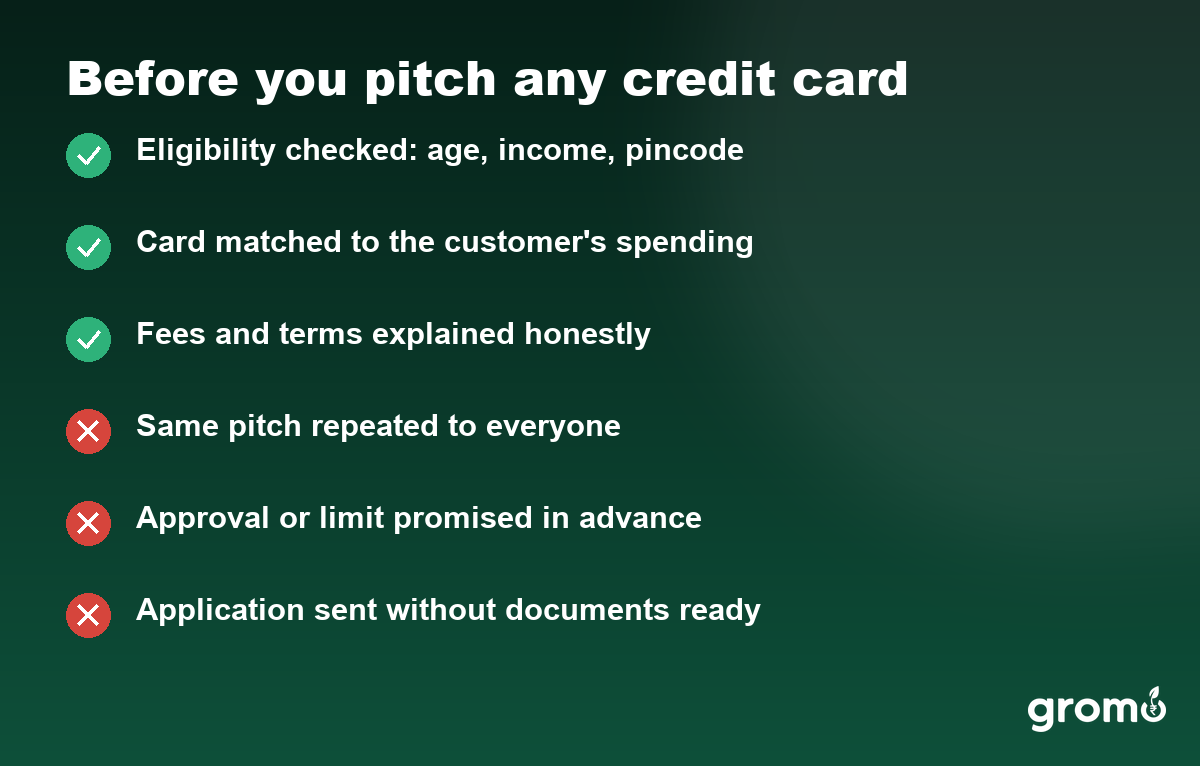
| 3 | Not checking customer eligibility | Ask income, age, and city before you pitch |
| 4 | Ignoring customer credit profile | Ask about existing cards, loans, and score first |
| 5 | Not comparing bank offers and benefits | Know 4 to 5 cards well and compare openly |
| 6 | Focusing only on credit card features | Sell the benefit for that person's life |
| 7 | Making false or misleading promises | Say only what the bank's page says |
| 8 | Using the same sales pitch for everyone | Change the pitch by profile and need |
| 9 | Not building customer trust | Educate first, sell second |
| 10 | Poor lead follow-up | Follow up within 24 hours, then on a schedule |
| 11 | Ignoring rejected applications | Find the reason and offer a better-fit card |
| 12 | Not tracking leads and applications | Keep one sheet or app for every lead's status |
| 13 | Depending only on friends and family | Build online and referral lead sources early |
| 14 | Ignoring referrals and repeat opportunities | Ask every happy customer for 2 names |
| 15 | Not following up after card approval | Help with activation and first use |
| 16 | Focusing on applications instead of approved cards | Chase approvals, because that is what pays |
| 17 | Not understanding bank policies | Learn each bank's rules before pitching its card |
| 18 | Poor documentation guidance | Tell customers the exact documents upfront |
| 19 | Ignoring data privacy and compliance | Never misuse or share customer data |
| 20 | Giving up too early | Give the work 3 to 6 months of steady effort |
Mistakes in Choosing Cards and Customers
1. Choosing the Wrong Credit Card to Sell
Many new agents pick one card they like and push it to everyone. A premium travel card is a poor fit for a customer who never flies, and a fuel card is wasted on someone without a vehicle. The customer feels the mismatch and loses interest.
How to avoid it: Learn 4 to 5 different types of credit cards: shopping, fuel, travel, cashback, and lifetime free. Ask what the customer spends on every month, then suggest the card that fits that spending.
2. Targeting the Wrong Customer
Pitching a card to someone with no income proof, someone below the bank's age limit, or someone who does not want credit at all wastes your time and theirs. Too many such pitches also hurt your confidence.
How to avoid it: Build a simple picture of your ideal customer for each card: salaried or self-employed, rough income range, and city type. Spend your energy only on people who fit it.
3. Not Checking Customer Eligibility
Sending an application without checking basic eligibility is the fastest route to rejection. Every rejection wastes your effort, disappoints the customer, and can leave a hard inquiry on their credit report.
How to avoid it: Before filling any form, confirm age, monthly income, employment type, and serviceable pincode against the card's criteria. Two minutes of checking saves days of wasted follow-up.
4. Ignoring Customer Credit Profile
A customer with a low credit score, recent loan defaults, or five existing cards will likely be rejected for a premium card no matter how good your pitch is. Agents who ignore this keep collecting rejections.
How to avoid it: Politely ask about existing cards, running loans, and whether they know their credit score. Suggest entry-level or secured cards for weaker profiles and premium cards only for strong ones.
5. Not Comparing Bank Offers and Benefits
If you know only one bank's card, you lose every customer that card does not suit. Customers today compare options online, and an agent who cannot compare looks less informed than the customer.
How to avoid it: Keep a simple comparison of the cards you sell: joining fee, annual fee, key benefit, and who it suits. When you compare openly, customers trust your final suggestion much more.
Mistakes in the Sales Pitch
6. Focusing Only on Credit Card Features
Reciting "5x reward points, 1 percent fuel surcharge waiver, 4 lounge visits" means nothing to most customers. Features do not sell; benefits do.
How to avoid it: Translate every feature into that person's life: "You fill fuel for Rs 4,000 a month, so this card saves you about Rs 480 a year, and the airport lounge is free when you travel for work."
7. Making False or Misleading Promises
Promising guaranteed approval, "lifetime free" for a card that has conditions, or a credit limit you cannot control is the single most damaging mistake. One false promise can end the relationship, invite complaints, and even get your agent code blocked.
How to avoid it: Say only what the bank's official page says. If you are not sure, say "let me check and confirm". Approval and limit are always the bank's decision, and honest agents say so upfront.
8. Using the Same Sales Pitch for Everyone
A college-passout, a shop owner, and a senior manager care about completely different things, yet many agents deliver one memorised script to all three.
How to avoid it: Prepare 3 short pitch variations: first-card customers (build credit history, low fee), regular spenders (cashback and rewards), and premium customers (lounge, golf, concierge). Pick the pitch after you understand the person.
9. Not Building Customer Trust
Rushing to the application link in the first two minutes makes you look like a commission chaser. Customers share personal and financial details only with agents they trust.
How to avoid it: Educate before you sell. Explain fees honestly, including the annual fee and interest on late payment. Answer doubts patiently. A customer who trusts you buys today and refers others tomorrow.
Mistakes in Leads and Follow-Up
10. Poor Lead Follow-Up
Most customers do not say yes in the first conversation. Agents who never call back lose leads that only needed one more nudge, and most new agents give up after a single attempt.
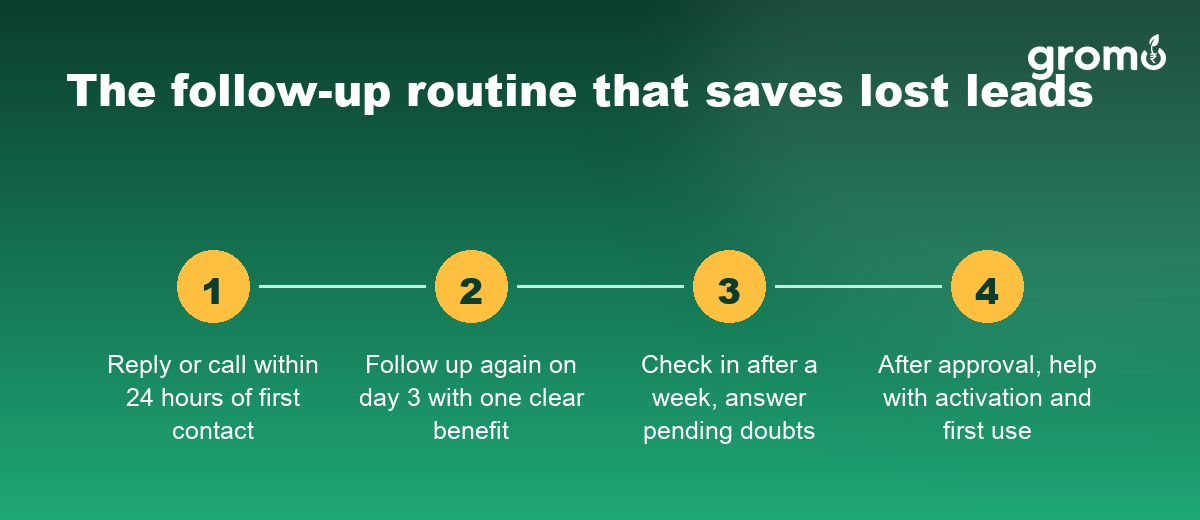
How to avoid it: Follow up within 24 hours of the first conversation, then again after 3 days and after a week. Keep each follow-up short and useful: a benefit they cared about, an offer update, or an answer to their doubt.
11. Ignoring Rejected Applications
A rejection is not a dead lead. The customer still wants a card; this particular card said no. Agents who drop rejected customers throw away warm leads they already worked hard to create.
How to avoid it: Find out the likely reason: income below criteria, low score, or unserviceable pincode. Then suggest a better-fit card from another bank, or tell them how to improve their credit score and follow up after a few months.
12. Not Tracking Leads and Applications
Working from memory means forgotten follow-ups, duplicate calls, and missed payouts. You cannot improve what you do not track.
How to avoid it: Keep one tracker with name, contact, card pitched, date, status (interested, applied, approved, rejected), and next follow-up date. A notebook, a spreadsheet, or your platform's dashboard all work; using one consistently is what matters.
13. Depending Only on Friends and Family for Leads
Your personal circle runs out in the first month or two. Agents who never build other lead sources see income spike once and then fall to zero.
How to avoid it: Treat friends and family as your starting practice, not your business model. Build steady sources in parallel: WhatsApp status and groups, local shopkeepers, office contacts, society groups, and referrals from every happy customer.
14. Ignoring Referrals and Repeat Opportunities
A satisfied customer is your cheapest source of new leads, yet most agents never ask. The same customer may also need an upgrade or a second card next year.
How to avoid it: After every successful approval, ask one simple question: "Is there anyone in your family or office who could use a card like this?" Two names per happy customer keeps your pipeline full without spending anything.
15. Not Following Up After Card Approval
Many agents vanish the moment the card is approved. The customer then struggles with activation or never uses the card, and some payouts depend on the card being activated and used.
How to avoid it: Call after delivery, help with activation, and explain the first-use offer and the billing date. This five-minute call protects your payout and turns the customer into a referral source.
Mistakes in Process and Compliance
16. Focusing on Applications Instead of Approved Cards
Fifty careless applications with five approvals earn less than fifteen careful applications with ten approvals. Chasing application counts also floods banks with poor files, which hurts your standing.
How to avoid it: Measure yourself on approvals, because payouts come from approved and activated cards, not submitted forms. Pre-check eligibility and documents so most files you send actually convert.
17. Not Understanding Bank Policies
Every bank has its own rules on minimum income, age, serviceable pincodes, existing-customer offers, and how many cards a person can hold. Agents who do not know these rules make promises the bank will not keep.
How to avoid it: Before you pitch any card, read its eligibility criteria, fee page, and current offer terms. When a bank updates a policy, update your pitch the same day.
18. Poor Documentation Guidance
Applications stall for days because the customer did not know they needed an income proof, or uploaded a blurred PAN photo. Every stalled file cools the lead.
How to avoid it: Tell every customer the exact list upfront: usually PAN, Aadhaar, a photo, and income proof such as salary slips or bank statements. Check clarity of uploads before submitting, and the file moves in one attempt.
19. Ignoring Data Privacy and Compliance
You handle PAN numbers, income details, and phone numbers. Sharing them casually, storing them insecurely, or using them for anything beyond the application is a serious breach that can end your agent career and invite legal trouble.
How to avoid it: Collect only what the application needs, submit it only through the official app or portal, never forward documents on personal chats, and delete copies once the application is done. Take consent before every application.
20. Giving Up Too Early
Most agents quit in the first two months, right before their referral chains and repeat customers would have started paying off. Early weeks are for learning cards, building trust, and creating a lead pipeline; income follows that work.
How to avoid it: Give the work a fair window of 3 to 6 months with steady daily effort: a fixed number of conversations and follow-ups every day. Track your monthly approvals; if the trend is rising, keep going.
How GroMo Helps You Avoid These Mistakes
Many of these 20 mistakes come from working alone without training, tracking, or product variety. A platform fixes most of them in one place.
On the GroMo app you can compare 30+ credit cards from different banks, check eligibility and required documents for each card before applying, track every lead and application status in the app, and learn selling skills through free GroMo Academy lessons. You share the application link, the customer applies digitally, and you earn a payout on every approved and activated card.
Our step-by-step guide on how to sell credit cards covers the full sales method, and this guide shows how to register as a credit card agent on GroMo. GroMo is free to join.
FAQ: Credit Card Agent Mistakes
What are the most common mistakes new credit card agents make?
The biggest ones are pitching the wrong card to the wrong person, skipping eligibility checks, making false promises about approval or limits, following up poorly on leads, and quitting in the first two months. Fixing just these five usually doubles a new agent's approval rate.
Why do credit card applications sent by agents get rejected?
Most rejections happen because the customer did not meet the card's income or age criteria, has a low credit score or too many existing cards, lives in a pincode the bank does not serve, or submitted incomplete or unclear documents. Checking these four things before applying prevents most rejections.
How can a credit card agent build trust with customers?
Explain fees and charges honestly, including the annual fee and late payment interest, before the customer applies. Never promise approval or a specific limit, answer doubts patiently, and stay in touch after the card is approved. Trust built this way brings referrals, which are the cheapest leads an agent can get.
How long does it take to start earning well as a new credit card agent?
Most agents need 3 to 6 months of steady daily effort. The first weeks go into learning cards, building a lead pipeline, and earning trust. Income grows after that as referrals and repeat customers add up, which is why quitting in the first two months is one of the costliest mistakes.
Can one agent sell credit cards from multiple banks?
Yes. Instead of tying up with a single bank, you can join a distribution platform like GroMo and offer 30+ credit cards from different banks through one app. That lets you match every customer with a card they are actually eligible for, which directly improves your approval rate.
Disclaimer
This article is general guidance for credit card agents, not financial or legal advice. Card features, fees, eligibility criteria, and agent payouts are decided by the issuing banks and platforms, vary by product and profile, and change over time; always check the official app or bank page for current terms. No income is guaranteed, and card approval is always the bank's decision.
GroMo is a financial product distribution platform, not a bank or lender, and is available only to users aged 18 and above. Bank, card, and app names are trademarks of their respective owners.


