
Vehicle Loan in India 2025: Interest Rates, EMI Calculator, Eligibility & How to Apply
Need a car but short on cash? Get a vehicle loan that suits your needs! Our expert tips and advice will help you secure the best loan deal. Apply today!

Planning to buy your first car on EMI? Or maybe a two-wheeler to skip those crowded metro rides? A vehicle loan is how most Indians — from fresh graduates to small business owners — afford their wheels without draining their savings.
This guide breaks down everything about vehicle loans in India — current interest rates from top banks, how to calculate your EMI before you commit, eligibility rules, the application process, and the mistakes that cost borrowers thousands in extra interest. Whether it's a ₹3 lakh bike loan or a ₹15 lakh car loan, you'll walk away knowing exactly what to expect.
TL;DR — Vehicle Loan Quick Summary
- A vehicle loan lets you buy a car, bike, or commercial vehicle by paying in monthly EMIs instead of the full amount upfront
- Interest rates in India currently range from 7.5% to 14% p.a. depending on the bank, your credit score, and the loan amount
- You can borrow anywhere from ₹50,000 to ₹75 lakhs with tenures of 1 to 7 years
- Your CIBIL score (750+) is the single biggest factor that decides your interest rate
- RBI mandates that banks cannot charge prepayment penalties on floating-rate vehicle loans — use this to save lakhs
What Is a Vehicle Loan?
A vehicle loan is a secured loan where a bank or NBFC lends you money to purchase a vehicle — car, bike, scooter, truck, bus, or any automobile. The vehicle itself acts as collateral until you repay the full amount through EMIs.
Here's a simple way to think about it. Say you want to buy a car worth ₹8 lakhs. You pay ₹1.5 lakhs as down payment (usually 10-25% of the vehicle price). The bank pays the dealer ₹6.5 lakhs directly. You then repay the bank ₹6.5 lakhs + interest over 3 to 7 years in fixed monthly EMIs.
One thing most people don't know: under RBI's 2012 circular, banks cannot charge foreclosure or prepayment penalties on floating-rate vehicle loans taken by individual borrowers. So if you get a bonus or extra cash, you can prepay without any extra charges. Fixed-rate loans, however, may still carry prepayment fees of 2-5%.
Types of Vehicle Loans in India
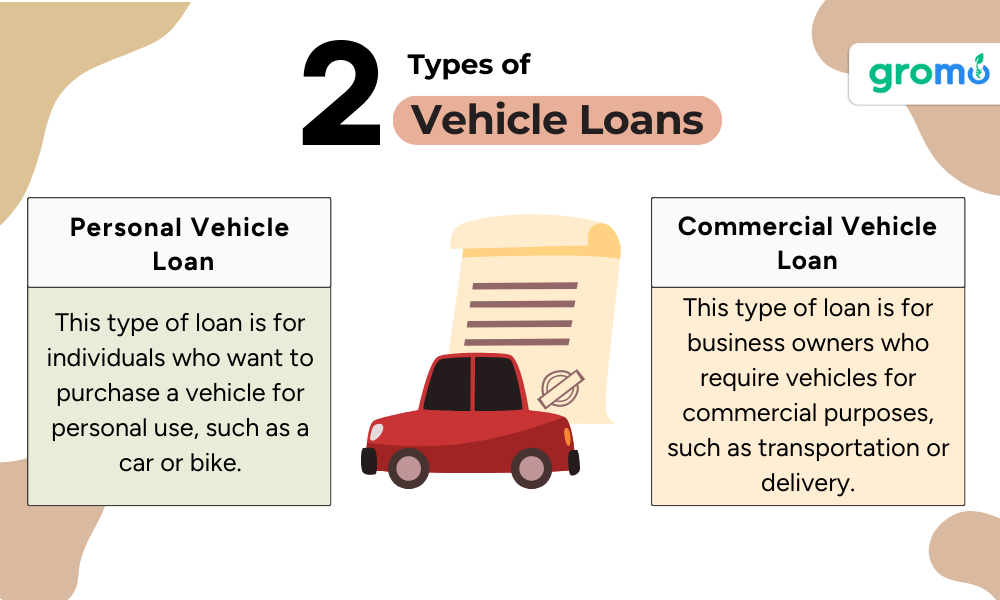
Personal Vehicle Loan
This is the most common type. You take it to buy a car or two-wheeler for personal use. Banks like SBI, HDFC, and ICICI offer these with interest rates starting around 7.5% p.a. Loan amounts typically range from ₹1 lakh to ₹50 lakhs.
Commercial Vehicle Loan
If you're a business owner buying trucks, tempos, buses, or delivery vans, this is what you need. The eligibility criteria and documentation are different — lenders look at your business revenue, fleet size, and commercial viability. HDFC Bank, Mahindra Finance, and Shriram Finance are the big names here.
Used Vehicle Loan
Want a second-hand car? Many banks and NBFCs offer used car loans, though interest rates are typically 1-3% higher than new car loans. The vehicle's age and condition matter — most lenders won't finance a car older than 7-10 years.
Two-Wheeler Loan
Specifically for bikes and scooters, these are smaller loans (₹30,000 to ₹5 lakhs) with shorter tenures (1-4 years). HDFC, Bajaj Finance, and IndusInd Bank are popular choices here.
Vehicle Loan Interest Rates in India (2025)
Vehicle loan interest rates depend on three things: the bank you choose, your credit profile, and whether you're buying new or used. Here's a comparison of current rates from major lenders:
| Bank / NBFC | Interest Rate (p.a.) | Max Tenure | Max Loan Amount |
|---|---|---|---|
| SBI | 7.50% – 9.50% | 7 years | ₹50 lakhs |
| HDFC Bank | 7.30% – 8.90% | 7 years | ₹50 lakhs |
| IndusInd Bank | 8.50% – 13.50% | 5 years | ₹50 lakhs |
| Shriram Finance | 8.50% – 14.00% | 5 years | ₹20 lakhs |
| Bank of Maharashtra | 7.65% – 9.75% | 7 years | ₹40 lakhs |
| Canara Bank | 7.60% – 8.75% | 7 years | ₹35 lakhs |
| PNB | 7.65% – 8.75% | 7 years | ₹25 lakhs |
| Mahindra Finance | 8.75% onwards | 7 years | ₹75 lakhs |
| Cholamandalam | 10.99% onwards | 5 years | ₹25 lakhs |
Quick tip — don't just pick the lowest rate on the table. SBI and PNB offer great rates, but their processing can be slower. Private banks like HDFC and IndusInd approve faster but may charge slightly more. NBFCs like Shriram Finance and Mahindra Finance are better if your CIBIL score isn't perfect — they're more flexible with eligibility.
You can compare vehicle loan offers from multiple banks using the GroMo app. It gives you access to different lenders in one place, so you don't have to visit each bank separately.
What Factors Affect Your Vehicle Loan Interest Rate?
Credit Score (CIBIL Score)
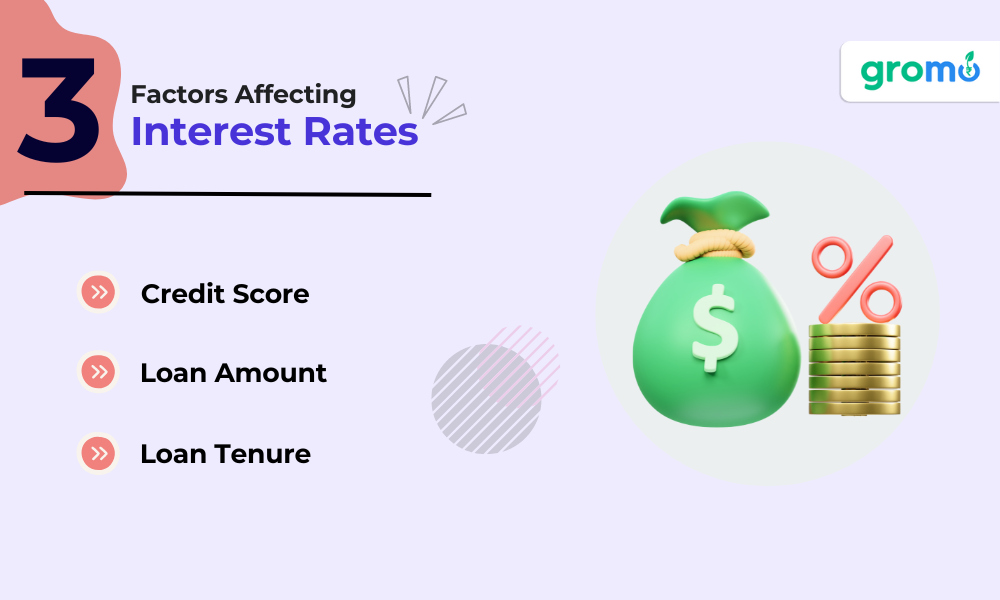
This is the #1 factor. A CIBIL score of 750+ gets you the best rates — often 1-2% lower than someone with a score of 650. Quick example — on a ₹5 lakh loan for 5 years, the difference between 8% and 10% interest is roughly ₹5,300 in total extra interest. That's real money.
Loan Amount and Down Payment
Bigger down payment = lower loan amount = lower risk for the bank = better interest rate. Most banks need at least 10-15% down payment, but putting 20-25% down can get you a noticeably better deal.
Loan Tenure
Shorter tenure means less risk for the bank, so you get a slightly lower rate. A 3-year loan will almost always have a better rate than a 7-year loan. But here's the trade-off — shorter tenure means higher monthly EMI.
Type of Vehicle
New cars get better rates than used cars. Four-wheelers get better rates than two-wheelers (generally). And premium brands sometimes get preferential rates through dealer tie-ups.
Your Income and Employment
Salaried employees with stable jobs typically get lower rates than self-employed individuals. Banks see salaried income as more predictable.
How to Calculate Your Vehicle Loan EMI
Before you sign any loan agreement, calculate your EMI. You don't want to commit to a monthly payment that stretches your budget too thin.
The EMI formula is: EMI = P × r × (1 + r)^n / [(1 + r)^n – 1]
Where P = loan amount, r = monthly interest rate, n = number of months.
But honestly, nobody does this manually. Here's what you actually do:
- Go to any bank's website or use a free online EMI calculator
- Enter your loan amount (say ₹5,00,000)
- Enter the interest rate (say 8.5% per annum)
- Enter the tenure (say 5 years / 60 months)
- Hit calculate — your EMI will be approximately ₹10,238 per month
On this ₹5 lakh loan at 8.5% for 5 years, you'll pay ₹1,14,280 as total interest. The total repayment comes to ₹6,14,280.
Here's a practical EMI comparison:
| Loan Amount | Interest Rate | Tenure | Monthly EMI | Total Interest Paid |
|---|---|---|---|---|
| ₹3,00,000 | 8.0% | 3 years | ₹9,400 | ₹38,400 |
| ₹5,00,000 | 8.5% | 5 years | ₹10,238 | ₹1,14,280 |
| ₹8,00,000 | 9.0% | 7 years | ₹12,816 | ₹2,76,544 |
| ₹10,00,000 | 7.5% | 5 years | ₹20,038 | ₹2,02,280 |
Real talk — always choose the shortest tenure you can afford. The difference in total interest between a 5-year and 7-year loan on ₹8 lakhs can be over ₹1 lakh.
How to Check Your Vehicle Loan Statement Online
Need to check how much principal you've paid or how many EMIs are left? Most banks now let you do this online:
- Visit your lender's website or open their mobile app
- Log in using your customer ID and password
- Go to the Loans section — look for "Loan Statement" or "Account Statement"
- Download your statement — it shows principal outstanding, interest paid, EMIs remaining, and payment history
Pro tip: Check your loan statement at least once every quarter. Some borrowers discover that their floating rate has been increased by the bank without proper notification. If that happens, you can escalate the matter to the RBI Banking Ombudsman.
Also Read: Personal Loan: What Is Personal Loan?
Who Can Get a Vehicle Loan? Eligibility Criteria
Eligibility varies slightly across lenders, but here are the general requirements:
For Salaried Individuals:
- Age: 21 to 65 years
- Minimum monthly income: ₹15,000–₹25,000 (varies by bank)
- Employment: At least 1 year of total work experience, 6 months with current employer
- CIBIL Score: 700+ (750+ for best rates)
For Self-Employed / Business Owners:
- Age: 21 to 65 years
- Business vintage: At least 2 years
- Minimum annual income: ₹2–3 lakhs (varies by bank)
- ITR for last 2 years required
Documents You'll Need:
- PAN Card and Aadhaar Card
- Address proof (utility bill, passport)
- Last 3-6 months' bank statements
- Last 3 months' salary slips (salaried) OR 2 years' ITR (self-employed)
- Passport-size photos
- Vehicle quotation from the dealer
One thing worth knowing — if you're buying a vehicle for your business, some banks let you claim the interest as a business expense under Section 36(1)(iii) of the Income Tax Act. That's a decent tax benefit many business owners miss.
How to Apply for a Vehicle Loan: Step-by-Step
The application process is mostly online now. Here's how it works:
Step 1: Compare and Choose a Lender
Don't just walk into the nearest bank. Compare rates across at least 3-4 lenders. Use the GroMo app to check offers from multiple banks and NBFCs in one place.
Step 2: Check Your Eligibility
Most bank websites have an instant eligibility checker. Enter your income, age, and existing loans — it'll tell you how much you can borrow.
Step 3: Apply Online or In-Branch
Fill out the loan application form with your personal, employment, and vehicle details. Upload your documents. Many banks like SBI and HDFC let you complete the entire process online.
Step 4: Verification and Approval
The bank verifies your documents, checks your CIBIL score, and assesses your repayment capacity. This takes anywhere from 2 hours (for pre-approved customers) to 5-7 working days.
Step 5: Loan Disbursement
Once approved, the bank disburses the loan amount directly to the vehicle dealer. You sign the loan agreement, and your EMI schedule starts from the next month.
The whole process can be done in 24-48 hours with private banks if your documents are in order and your credit score is strong.
Vehicle Loan Details by Number Plate: How to Check
If you're buying a used car, you should check whether the vehicle has an existing loan (hypothecation) on it. Here's how:
- Visit the Parivahan website (parivahan.gov.in) or your state's RTO portal
- Enter the vehicle's registration number (number plate)
- The system displays the vehicle details including the financier name if there's an active loan
You can also check this on the VAHAN portal. If the vehicle shows a hypothecation entry, it means the current owner still has a loan on it. Don't buy that vehicle until the seller clears the loan and gets a No Objection Certificate (NOC) from the lender.
Vehicle Loan Providers: A Quick Comparison
Let's compare some of the popular vehicle loan providers so you can decide which one fits your needs:
| Feature | HDFC Bank | IndusInd Bank | Shriram Finance | Mahindra Finance |
|---|---|---|---|---|
| Interest Rate | 7.30% onwards | 8.50% onwards | 8.50% onwards | 8.75% onwards |
| Max Tenure | 7 years | 5 years | 5 years | 7 years |
| Prepayment Charges | Applicable (fixed rate) | None | None | Applicable |
| Best For | Salaried, high CIBIL | Quick approval | Used vehicles, low CIBIL | Commercial vehicles |
| Doorstep Service | Yes | Yes | Limited | Yes |
| Online Application | Yes | Yes | Yes | Yes |
HDFC Bank works best if you're a salaried professional with a CIBIL score above 750 — they offer the lowest rates and have a smooth online process. IndusInd Bank is solid for quick approvals and offers zero prepayment charges. Shriram Finance is the go-to if your credit score isn't great or you're buying a used vehicle — they're more flexible with eligibility. Mahindra Finance specializes in commercial vehicles and has the widest loan amount range (up to ₹75 lakhs).
Honestly, the "best" lender depends on your specific situation. A person with a 780 CIBIL score buying a new Honda City will get a very different deal than someone with a 680 score buying a used Maruti Swift.
7 Common Vehicle Loan Mistakes That Cost You Money
1. Not checking your CIBIL score before applying
Every loan application creates a hard inquiry on your credit report. If your score is low and you get rejected, that rejection + inquiry further drops your score. Check your CIBIL score for free (once a year from CIBIL's website) before applying anywhere.
2. Choosing the longest tenure to reduce EMI
Yes, a 7-year tenure gives you a lower monthly EMI. But you end up paying 40-60% more in total interest compared to a 3-year tenure. Only extend tenure if your monthly cash flow genuinely can't handle the higher EMI.
3. Skipping the down payment
Some dealers advertise "100% financing." Bad idea. Zero down payment means a larger loan, more interest, and higher EMI. Put down at least 15-20% — your future self will thank you.
4. Ignoring the processing fee
Banks charge 0.5% to 2% of the loan amount as processing fee. On a ₹10 lakh loan, that's ₹5,000 to ₹20,000 upfront. Always negotiate this — many banks waive or reduce it during festive seasons.
5. Not reading the prepayment clause
Some fixed-rate loans charge 2-5% prepayment penalty. If you plan to prepay (and you should, whenever possible), pick a floating-rate loan where RBI rules prohibit prepayment charges.
6. Falling for dealer financing without comparing
Dealers push their "exclusive" financing partners because they earn commission. These rates are often 1-2% higher than what you'd get directly from a bank. Always get a direct bank quote before accepting dealer financing.
7. Forgetting about insurance costs
Comprehensive vehicle insurance is mandatory for the loan period. Budget for this — it's ₹8,000-₹25,000 per year for cars and ₹2,000-₹6,000 for bikes. Some banks include it in the loan, which means you're paying interest on your insurance premium too.
FAQs About Vehicle Loans in India
What is the minimum CIBIL score required for a vehicle loan?
Most banks require a minimum CIBIL score of 700 to approve a vehicle loan. However, to get the best interest rates (below 8.5%), you need a score of 750 or above. NBFCs like Shriram Finance and Mahindra Finance may approve loans for scores as low as 600-650, but the interest rate will be significantly higher.
Can I get a vehicle loan with zero down payment?
Technically, some lenders offer up to 100% on-road price financing, especially through dealer tie-ups. But this is not recommended. A zero down payment loan means a higher principal amount, higher EMI, and more interest over the loan tenure. Aim for at least 15-20% down payment to keep your loan affordable.
Is vehicle loan interest tax deductible?
For personal vehicles, the interest is not tax deductible under the Income Tax Act. However, if you're self-employed or a business owner and the vehicle is used for business purposes, you can claim the interest as a business expense under Section 36(1)(iii). The depreciation on the vehicle is also claimable under Section 32.
What happens if I miss a vehicle loan EMI?
Missing an EMI triggers a late payment fee (usually ₹500-₹1,500 per instance) and negatively impacts your CIBIL score. If you miss 3 or more consecutive EMIs, the bank can issue a loan recall notice and even repossess your vehicle, since it's pledged as collateral. If you foresee difficulty, contact your bank immediately — they may offer a temporary EMI restructuring.
Can I transfer my vehicle loan to another bank?
Yes, vehicle loan balance transfer (refinancing) is possible. If another bank offers a lower interest rate, you can transfer the outstanding balance. The new bank pays off your existing lender, and you start paying EMIs to the new bank at the lower rate. This makes financial sense if the rate difference is at least 1-1.5% and you have significant tenure remaining.
How long does vehicle loan approval take?
For salaried individuals with good credit scores, most private banks (HDFC, ICICI, IndusInd) can approve and disburse within 24-48 hours. Public sector banks like SBI and PNB may take 3-7 working days. NBFCs vary — Shriram Finance and Mahindra Finance typically process within 2-5 days.
What is the difference between a fixed-rate and floating-rate vehicle loan?
A fixed-rate vehicle loan has an interest rate that stays the same throughout the tenure — your EMI never changes. A floating-rate loan is linked to the bank's base rate or MCLR, so your EMI can increase or decrease based on RBI policy changes. Fixed-rate loans give predictability, but floating-rate loans let you prepay without penalty and can be cheaper if rates go down.
Your Next Step
Getting the right vehicle loan isn't about finding the cheapest rate — it's about finding the right combination of rate, tenure, and lender that fits your income and goals. Start by checking your CIBIL score, set a realistic budget (EMI shouldn't exceed 15-20% of your monthly income), and compare at least 3-4 lenders before signing anything.
If you're ready to explore vehicle loan options from multiple banks and NBFCs, check out the GroMo app. It gives you easy access to offers from SBI, HDFC, IndusInd, and more — all in one place.
Key Takeaways
- Vehicle loans in India offer interest rates from 7.3% to 14% depending on the lender and your credit profile
- Your CIBIL score is the single most important factor — anything above 750 gets you the best deals
- Always use an EMI calculator before committing, and keep your EMI below 15-20% of your monthly income
- RBI prohibits prepayment penalties on floating-rate loans for individuals — use this to save on interest
- Compare at least 3-4 lenders, don't just accept dealer financing — the rate difference can save you ₹20,000-₹50,000 over the loan tenure
- Check for hypothecation on the VAHAN portal before buying any used vehicle
- Keep your loan tenure as short as you can comfortably afford — longer tenure means significantly more interest paid


