
Active & Passive Income: GroMo Merges Both for Indians 2026

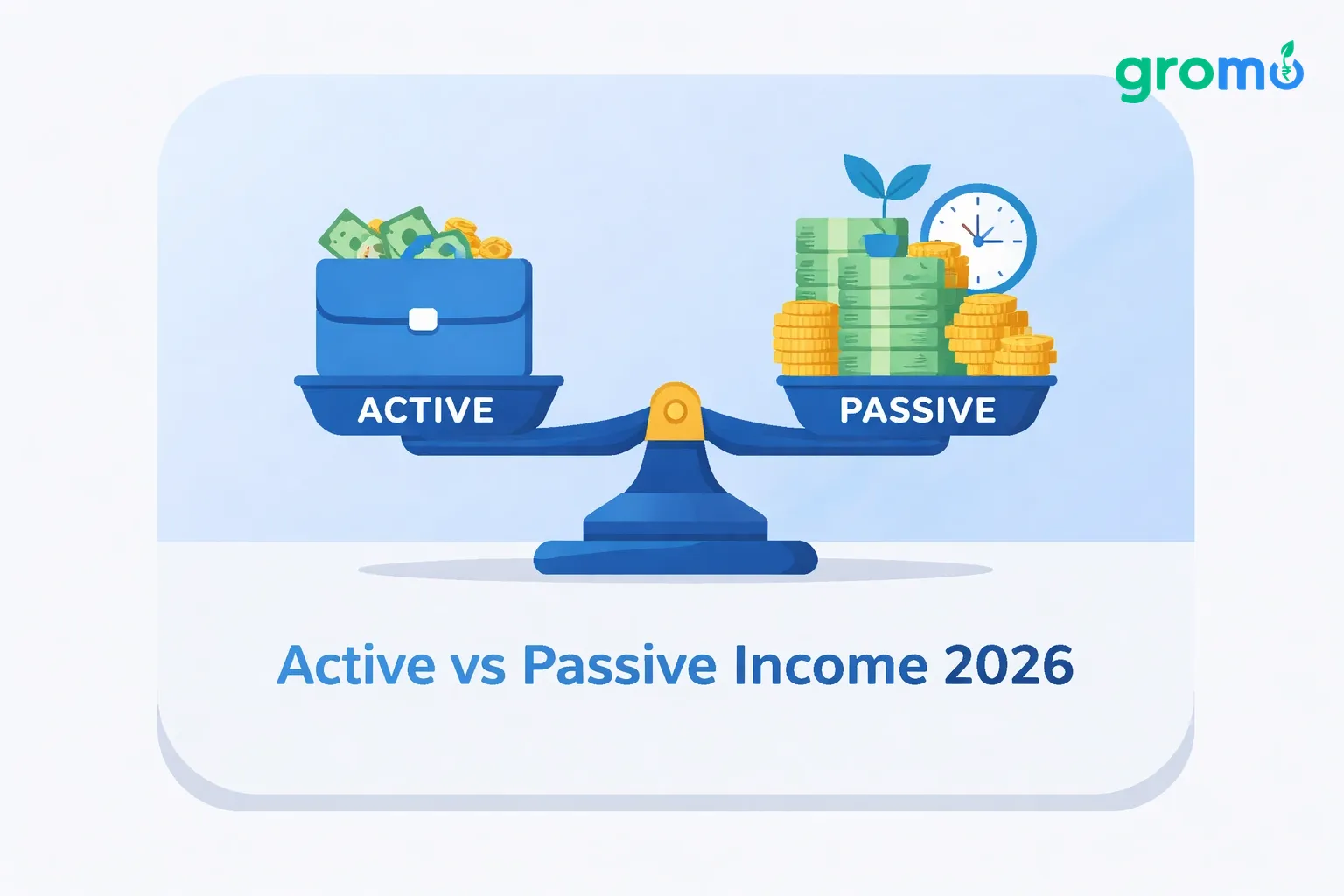
Active income and passive income aren't enemies they work better together. Active income means trading hours for rupees: your job, a freelance gig, consulting work. Passive income means money comes in without constant effort, usually after you've done upfront work like building an audience or setting up a system.
Most Indians live entirely on active income. Miss a week of work, miss a week of pay. But the gig economy and fintech platforms that have exploded since 2023-24 have made it possible to blend both. This post lays out the actual difference, why you probably need both, and how platforms like GroMo let you turn active selling work into something that starts to resemble passive income.
What is active income?
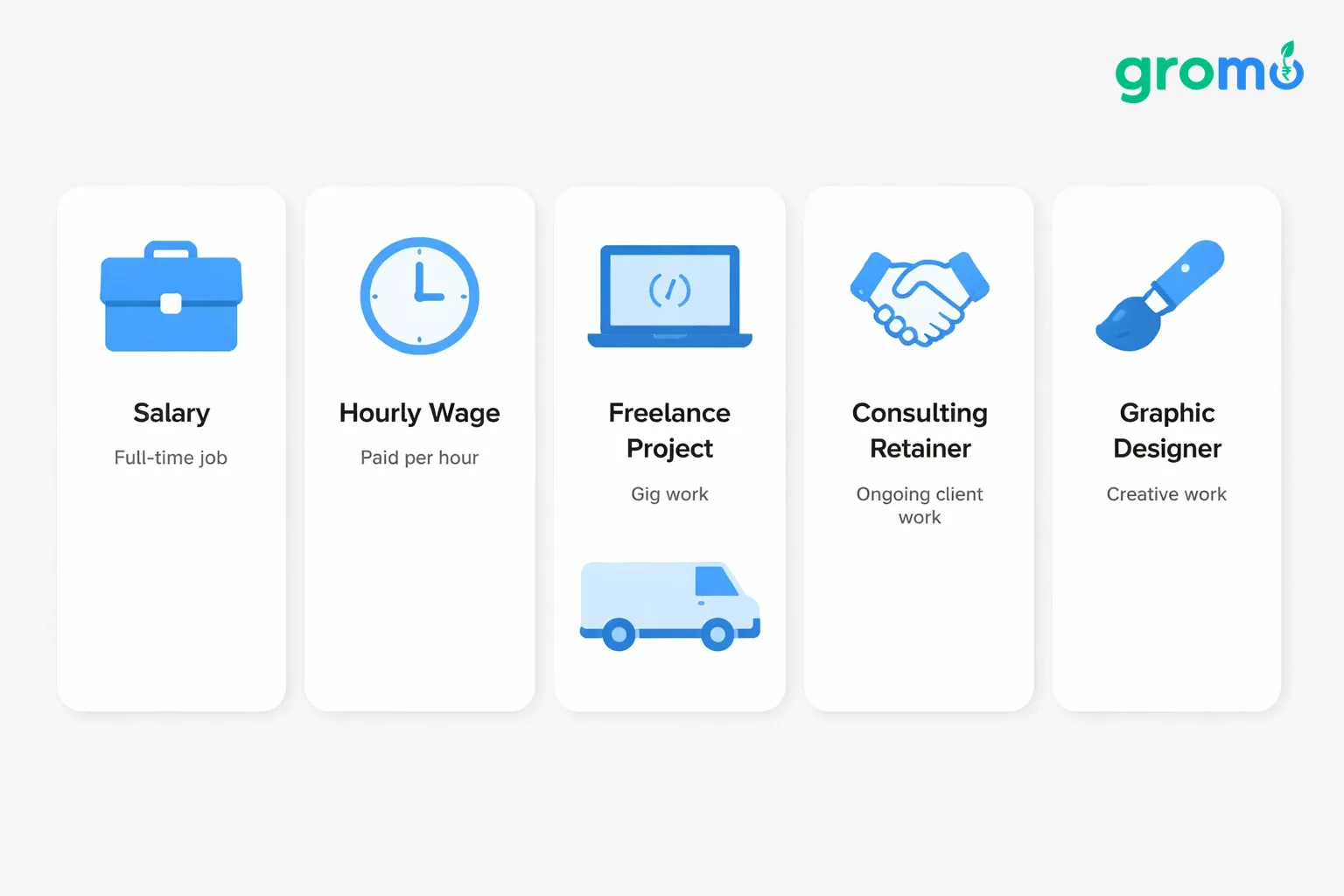
Active income needs you to keep showing up. Work, get paid. Stop working, money stops. Salaries, hourly wages, freelance projects, consulting retainers all fit here.
A delivery driver earns when he's on the road. A graphic designer earns when she's at her desk. Take a sick day, take a pay cut. This has been India's default model for decades because it's straightforward and you know what you're getting. The tradeoff is obvious: your income has a hard ceiling, and that ceiling is the number of hours you can physically work.
What is passive income?
Passive income keeps paying after the initial setup. Build the thing once, it keeps generating money with minimal ongoing work. Rental income, dividends, mutual fund commissions, referral networks that keep referring customers.
The concept is catching on in India as people look for passive income ideas that don't require quitting their jobs. But here's what the influencers don't always mention: passive income usually needs upfront time, money, or both before it becomes passive. The "passive" part isn't instant.
Active vs passive income: how they actually compare
They serve different purposes. Active income gives you stability and cash now. Passive income gives you options and freedom later. Most people should have both.
Factor | Active Income | Passive Income |
|---|---|---|
Effort required | Continuous | Front-loaded |
Earning cap | Hours in your day | Can grow beyond your time |
Risk | Job loss = income stops | More diversified |
Examples | Salary, freelancing, gig work | Referral commissions, dividends, rentals |
Setup time | Immediate | Weeks or months |
Depending entirely on active income is precarious. The Indian job market in 2025-26 has been volatile layoffs, contract roles, hiring freezes. Passive income isn't a magic solution, but it's a buffer. Digital platforms are making it easier for regular people to build income streams that don't require their constant presence. India's fintech revolution trends for 2026 show this shift happening across income levels.
Why GroMo sits between active and passive
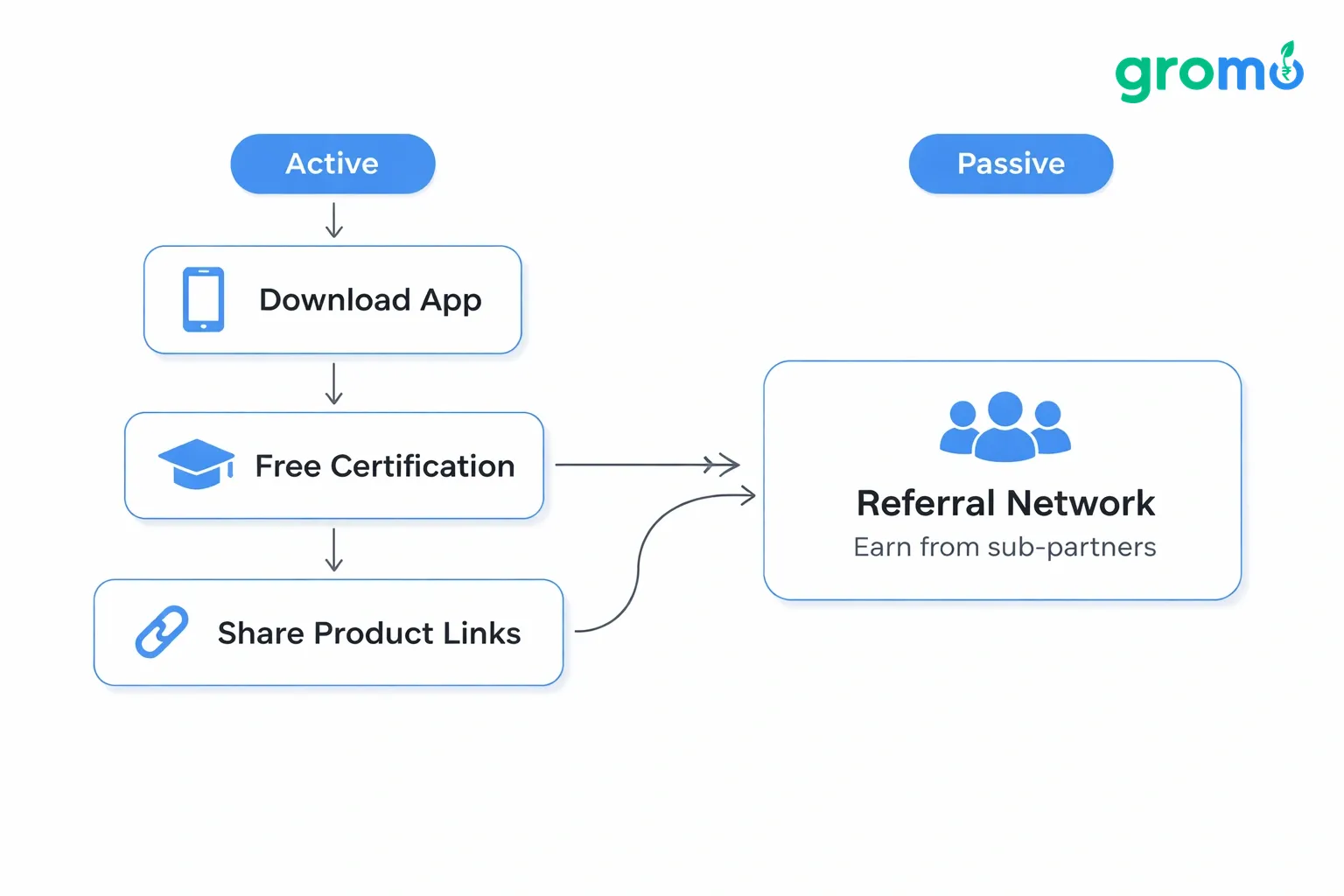
GroMo starts with active work sharing product links, following up with contacts but can turn into semi-passive income if you build a network. That's the interesting part: it bridges pure hustle and pure passive income.
Here's how it works. Download the app, do the free certification training, start sharing links for credit cards, savings accounts, loans, investment products. Every successful referral pays commission. That part is active. You did the work.
But GroMo's referral program adds another layer. When you recruit sub-partners who sell under your network, you earn from their sales too. The initial effort of finding and training them creates ongoing income that doesn't require you to personally make every sale.
What the numbers actually look like
Earnings on GroMo depend on what you're selling and how much effort goes in. Credit cards pay flat fees. Loans pay percentages that can compound if your network grows.
Some actual payout ranges from GroMo's catalog:
SBI Credit Card: ₹2,400 to ₹3,750 per approved application
Axis Bank Credit Cards: ₹2,000 to ₹3,000 depending on the card
Jiraaf Bond/FD investments: ₹1,500 to ₹2,250 per first investment
Loan disbursals (KreditBee, InCred): 3.10% to 5% of the disbursed amount
Demat account openings (Appreciate Wealth): ₹1,400 to ₹2,250
Each sale is active work at first. But if you refer 20-30 people who become sub-partners, their ongoing sales generate trailing income that starts to feel passive. This model using referral networks instead of capital investment is the same approach described in the ₹1 crore investment plan with zero capital.
A practical approach for 2026
Start with stability. Keep your salary or primary gig running while you build passive systems on the side. Don't quit active income too early passive streams need time to actually become passive.
Here's what works for Indian earners:
Keep your day job or active gig this covers your bills while you experiment
Pick one platform to start GroMo, mutual fund SIPs, or digital silver investments are reasonable options
Put in 1-2 hours daily at the start sharing links, training, content creation
Build a referral network so earnings continue without your direct involvement
Track and reinvest use payouts to fund SIPs or other investments
Students are earning ₹300-5,000 daily through GroMo's model right now, treating it as active income with the option to make it semi-passive later. Housewives and working professionals are doing similar things starting active, building toward passive.
Where people go wrong chasing passive income
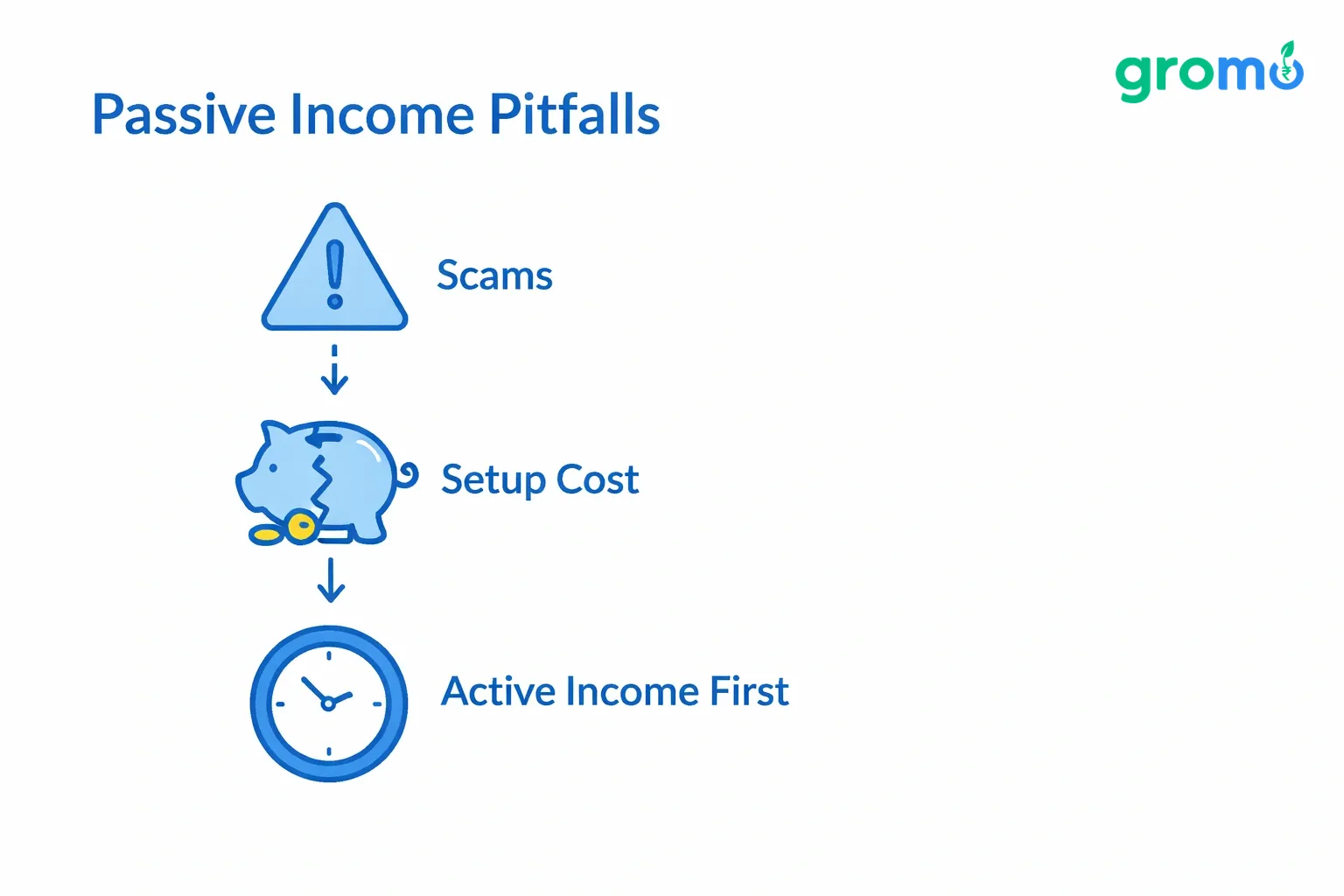
Jumping into passive income without an active income base is risky. A lot of "earning games" and apps promise effortless returns. Many are scams. The tactics used by earning games that scam users follow predictable patterns once you've seen a few.
Real passive income has a setup cost time, money, or skill, usually some combination. GroMo's referral commissions or mutual fund distribution require verified KYC, actual product sales, patience. Platforms claiming instant, zero-effort payouts are almost always lying.
Another mistake: treating passive income as a replacement for active income before it's ready. Financial advisors (the boring, sensible kind) recommend having 3-6 months of expenses covered by active income before scaling back on primary income sources.
Which approach fits your situation?
Depends on where you are in life, how much risk you can handle, how much time you have. Students and housewives often start with active GroMo selling and shift toward semi-passive referral income. Working professionals tend to use passive streams SIPs, referral networks as supplements to their full-time job earnings.
No universal answer. But India's earners are moving from single-income dependency toward diversified active-plus-passive portfolios. Platforms like GroMo make this possible without requiring upfront capital, whether you're in a major city or a smaller town.
Frequently Asked Questions
What's the actual difference between active and passive income?
Active income requires continuous effort your job, freelance work, consulting. Stop working, money stops. Passive income continues generating earnings after initial setup with minimal ongoing effort referral commissions, investment returns, rental income.
Can GroMo really become passive income?
Partially, yes. GroMo starts as active income through direct selling. But if you build a referral network of sub-partners, you earn from their ongoing sales. That's semi-passive income you did the work of recruiting, now their sales generate income for you.
Is it risky to rely only on passive income?
Yes, especially early on. Passive income takes time to build and rarely replaces active income immediately. Keep your active income while you build passive streams.
How much can I realistically earn combining both with GroMo?
Varies by product and network size. Partners report earning ₹10,000 to ₹1 lakh monthly by combining active selling with referral-based semi-passive income. Results depend on effort and network quality.
Do I need investment to start earning passive income through GroMo?
No. GroMo requires zero investment to join and start selling financial products. The passive-style earnings come from building a referral team over time, not from putting in capital.
How long before passive income feels actually passive?
Usually 3-6 months of consistent active effort building a network or asset base. Not instant.


