
Referral Income in India: Earn ₹1 Lakh Monthly with Smart Strategies
Discover how referral income in India can turn into a full-time salary. Learn strategies, platforms like GroMo, and tips to earn ₹50k-₹1Lakh monthly through smart referrals and systematic approaches.

Referral income has become a serious side hustle in India. You probably know someone claiming to make decent money just by sharing links. It’s easy to roll your eyes, but the money is real if you treat it like a business rather than a lottery ticket. There is a massive gap between casually posting a code on WhatsApp and building a system that actually generates ₹50,000 to ₹1 lakh a month.
As of April 2026, fintech companies are fighting hard for new users. That competition is your opportunity. Banks will pay ₹300 to ₹2,000 just to acquire a new credit card customer. You don't need to guess why this works. Just do the math. A few dozen referrals a month starts to look like a full-time salary.
Platforms like GroMo aggregate these offers so you don't have to manage relationships with twenty different banks. This is what separates people making pocket money from those making a living.
How this actually works
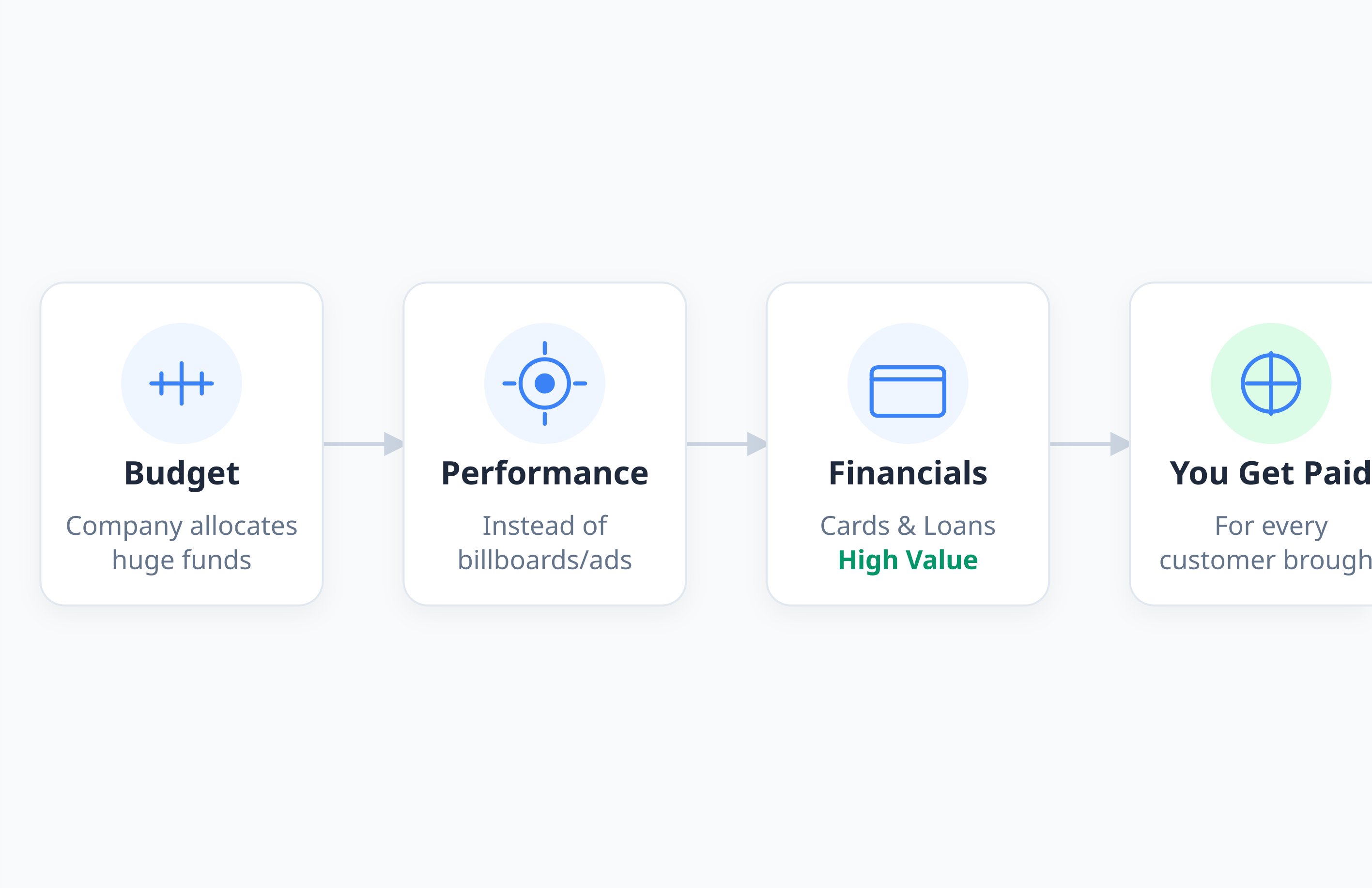
Companies allocate huge budgets for customer acquisition. Instead of spending it all on billboards or Facebook ads, they pay individuals for performance. You bring a customer, you get paid. Financial products like credit cards and loans have the highest payouts because a single customer is valuable to a bank.
Picking a platform
Not all programs are worth your time. Some will waste your effort with delayed payments or vague promises. Focus on these factors:
Speed of payment. Traditional programs might take 90 days to pay. That kills your momentum. You want platforms that credit earnings within days.
Breadth of products. If a platform only offers credit cards, you’re limited. The best ones let you pivot if someone doesn't want a card, maybe they need a savings account or a loan.
Clarity. Avoid programs that say "earn up to" without specifics. You need to know exactly what a successful referral pays.
Support. Platforms that train partners tend to be better long-term partners. If they invest in your knowledge, they’re likely invested in the product.
Tech. You need a dashboard that tracks leads in real-time. If you can't track it, you can't optimize it.
Building the foundation
Stop selling to everyone
The "spray and pray" method burns out your contacts and damages your reputation. Pick two or three specific groups to focus on. Maybe it's young professionals who just got their first job, or small business owners looking for working capital.
A 22-year-old needs different products than a 40-year-old planning for their kid's education. Understanding this distinction is what makes you a consultant rather than a spammer.
Be visible where it counts
You don't need to be on every social network. You just need to be where your audience is.
WhatsApp Business. This should be your primary channel. It’s personal and has high open rates. Use broadcast lists for different segments.
One social platform. Master one channel. LinkedIn works for professionals; Instagram might work better for younger audiences.
A simple website. A basic landing page adds legitimacy. When someone Googles you before trusting your financial advice, a professional page answers their doubts.
Content is your lever
Don't just send links. Create value. If you position yourself as a helpful resource rather than a salesperson, people will actually listen. Share comparison guides, explainers on reward points, or tips on building credit.
This builds trust. Someone who reads your article on "Best cards for travel in 2026" is already warm. They aren't just tolerating your link they are looking for it.
Scaling up
The follow-up is where the money is
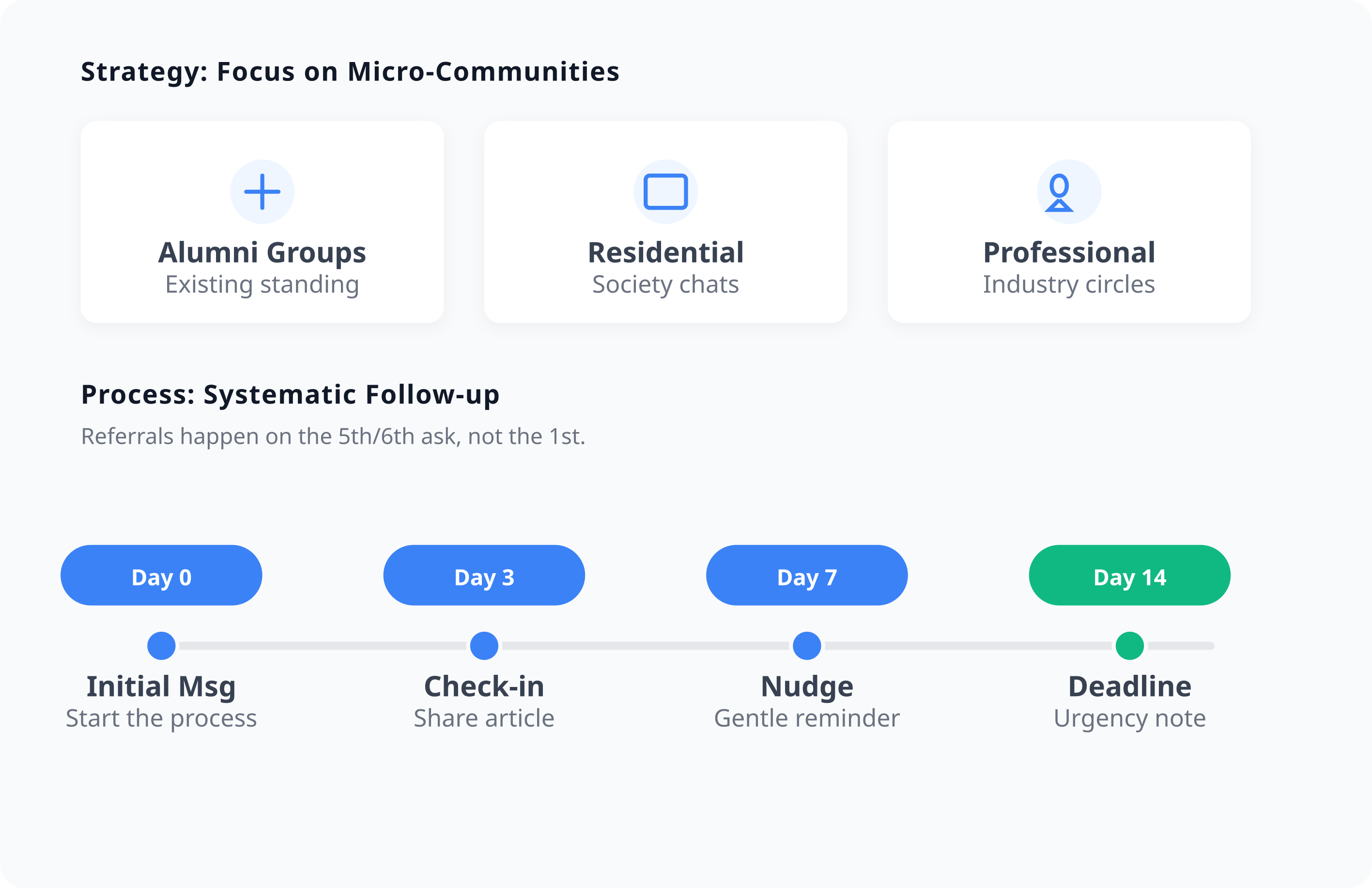
Most referrals don't happen on the first ask. They happen on the fifth or sixth. People get busy. They intend to do it later and forget. A systematic follow-up process doesn't annoy them; it helps them finish what they started.
A simple cadence works: an initial message, a check-in three days later with a helpful article, a nudge at day seven, and a note about a deadline at day fourteen.
Find your micro-communities
Don't broadcast to strangers. Focus on groups where you already have standing alumni groups, residential society chats, professional circles. Be helpful first. When you eventually make a recommendation, it will carry actual weight.
Build a team
The highest earners don't just refer; they recruit. Most platforms, including GroMo, let you earn from the activity of people you bring in. Find five or ten motivated people, train them, and multiply your output.
Hunt for high-value products
Credit cards are volume plays. But home loans? A single successful referral can net ₹10,000 to ₹50,000. Business loans and premium credit cards also pay significantly more than standard products. You don't need many of these to change your month.
Mistakes that kill your momentum
Spamming. Sending generic links to everyone you know is the fastest way to get ignored. It signals that you value the commission more than the relationship.
Ignoring past wins. Once someone uses your referral, they become your best asset. They already trust you. Check in with them. Cross-sell. Ask for introductions.
Faking expertise. If you recommend a product you don't understand, you’ll lose credibility when it fails them. Learn the products inside and out.
Inconsistency. Working hard for two weeks and then vaning for a month creates an income rollercoaster. Steady effort beats sporadic intensity.
Trying to do too much. Don't be on seven platforms. Pick one, master a few products, and go deep.
Staying on the right side of the line
Disclose. Tell people you earn a commission. In 2026, everyone understands affiliate marketing. What they hate is feeling tricked.
Recommend responsibly. Don't push a bad product for a quick buck. The short-term gain isn't worth the long-term damage to your reputation.
Pay your taxes. Referral income is taxable. Keep records and set money aside. Ignoring this causes problems later.
Respect privacy. Don't misuse the data people entrust you with.
Your first 90 days
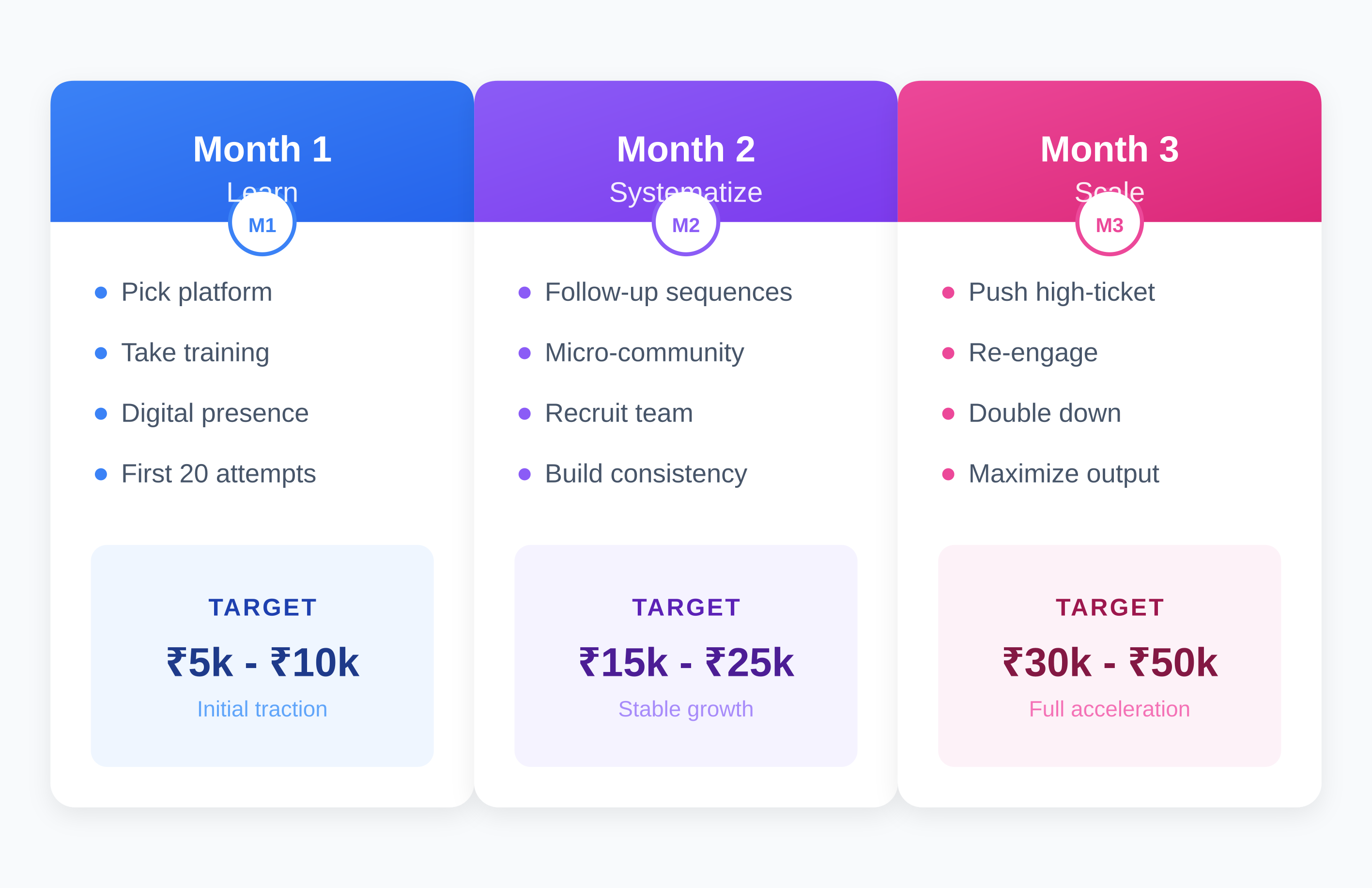
Month 1: Learn. Pick your platform. Take the training. Set up your digital presence. Make your first 20 attempts. Target: ₹5,000-₹10,000.
Month 2: Systematize. Build your follow-up sequences. Start engaging a micro-community. Recruit a couple of team members. Target: ₹15,000-₹25,000.
Month 3: Scale. Push high-ticket items. Re-engage past customers. Double down on what is working. Target: ₹30,000-₹50,000.
The math behind ₹1 Lakh
Here is how the numbers shake out:
The volume path: 100 credit cards at ₹800 average + 20 savings accounts at ₹500 + 10 demat accounts at ₹1,000 = ₹1,00,000.
The high-ticket path: 2 home loans at ₹25,000 + 3 business loans at ₹10,000 + 30 credit cards at ₹500 + misc products = ₹1,00,000.
The team path: Your personal referrals earn ₹40,000. Your team of 10 partners generates another ₹60,000 in override commissions. Total: ₹1,00,000.
Most successful earners mix all three.
Just start
Forget the ₹1 lakh goal for a second. Can you make ₹1,000? That is the hurdle. Once you clear it, the model is proven. Your first thousand will likely come from close friends or family people who trust you. Help them genuinely. That first notification of a deposit changes your mindset from "can this work?" to "how do I do this more?"
The opportunity in India’s referral economy is legitimate. It doesn't require luck, just a systematic approach and the willingness to treat it like a real business. The conversation starts with you.
If you want a platform that handles the heavy lifting regarding infrastructure and product variety, check out what GroMo offers its partners. The infrastructure exists. The rest is up to you.


