
Legit Refer and Earn Apps in 2026: Earn Up to ₹10K


"Refer and earn" apps are everywhere. You've seen the ads, the WhatsApp forwards, the "share this link and make money" posts. Most of them are a waste of time. But the underlying idea getting paid to bring users to a platform isn't nonsense. Companies spend crores on ads. Some of them would rather give that money to actual users.
I've spent enough time testing these to be skeptical. The payouts are usually tiny, the terms are often buried, and half the products aren't things you'd genuinely recommend to friends. But there are exceptions. Done right, with the right platform, this is real income. Here's how to spot the difference in 2026.
What These Programs Actually Are
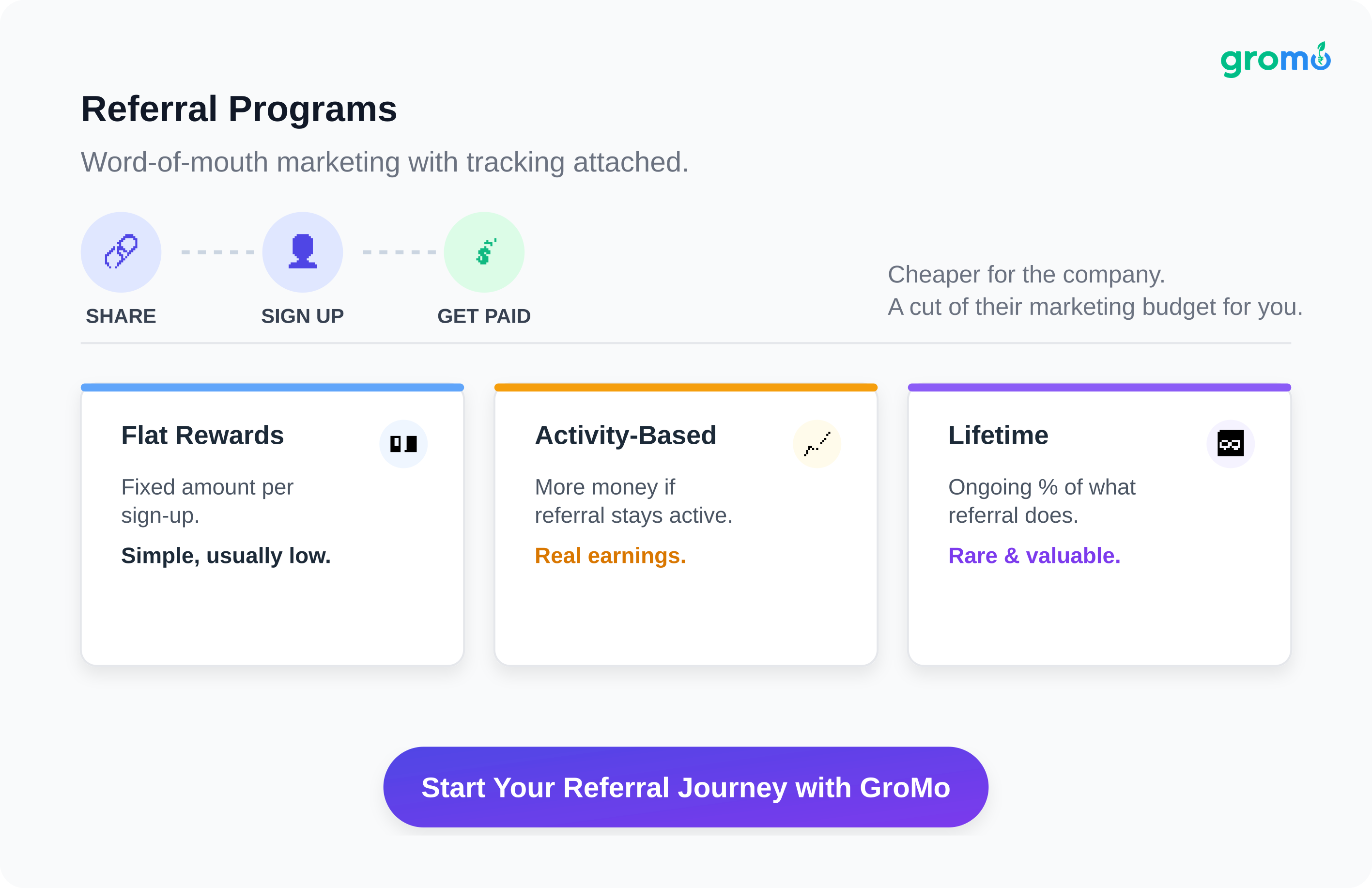
Referral programs are word-of-mouth marketing with tracking attached. You share a link. Someone signs up. You get paid. The company gets a customer for less than they'd pay Facebook or Google, and you get a cut of their marketing budget.
The main types:
Flat rewards: Fixed amount per sign-up. Simple, usually low.
Activity-based: More money if your referral stays active. This is where the real earnings are.
Start Your Referral Journey with GroMo
Why This Is Working Now
Two things changed. UPI made payouts instant no more waiting weeks for a ₹50 transfer. And smartphone penetration means almost anyone can sign up. Combine that with genuine demand for side income, and you have a market.
Financial products specifically are having a moment. Credit cards, loans, savings accounts people need these anyway. You're not convincing someone to buy random stuff. You're helping them access tools they already want.
The partner payout market for financial products in India is projected to cross ₹500 crores by 2027. That's the number to know.
Why Most Apps Will Waste Your Time
The payouts are too low. ₹10-20 per referral doesn't cover the time it takes to explain the app, follow up, and answer questions. Your hourly rate ends up laughable.
The terms are murky. I've seen apps that require your referral to make a purchase before you get paid mentioned nowhere in the signup flow. Others have "activity requirements" that are almost impossible to track.
The products aren't worth sharing. If you're referring friends to something you wouldn't use yourself, they'll notice. And they'll stop trusting you.
How to Find Something Worth Your Time
1. Product First
If the product doesn't solve a real problem, stop. Financial products work because people need credit cards, loans, and accounts. They're not luxury purchases.
2. Clear Numbers
You should know exactly what you'll earn before sharing anything. No points systems, no "unlock rewards," no mystery tiers. Cash amounts, clearly stated.
3. Payout Speed
In 2026, waiting 15 days for a transfer is nonsense. Same-day should be standard. Platforms that hold your money are either badly organized or playing games.
4. Real Support
Most apps dump you in with zero guidance. The useful ones have training, templates, and actual humans to ask when stuck.
5. Track Record
Is this a real company? Any press coverage? User reviews? Two minutes of searching saves months of wasted effort.
GroMo: A Useful Example
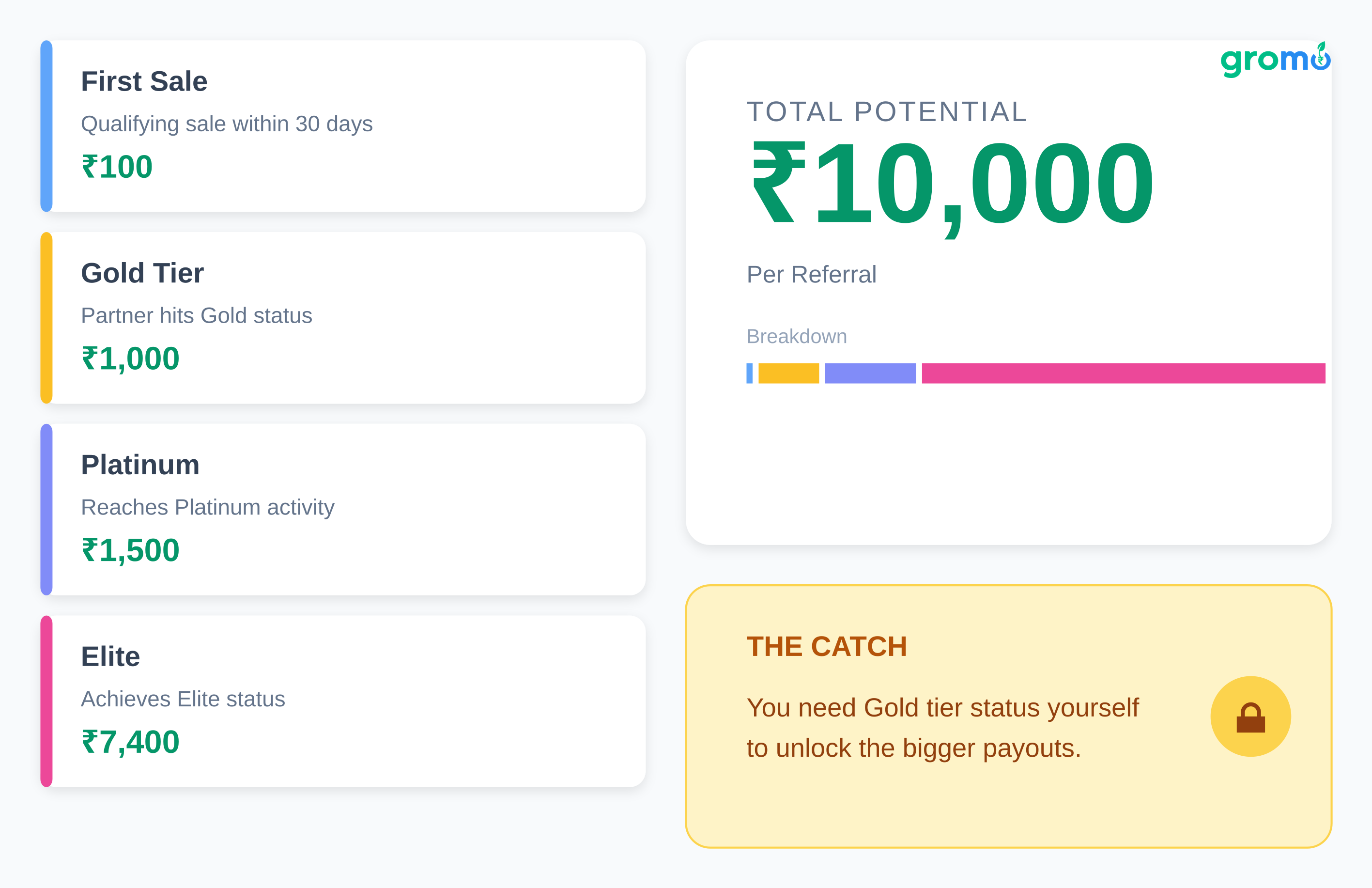
GroMo is one of the few I've seen that seems built for partner success rather than just user acquisition. The referral program reflects that up to ₹10,000 per person you refer. But it's milestone-based, not a flat fee. You earn as your referral becomes active.
Milestone | Amount | Requirement |
|---|---|---|
First Sale | ₹100 | Referral makes qualifying sale within 7 days |
Gold | ₹1,000 | They hit Gold tier (you need Gold status too) |
Platinum | ₹1,500 | They reach Platinum activity |
Elite | ₹7,400 | They achieve Elite status |
Total possible | ₹10,000 | Per referral |
The catch: you need to be Gold tier yourself for the bigger payouts. Your referral also needs to earn at least ₹5,000 from qualifying sales.
This is actually smart. It pushes you to bring in people who'll do the work, not just click a link and disappear. And it makes you invested in their success.
Join 60 Lakh+ Partners Earning with GroMo
What Actually Works
Spamming links doesn't work. Here's what does:
Talk to people individually. Not "join this app" broadcasts. Actual conversations. Why you're doing it. What's in it for them.
Find the right people. Friends with free time. Colleagues who want extra income. People already on social media who could leverage their networks.
One good referral beats ten bad ones. Someone who puts in effort will trigger your milestones. Someone who signs up and does nothing earns you nothing.
Stick around after they sign up. Check in. Share what worked for you. Help them make their first sale. Your milestone bonuses depend on their success.
Create content if that's your thing. A short video about how you made your first ₹5,000 brings in better prospects than a random link drop. Authenticity matters.
Track it. Who you talked to. Who signed up. Who's active. This shows you where people drop off and what to fix.
Building Something Bigger
The serious money isn't in one-off referrals. It's in finding people who want to build their own income streams. When you bring in someone who gets serious, they generate revenue for themselves while triggering your bonuses. Some partners have 50-100 active sellers in their network. That's not a side hustle anymore it's a business.
Realistic Numbers
Using GroMo as the example:
Casual effort (5 hrs/week):
4 referrals/month, 2 make first sale: ₹200
Your own sales: ₹8,000
Total: ~₹8,200/month
Serious effort (15 hrs/week):
10 referrals/month, 6 first sales: ₹600
2 hit Gold milestone: ~₹2,000
Your own sales: ₹25,000
Total: ~₹26,000/month
Full-time:
25 referrals/month, 15 first sales: ₹1,500
Milestone bonuses: ~₹5,000
Your own sales: ₹60,000
Total: ~₹66,500/month
These aren't guarantees. They assume you're selling products yourself, not just referring. The people who make real money treat this as a business.
What Kills Your Progress
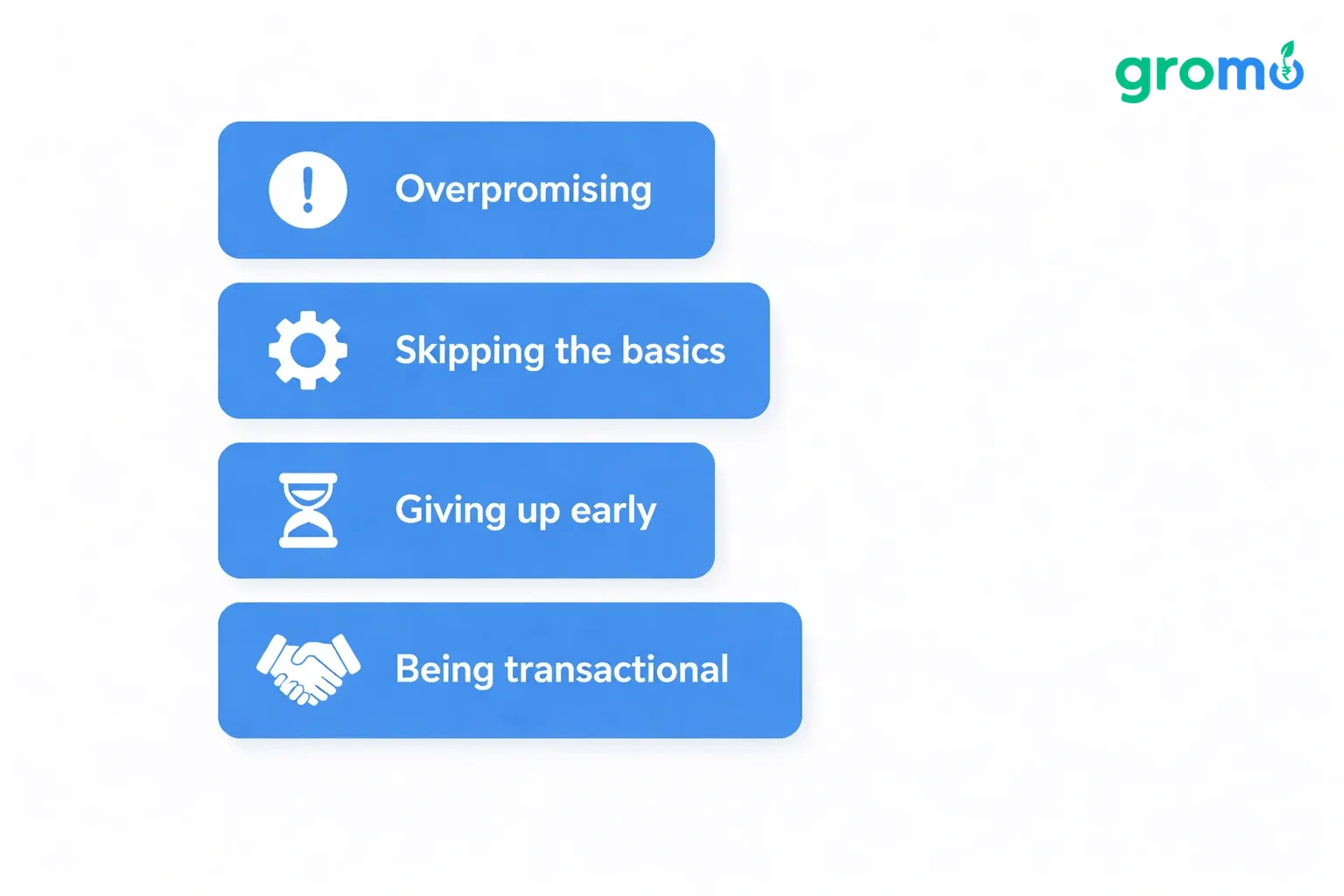
Overpromising. Don't tell people they'll make ₹1 lakh in month one. They won't believe you, and if they do, they'll quit angry.
Skipping the basics. If you can't sell the product, you can't help referrals sell it. Learn first.
Giving up early. Your first referrals probably won't work out. That's normal.
Being transactional. People work harder for someone who helps them than for someone collecting sign-ups.
Where This Is Going
AI is starting to match referrals with the right products. Video is becoming the main way people share opportunities. Regional language support is opening this up beyond English speakers.
The platforms worth your time will be the ones that pay fairly and support partners. The rest will eventually burn through their user base.
Starting Out
Pick carefully. GroMo has training and range decent place to start.
Learn first. Don't skip onboarding.
Make a sale yourself. You'll teach better if you've actually done it.
Personal messages beat broadcasts. Every time.
Give it 90 days. Enough time to know if it fits.
Questions People Actually Ask
What can I make in month one?
While learning, maybe ₹2,000-₹5,000. By month three, ₹15,000-₹30,000 is realistic if you put in the hours. The big numbers take 6-12 months.
Any upfront cost?
No. If they ask for fees, walk away.
How do I get people to sign up?
Be honest. "I helped my cousin get a credit card through this took 5 days, he got reward points." Real stories beat pitches.
What if referrals don't do anything?
That happens. Focus on finding a few serious people.
Is this legal?
Yes, when the platform follows RBI/SEBI guidelines. GroMo's backed by Y Combinator, was on Shark Tank India those are credibility signals. Still worth checking yourself.
Can I do this with a job?
That's how most people start. Evenings and weekends work fine.


