
Mutual Fund Distribution Commissions in India 2026


The mutual fund industry in India is growing, and the commission structure for distributors is straightforward once you understand it. Here's how it works in 2026.
What Distributors Actually Do
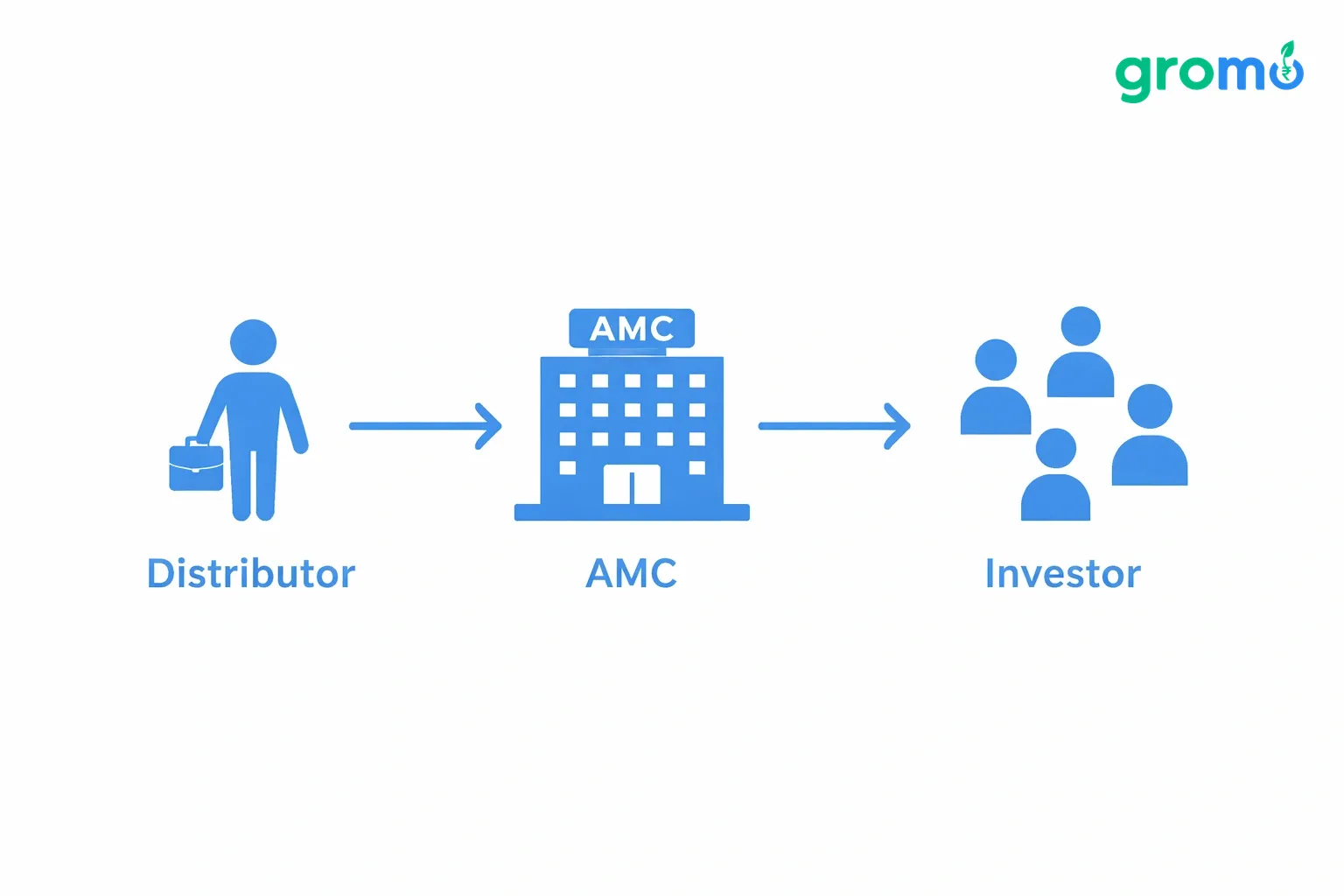
Distributors connect AMCs (Asset Management Companies) with investors. You help people pick funds and complete the investment process. The AMC pays you not the investor.
This used to require AMFI certification, office space, and relationships with multiple fund houses. After 2013's direct plan regulations and the rise of apps like GroMo, the barrier to entry dropped. Now anyone with a phone can distribute.
Start Earning from Mutual Fund Distribution Today
Two Ways You Get Paid
Upfront Commission
One-time payment when someone invests a lump sum or starts a SIP. Usually 0.5% to 2.5% of the amount. Depends on the fund type (equity pays more), the AMC, and your distributor level.
Example: ₹1 lakh in an equity fund at 1.5% = ₹1,500 in your pocket immediately.
Trail Commission
This is where the money builds. You get paid annually (sometimes quarterly) as long as the investor stays in the fund. Typically 0.25% to 1% per year of AUM.
₹10 lakhs invested at 0.75% trail = ₹7,500/year
Over 10 years, that's ₹75,000 from one client
Trail is why this business compounds. Side income opportunities with recurring revenue are rare.
Commission Rates by Fund Type
Fund Category | Upfront | Trail (Annual) |
|---|---|---|
Equity | 1.0% - 2.5% | 0.50% - 1.00% |
Debt | 0.25% - 1.0% | 0.10% - 0.50% |
Hybrid | 0.50% - 1.5% | 0.30% - 0.75% |
Liquid | 0.10% - 0.25% | 0.05% - 0.15% |
ELSS | 1.0% - 2.0% | 0.50% - 1.00% |
Equity pays more because it's harder to sell and has higher expense ratios. Liquid funds are simple products with thin margins.
Realistic Earnings
I'm skeptical of income claims in most side-hustle articles, so here are grounded numbers based on typical conversion rates:
Months 1-6
20-30 clients
₹10-15 lakhs AUM
Trail: ₹625-937/month
Upfront from new SIPs: ₹2,000-5,000
Total: ₹2,600-6,000/month
Year 1-2
100-150 clients
₹1.5-2.25 crores AUM
Trail: ₹9,000-14,000/month
Upfront: ₹8,000-15,000
Total: ₹17,000-29,000/month
Year 3+
300-500 clients
₹9-15 crores AUM
Trail: ₹56,000-94,000/month
Upfront: ₹20,000-35,000
Total: ₹76,000-1,28,000/month
GroMo claims 60 lakh partners and has paid out ₹100 crores. Those numbers suggest the model works, though individual results vary wildly.
How GroMo Changed Distribution
Old model: Get AMFI certified, file paperwork, build relationships with 20+ AMCs, wait 45 days for payouts.
GroMo model: Download app, complete training, sell any fund on the platform, get paid instantly.
The app handles:
Commission tracking (real-time)
Payouts (immediate vs. traditional 30-45 days)
Multi-AMC access (Aditya Birla, others in one place)
Paperwork (fully digital onboarding)
Specific Example: Aditya Birla SIP on GroMo
Offer: ₹400 upfront per first SIP activation
Conditions:
Minimum ₹100 SIP
Must run 3 months
Clawback: If the customer cancels before 3 months, you lose the ₹400. This prevents gaming the system with fake signups.
Customer process:
Click your referral link
Download Appreciate app
Sign up (name + mobile)
KYC (PAN + Aadhaar)
Verify bank + email
Select "Indian Mutual Funds" → ABSL
Set up ₹100+ SIP
You get ₹400
Simple enough that people genuinely earn ₹10K-₹1L monthly from this flow.
Join 60L+ Partners Earning with GroMo
What Actually Works
Don't Wait for Referrals
Week 1: Find 10 prospects in your network
Week 2: Explain SIPs (use GroMo's training)
Week 3: Help them choose based on goals
Week 4: Close and follow up
Repeat. You'll land 40+ clients per quarter if you're consistent.
Push SIPs Over Lump Sums
SIPs are easier sells (₹1,000/month feels doable; ₹50,000 lump sum doesn't). They also generate ongoing trail and have better retention people set them and forget them.
Lead with Education
Customers who understand what they're buying stay invested. That means more trail for you and better referrals. Share financial planning content before you pitch products.
The Compliance Guardrails
Without SEBI RIA License, You Cannot:
Recommend specific schemes
Promise returns
Charge advice fees
Invest on someone's behalf
Split commissions with clients
You Must:
Complete KYC properly
Protect customer data
Disclose commission arrangement
Follow platform rules (like the 3-month SIP maintenance)
Violations get your wallet blocked or trigger legal issues. Platforms enforce this strictly.
Why Mutual Funds Alone Is Limiting
GroMo lets you sell other products:
Credit cards: ₹500-₹3,000 per approval (HDFC cards do well)
Savings accounts: Kotak 811 pays ₹550-₹800
Demat: ₹250-₹1,400 per account
Loans: 0.5%-3.5% of disbursed amount (business loans included)
Cards and loans pay more upfront. Mutual funds pay less now but compound. Mixing both gets you to ₹1 lakh monthly faster.
The Friction Points
Trust is hard
Reality: People are skeptical of someone suddenly pitching investments. Lead with education, not products. Share useful content first.
Markets drop
Reality: Clients will panic. Focus them on SIP discipline and long-term horizons. Rupee-cost averaging is your talking point.
First 50 clients are slow
Reality: Expect to grind for months. After ~50 clients, referrals and trail income start compounding.
Competition exists
Reality: Robo-advisors and direct plans compete with you. Your edge: availability and personalized help.
Where This Is Going
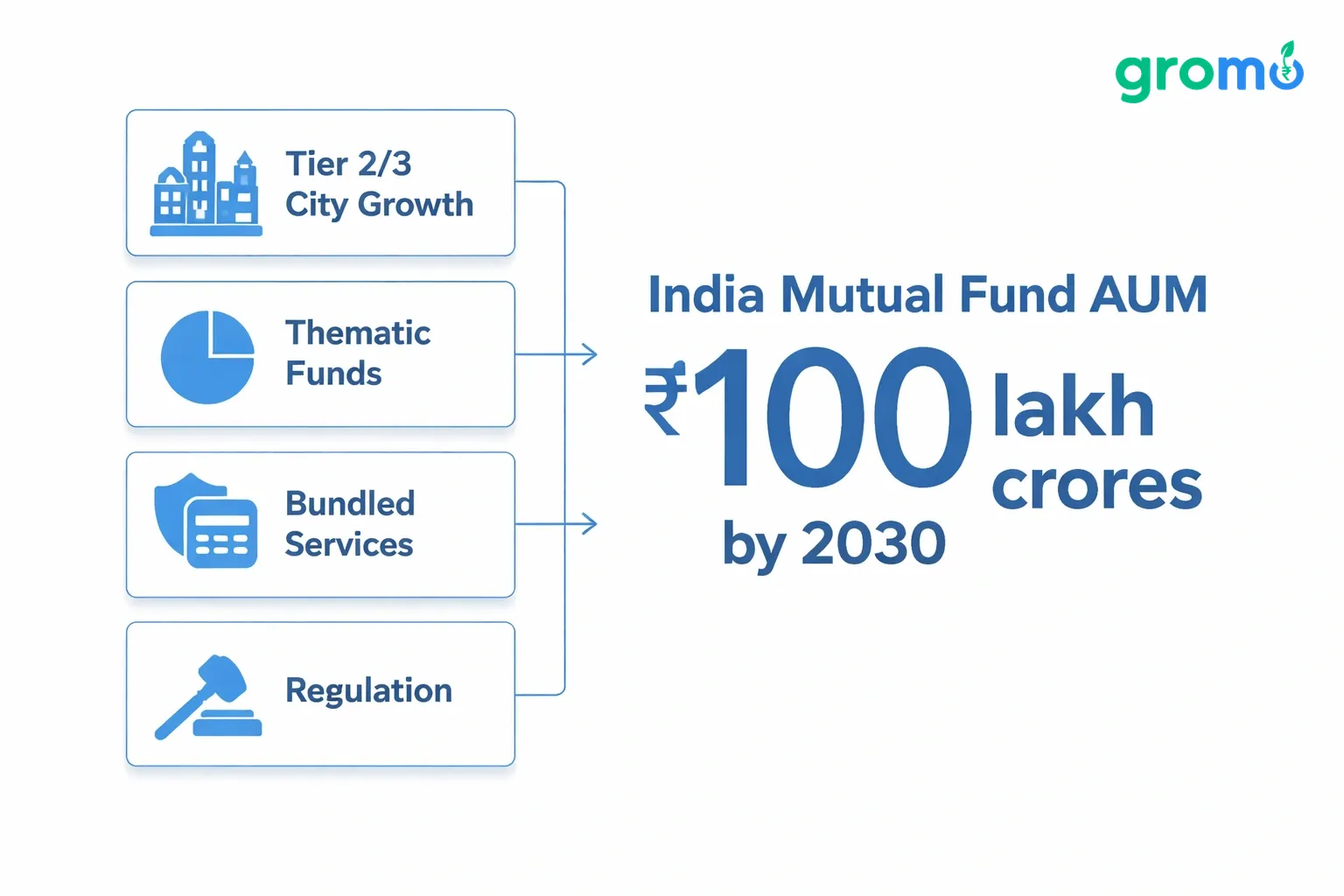
India's mutual fund AUM is projected at ₹100 lakh crores by 2030. That's the macro case for entering now.
Trends:
Tier 2/3 cities: Internet penetration is opening new markets. Rural distribution is growing.
Thematic funds: Young investors want sector-specific exposure (tech, healthcare, ESG).
Bundled services: The winning distributors offer insurance, cards, and loans alongside funds exactly what GroMo's platform enables.
Regulation: SEBI tightens rules periodically. Stay compliant or get squeezed out.
A Realistic Timeline
Month 1
Download GroMo, finish training modules
Learn the fund categories
Practice explaining SIPs to friends (badly at first, then better)
Month 2
Pitch family, friends, colleagues
Target people who save but don't invest
Start them small (₹500-₹1,000 SIPs)
Expect rejections, learn from them
Month 3
Ask satisfied clients for intros
Try social media
Aim for 20-30 active clients
Months 4-6
Add 15-20 clients monthly
Trail income starts appearing
Layer in credit cards/demat for upfront cash
Target ₹25,000-₹50,000 total
Month 6+
100+ clients
Trail grows on autopilot
Consider referral programs to scale
₹1 lakh+ monthly becomes mathematically possible
Why GroMo Specifically
60 lakh partners. ₹100 crores paid. The numbers suggest it's not a scam.
Zero entry cost: No office, no capital
Instant payouts: Cash flow matters when you're starting
Training: Free, actually useful
Brand access: Major AMCs and banks in one app
Tech stack: Mobile-first, compliance built-in
Bottom Line
Mutual fund distribution works because trail income compounds. The clients you bring in this year pay you for years.
The apps removed the old friction. You don't need an office or certification to start just consistency. The first months are slow. Then it accelerates.
If you're going to try this, download GroMo, finish the training, and help one person start a SIP. See if the process clicks. Then decide if you want to scale.
FAQs
Q: AMFI certification required?
A: No. You can facilitate and earn without it. You just can't recommend specific schemes without an RIA license. Stick to facilitation.
Q: Realistic month-one income?
A: ₹2,000-₹5,000 if you help 5-10 people start SIPs. Trail is negligible early on. By month 3-4, ₹10,000-₹15,000 is realistic.
Q: What if a client withdraws early?
A: Within the clawback period (typically 3 months), your commission gets reversed. After that, you keep it. This is why client education matters set expectations for medium to long-term.
Q: New vs. existing investments?
A: Upfront only on new. Trail continues as long as they stay invested. One good client can pay you for a decade.
Q: Mutual funds vs. cards/loans?
A: Cards/loans pay more upfront. Mutual funds build recurring income. Do both.
Q: Taxes?
A: Business income. Declare in ITR. GroMo tracks payouts, so record-keeping is easier. Talk to a CA once income grows.


