
Digital Silver Investment in India 2026: Guide & Benefits

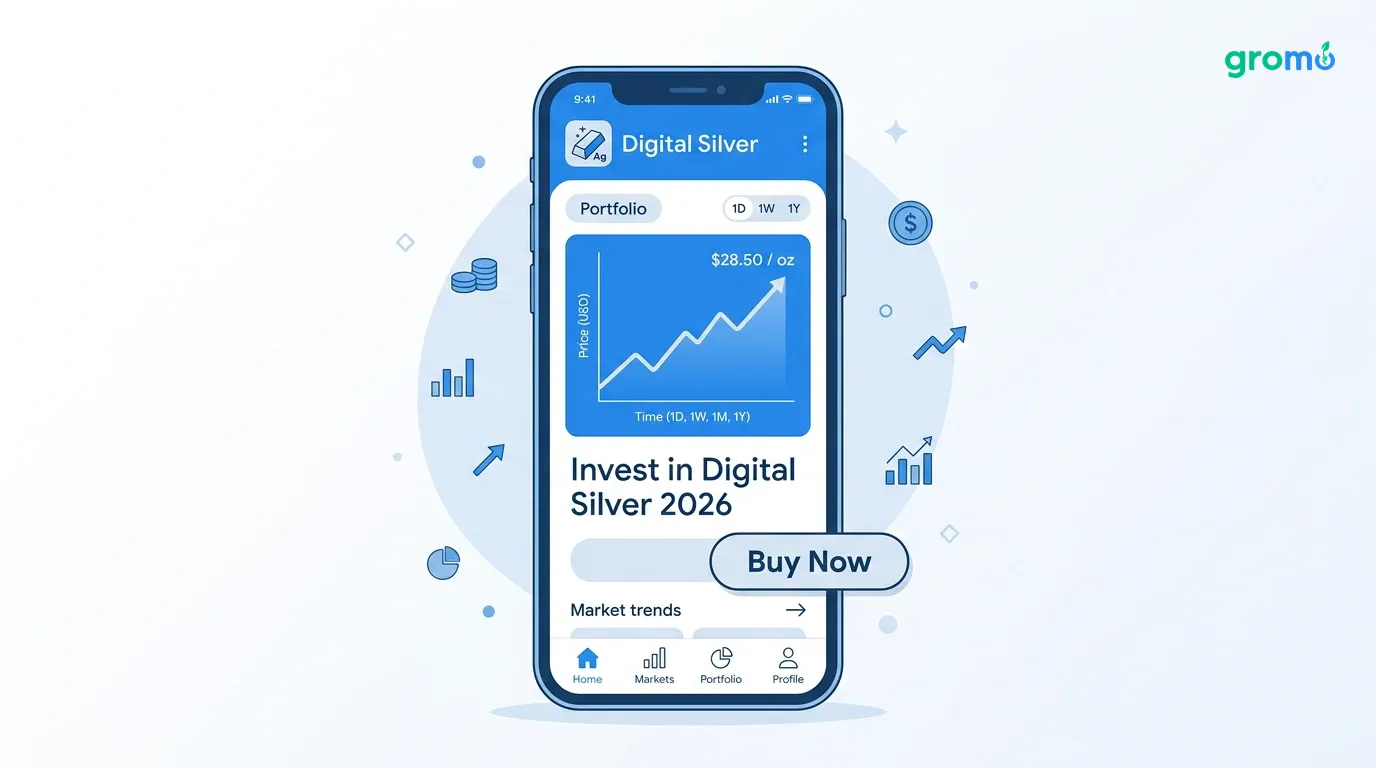
Digital silver is a way to own precious metal without finding somewhere to hide your bars. You buy it on an app. It sits in a vault. You sell it when you want. That's the pitch. And in India, where buying gold and silver usually means visiting a jeweler and negotiating making charges, the digital version is worth understanding especially if you're looking at it as both an investment and a way to earn commissions.
What You're Actually Buying
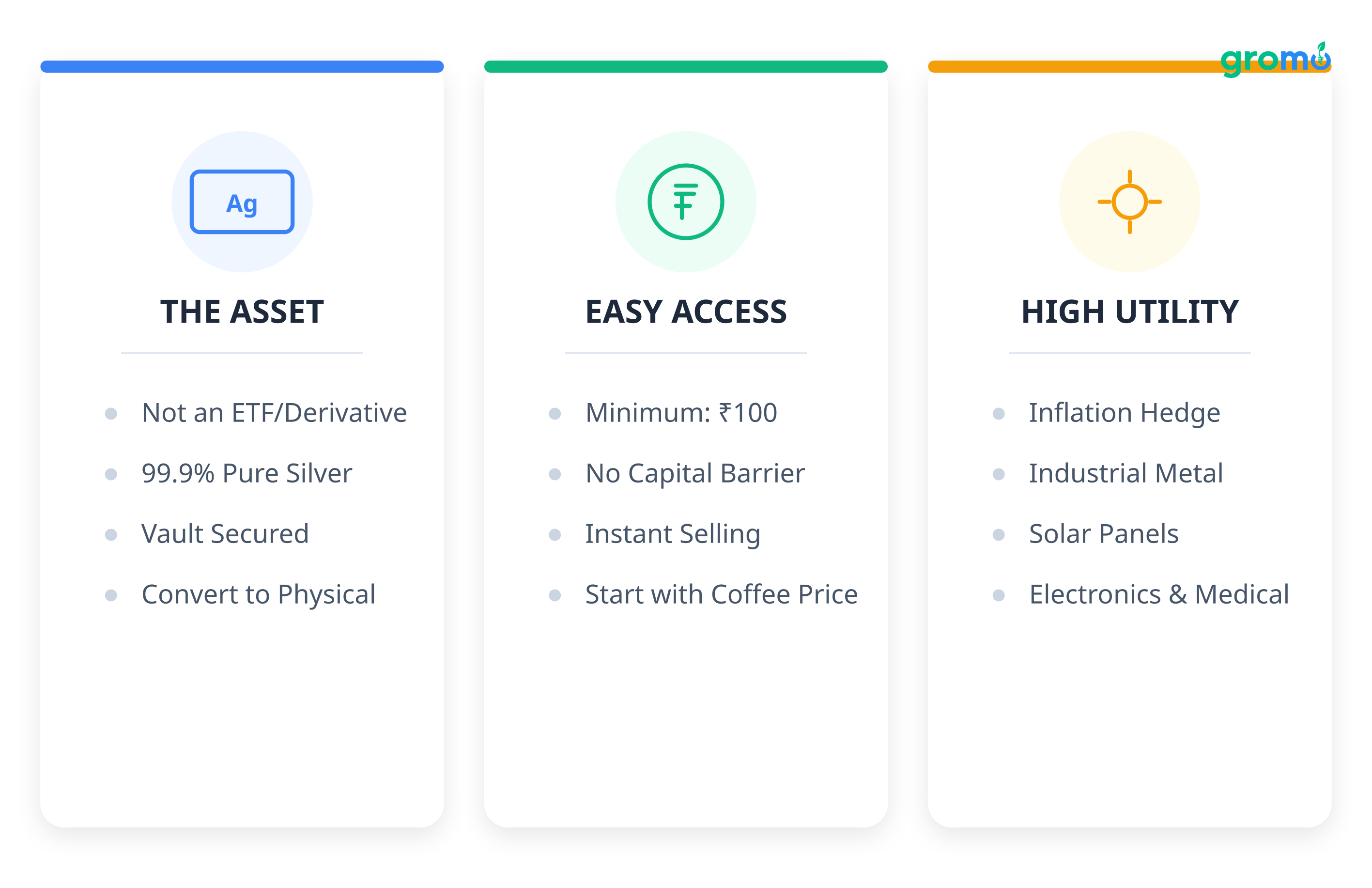
Digital silver isn't a derivative or an ETF. You're buying real silver 99.9% pure stored in a vault by a custodian. You just don't hold it. The app tracks your ownership, and you can sell instantly or convert to physical bars and coins.
The minimum entry is low. ₹100 on most platforms. That removes the capital barrier. You don't need ₹50,000 to buy a gold coin. You start with the price of a coffee.
Why silver specifically? It's an inflation hedge, sure, but it's also an industrial metal. Electronics, solar panels, medical equipment all require silver. That creates demand beyond speculation. Gold is purely investment and jewelry. Silver works harder.
The Mechanics
Account setup. Download an app from a SEBI- or RBI-registered platform. PAN and Aadhaar, linked bank account, OTP verification. Ten minutes.
Purchase. Buy at live market rates. The silver sits in a vault with an accredited custodian. You own it not the platform. If the company fails, your metal is legally segregated from their assets.
Liquidity. This is the advantage over physical silver. Selling physical metal means finding a buyer, accepting a discount, dealing with purity checks. Digital silver converts to cash in 24-48 hours.
Conversion. Want physical metal? Most platforms let you swap your digital holdings for coins or bars. Fees vary. Some offer free delivery above a threshold.
Start Earning from Digital Silver Sales Today
Why April 2026 Isn't a Random Time to Pay Attention
A few things are happening:
Inflation is still a conversation. Savings accounts don't keep up. Metals do.
India's solar push. The government wants domestic solar manufacturing. Silver is essential for photovoltaic cells. That's fundamental demand.
Demographics. Younger investors prefer apps to jewelry stores. They want fractional ownership the ability to buy ₹500 worth instead of a whole bar.
Advisor recommendations. A 5-10% allocation to precious metals is standard advice now. Digital platforms make rebalancing easy.
The Trade-offs: Digital vs. Physical vs. ETFs
Feature | Digital Silver | Physical Silver | Silver ETFs |
|---|---|---|---|
Minimum Investment | ₹100+ | ₹5,000-₹10,000+ | ₹500+ (one share) |
Storage Required | No (vault storage included) | Yes (home/locker) | No |
Liquidity | High (24-48 hrs to cash) | Low (finding buyers takes time) | High (trading hours only) |
Purity Guarantee | 99.9% certified | Depends on source | Tracks silver price |
Insurance | Included in vault storage | You must arrange | Not applicable |
Making/Wastage Charges | None | Yes (10-20%) | None |
Tax Treatment | Capital gains tax | Capital gains + GST on physical | Capital gains tax |
Conversion to Physical | Available (small fee) | N/A | Not possible |
Physical silver carries hidden friction. Making charges of 10-20% vanish the moment you buy. You never get that back. Digital eliminates it.
The Distribution Opportunity
Most articles stop at "here's how to invest." There's another angle: referring others.
Platforms like GroMo let you distribute financial products without capital. You learn the product digital silver, gold, mutual funds and share referral links. When people transact, you earn. Earn money online isn't just a keyword; it's a real side hustle if you're willing to learn and build a network.
No inventory. You're not buying and reselling. You're referring.
Training included. Platforms provide free courses on products and compliance. See zero-investment business models for context.
Commissions. Typically ₹100-₹500 per successful transaction. Instant payout on many platforms.
Scale. Build trust, build a network, and it compounds. Some distributors earn ₹1 lakh monthly. Not day one. But over time.
Who This Is For
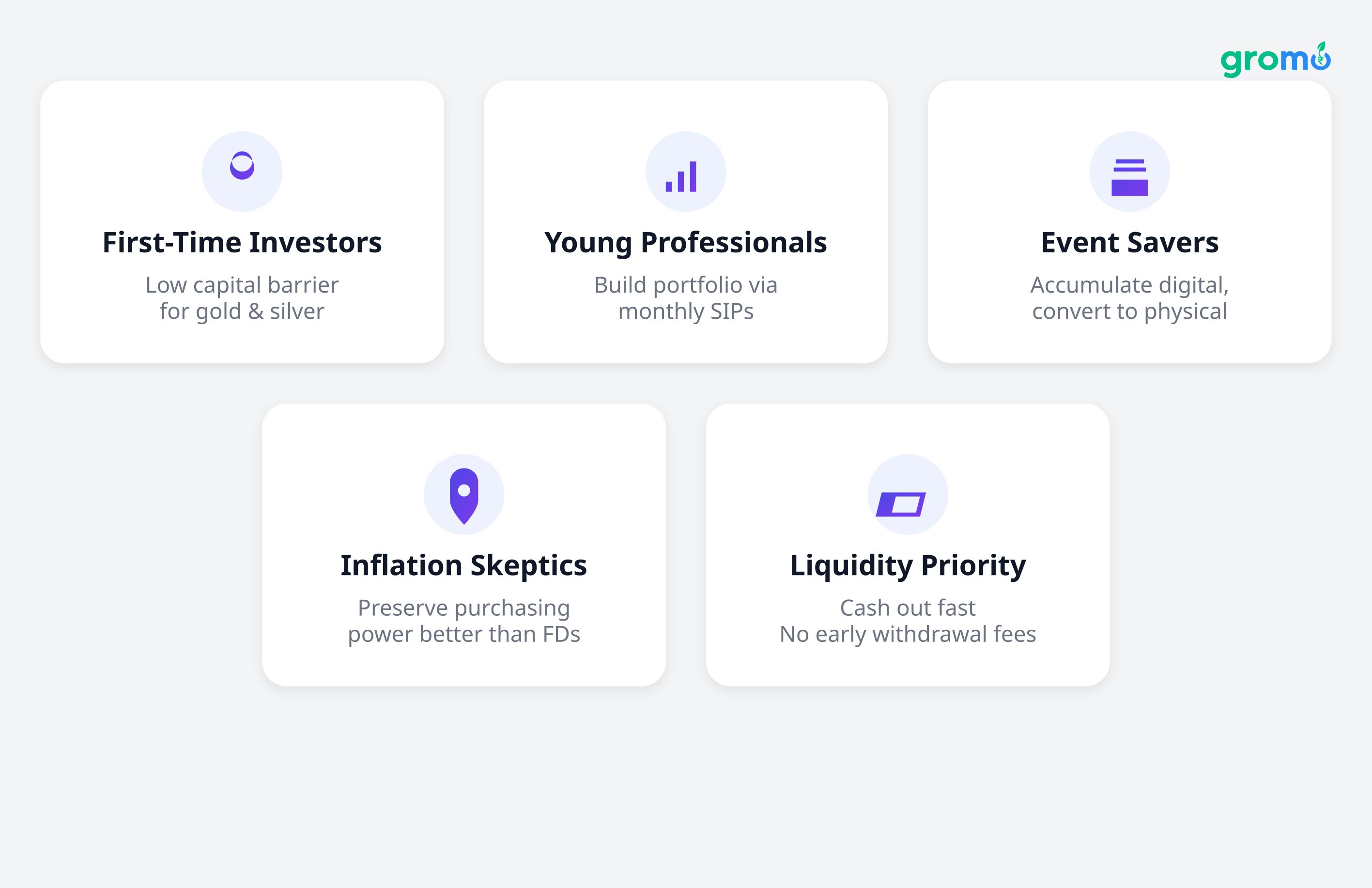
First-time metal investors. If you've never bought gold or silver because of the capital requirement, this removes that barrier.
Young professionals. You're building a portfolio. Adding silver via monthly purchases like a SIP makes sense.
Event savers. Weddings and festivals require silver. Accumulate digital, convert to physical closer to the date. You might benefit from price movements.
Inflation skeptics. Fixed deposits lose purchasing power over time. Metals preserve it.
Liquidity prioritizers. You want the option to cash out fast. Digital silver is more liquid than FDs (no early withdrawal penalty) and physical metal (no buyer search).
Explore Investment Products & Start Earning
How to Start
Choose carefully. Look for regulatory registration (SEBI/RBI). Check the buy-sell spread lower is better. Verify custodian and insurance details.
Sign up. Mobile number, OTP, PAN, Aadhaar. Digital KYC takes minutes.
Link a bank account. They'll verify with a penny drop.
Test with a small amount. ₹500. See how it feels. Watch the price ticker.
Decide your approach. Lump sum when prices dip? Or systematic monthly purchases (rupee-cost averaging)?
Taxes
Short-term capital gains. Sell within 36 months, gains get added to your income. Taxed at your slab rate.
Long-term capital gains. Sell after 36 months, pay 20% with indexation (inflation adjustment lowers your taxable gain).
GST. Applies when you convert to physical silver. 3%. Can't avoid it.
Keep records. Platforms provide statements. Download them.
Common Mistakes
Treating it like a day-trading asset. Silver fluctuates. Buying today and selling tomorrow isn't a strategy. Hold for 1-3 years minimum.
Overlooking fees. Some platforms charge storage fees after year one. Check the fine print.
Over-concentrating. Keep metals at 5-10% of your portfolio. Don't go all-in.
Panic-selling dips. Silver can drop 10-15% in a bad month. If your thesis hasn't changed, hold.
Assuming instant physical delivery. During festivals, physical conversion can take weeks. Plan ahead.
Using sketchy platforms. Stick to names with clear custodian partnerships and insurance disclosures.
The Income Side: How Distribution Works
Investing builds wealth. Distributing builds income. You can do both.
India has 60+ lakh financial product distributors. Platforms like GroMo have formalized this. You learn products, share links, and earn on transactions. It's a side hustle that works around your schedule.
Learning curve. You're not born knowing this. Platforms provide training on products, compliance, and communication.
Your network is the market. Friends, family, colleagues they're already looking for investment options. You help them find good ones.
Flexibility. Share links when you have time. Many distributors keep full-time jobs while earning ₹50K+ monthly on the side.
Compliance handled. The platform manages the regulatory paperwork, customer service, and settlements. You focus on distribution.
Silver vs. Gold: The Quick Comparison
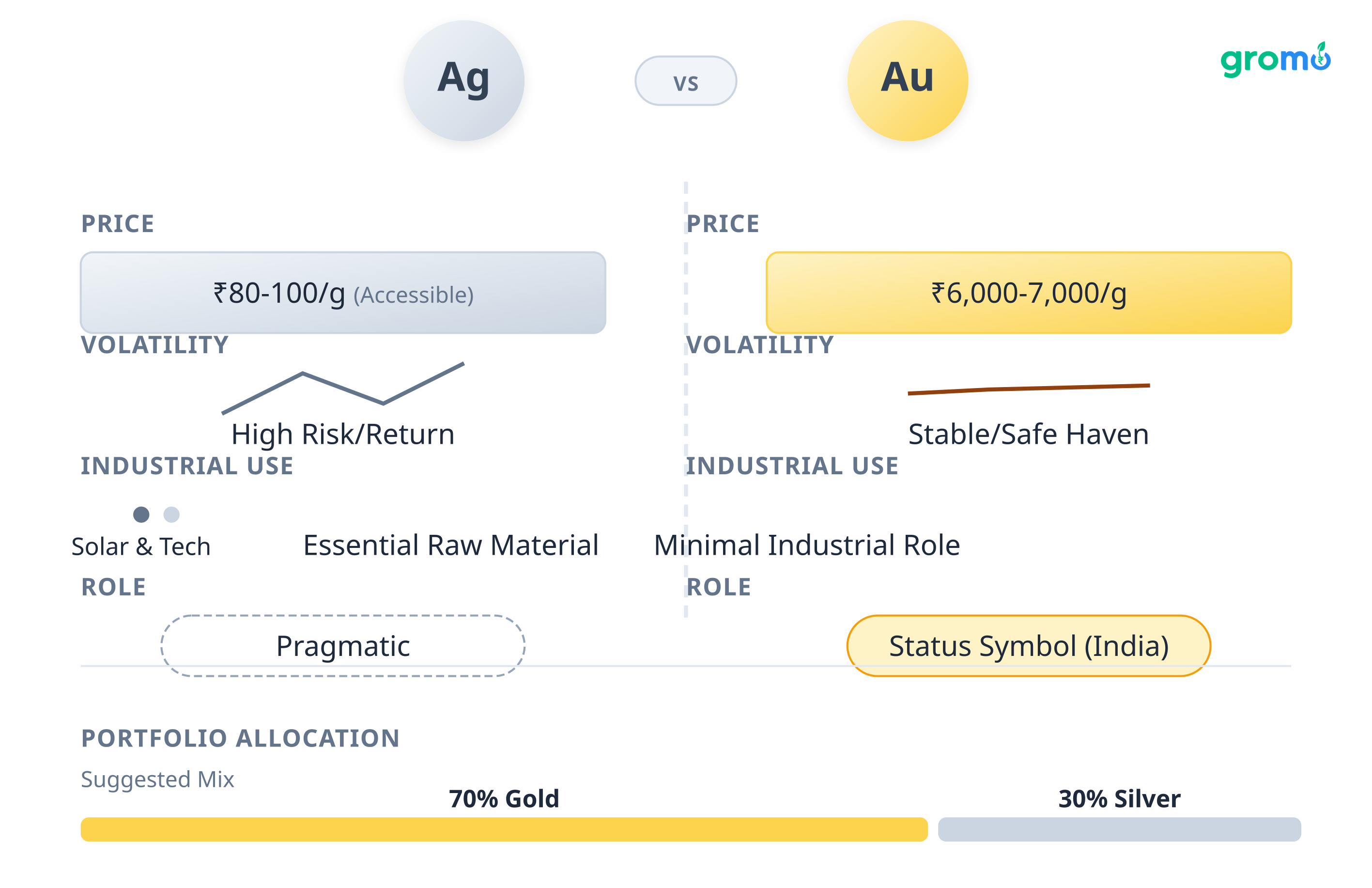
Price. Silver: ₹80-100/gram. Gold: ₹6,000-7,000/gram. Silver is accessible.
Volatility. Silver moves more. Higher risk, higher potential return.
Industrial demand. Silver has it. Gold doesn't. Solar panels and electronics require silver.
Cultural context. Gold is status in India. Silver is pragmatic.
Allocation. Many advisors suggest 70% gold, 30% silver in the metals portion of a portfolio.
Most investors hold both.
A Real Example: Ravi in Pune
Ravi is 28. He started buying ₹2,000/month of digital silver in January 2025. By April 2026, he'd put in ₹30,000 and accumulated about 250 grams (average purchase price: ₹80/gram).
During that period, silver rose to ₹85/gram. His holdings were worth ₹33,750. That's a 12.5% gain not spectacular, but better than a savings account.
He also referred 12 people who opened accounts. Average referral payout: ₹300. Total: ₹3,600.
Combined benefit: ₹7,350.
Initial capital: ₹30,000.
Effective return: ~24.5%.
This isn't a get-rich story. It's a "your money works harder" story. Ravi invested, and he earned by sharing.
Where This Is Headed
Blockchain backing. More transparency on ownership is coming.
Jeweler integrations. Convert digital directly to jewelry without the usual price spreads.
International vaults. Store metal outside India for diversification.
Lending against holdings. Use digital silver as collateral for loans.
UPI purchases. Buy silver as easily as sending money.
The infrastructure is maturing. Getting in now either as an investor or distributor means learning before it becomes mainstream.
What to Do Next
Invest a little. Open an account. Buy ₹500-₹1,000. Learn the interface.
Watch the market. Follow silver prices for a few weeks. Notice what moves them.
Consider distribution. If you understand the product, explore platforms offering referral income. You're already telling people about it might as well earn from it.
Learn adjacent products. Gold, mutual funds. The more you know, the more you can help.
Be honest. Don't sell. Share your experience. People trust authenticity.
Track. Watch both your investment returns and any referral income. Optimize what works.
April 2026 offers a decent entry point. Industrial demand supports prices. Platforms are stable. And the distribution model exists if you want to turn knowledge into cash flow.
Frequently Asked Questions
Is digital silver as safe as physical?
On regulated platforms, yes. Your silver is real, stored in an insured vault, and legally yours even if the platform shuts down. Physical silver is safe too but you're responsible for storage and insurance. Digital shifts that burden to the platform. Check the custodian and insurance before signing up.
What happens if the platform goes under?
Your silver isn't held by the platform it's held by a third-party custodian. The custodian is legally required to return your metal or its value. That's why picking a platform with a clear custodian relationship matters.
Is referral income realistic?
Yes, but it requires effort. You're not getting paid for nothing. You're getting paid for successful referrals. ₹10,000-₹50,000/month is achievable if you consistently share and educate your network. It's not passive. It's work that scales.
Digital silver vs. mutual fund SIPs which is better?
They serve different purposes. Equity mutual funds aim for growth (10-12% historical returns) but are volatile. Silver protects against inflation and currency risk. Most portfolios benefit from both: equity for growth, metals for stability. A 60-70% equity / 5-10% metals split is common.
Are there hidden fees?
Check the buy-sell spread (usually 2-3%), physical delivery charges (₹50-200), and potential annual storage fees (0.5-1% after year one on some platforms). GST applies when converting to physical. If a platform hides these details, walk away.
How liquid is it compared to fixed deposits?
Very liquid. Sell and receive cash in 24-48 hours, no penalty. Fixed deposits lock you in or reduce interest on early withdrawal. But: FDs guarantee returns; silver prices fluctuate. For emergency funds, consider holding both FDs for guaranteed capital, digital silver for flexible access.


